
Getting Around Vietnam: Flights, Trains, Buses and Transfers Compared
Vietnam Travel TipsBy Pham Phuong Anh
Vietnam is long and thin, so no single mode of transport suits every leg. This guide compares flights, trains, sleeper buses, limousine vans and private transfers leg by leg, with approximate journey times, booking lead times, city transport and what has changed for travellers in 2026–27.

Table of contents
Getting Around Vietnam: The Short Answer
Vietnam is about 1,700 km from Hanoi to Ho Chi Minh City by rail, and the right way to travel changes with every leg. The rule that works for most visitors: fly the long legs, take the train when the journey is the point, use buses and limousine vans for short and medium hops, and book a private car or transfer when you need flexibility or a stop-by-stop route.
- Long legs (Hanoi to Hue, Da Nang to Ho Chi Minh City, Hanoi to Ho Chi Minh City): fly. A flight takes roughly one to two hours (scheduled flight time, not door to door), against most of a day or more on the road or rails.
- Scenic or overnight legs: the sleeper train from Hanoi to Hue and the coastal section from Hue to Da Nang are the two scenic rail options to consider.
- Short and medium legs (Ha Long, Ninh Binh, Sapa, the Mekong Delta): road transport by limousine van, bus or private car.
- Inside cities: ride-hailing apps, taxis and, in Ho Chi Minh City and Hanoi, metro lines that help in some areas.
Journey times in this guide are approximate and rounded. Schedules, fares and baggage rules change by operator, season and fare type, so confirm them with the airline, the railway or the bus company when you book. Where a figure is a rule of thumb rather than an official number, we say so.

Which Option for Which Leg
Use this table to pick a mode for each leg of your route, then read the sections below for the detail behind each choice. Times are approximate scheduled flight or train durations, or typical road transfer times, unless stated otherwise. Flight times do not include ground transfers, check-in, security or baggage collection, so compare the full door-to-door journey before choosing.
| Leg | Best for most travellers | Approximate time | Alternative | Watch out for |
|---|---|---|---|---|
| Hanoi → Ha Long Bay | Road transfer (cruise transfer, limousine van or private car) | About 3–4 hours each way | Overnight cruise, which still needs road transfers out and back; check whether they are included or charged separately | A day trip can mean more time on the road than on the water |
| Hanoi → Ninh Binh | Limousine van, bus or private car | About 2 hours | Day trip with a guide | Traffic leaving Hanoi |
| Hanoi → Sapa | Limousine van or sleeper bus on the expressway | About 5½–6 hours | Overnight train to Lao Cai (about 7–8 hours), then a road transfer up the mountain | Sapa has no airport |
| Hanoi → Hue | Flight | About 1¼ hours | Sleeper train, roughly 12½–14 hours; can save a hotel night | Overnight arrival times vary |
| Hue → Hoi An | Sightseeing road transfer or private car | A full day for the sightseeing transfer (not a direct drive) | Direct bus or limousine van; train to Da Nang (about 2½–4 hours) plus a road transfer | Hoi An has no train station or airport |
| Da Nang → Ho Chi Minh City | Flight | Roughly 1–1½ hours | Train, most of a day and a night | Check which Ho Chi Minh City airport your ticket uses |
| Ho Chi Minh City → Mekong Delta | Day trip or 2-day tour by road to My Tho or Ben Tre | A full day for the tour; the road transfer itself is shorter | Overnight in Can Tho | Early starts can help avoid traffic |
| Hanoi → Ho Chi Minh City | Flight | About 2 hours | Train in stages, with stops in Hue and Da Nang | The full train journey takes well over a day |
For Ha Long, our guide to a Ha Long Bay day trip or overnight cruise explains how the transfer fits each option. For the Hue to Hoi An leg in detail, including the Hai Van Pass, the tunnel and the heritage train, see our guide to Hue to Hoi An via the Hai Van Pass. For how these legs fit into a whole trip, see the sample combinations further down.
What Has Changed for 2026–27
Several things travellers read in older guides are now out of date. These are the ones worth knowing before you book.
- Bamboo Airways is not a reliable booking option at present. In late November 2026 its website was reported to be inaccessible, and its remaining aircraft had no recorded flight after 6 November. Regular passenger services could not be confirmed, so choose an airline with bookable flights for your dates.
- Domestic flight schedules change. Timetables vary by season, route and date, so check that your exact flight is on sale before you fix other bookings.
- A second airport serving the Ho Chi Minh City region is planned to open. Long Thanh International Airport (LTH), in neighbouring Dong Nai City, is scheduled to begin commercial operations at 00:00 local time on 24 December 2026, subject to operational readiness, according to the Civil Aviation Authority of Vietnam. The opening is phased, with early priority going to domestic and short-haul international routes that airlines have registered, and flight allocations are not guaranteed. Confirm whether your ticket uses Tan Son Nhat (SGN) or Long Thanh (LTH), as the ground transfer differs.
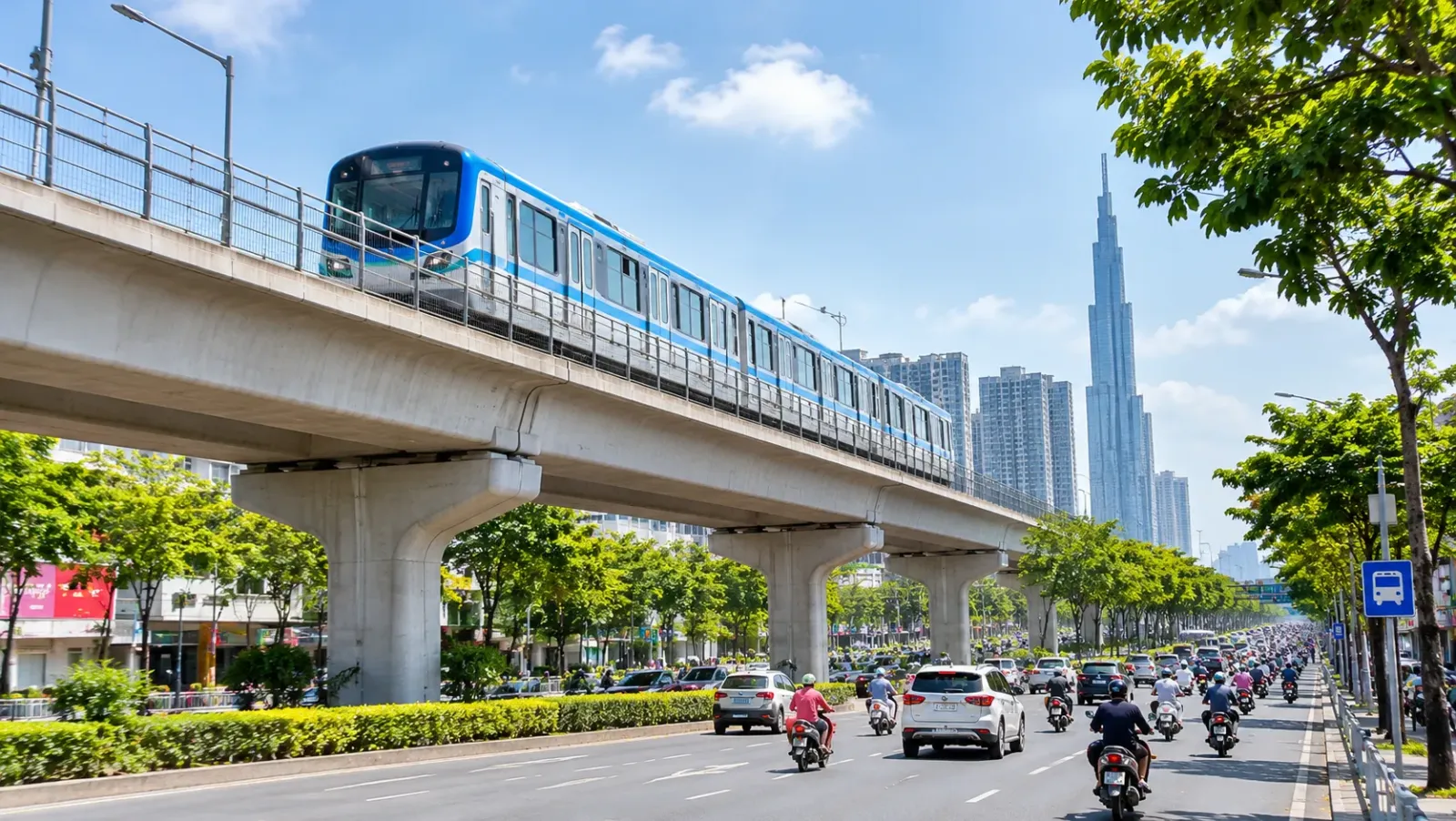
- Metro lines are running. Ho Chi Minh City's Line 1 has operated since December 2024, and Hanoi has two lines in service. They help in parts of each city but do not replace taxis or ride-hailing for most visitors.
- There is still no high-speed rail. A north–south high-speed line is planned, but the existing single-track railway is the only option for now.
Domestic Flights
Flying is the practical choice for Hanoi to Hue, Da Nang to Ho Chi Minh City and Hanoi to Ho Chi Minh City. It turns a day or two of travel into a one- or two-hour flight, and regular domestic flights connect many major tourist destinations. These are approximate scheduled flight durations, not door-to-door travel times. Add time for the airport transfer, check-in and baggage, which on a short leg can make the door-to-door saving smaller than it looks.
Who Flies What
Vietnam Airlines and Vietjet are the two main domestic carriers. Vietnam Airlines is the full-service national carrier; Vietjet is the low-cost airline. Newer carriers such as Sun PhuQuoc Airways have begun operating, so check which routes they fly on your dates. Compare the two main airlines on the route, the time of day and the total price including baggage, not on the headline fare alone.
Fares, Baggage and Schedule Changes
- Low fares often exclude checked baggage. Check what your fare includes before you pay, and add baggage when you book if you need it.
- Carry-on limits are enforced. Weight limits differ by airline, fare and aircraft type, and are lower on smaller propeller aircraft. Pack within the limit on your ticket.
- Allow for changes. Domestic timetables moved several times during 2026. Re-check your booking a few days before you fly and again before leaving for the airport.
Airports and Getting Into Town
Noi Bai Airport lies about 27 km north of central Hanoi, and the trip into town usually takes 45 minutes to an hour depending on traffic. Express bus 86 runs to the Old Quarter and the railway station, a low-cost option (check the current fare), and taxis and ride-hailing apps are the faster option with luggage. As of November 2026, flights to Ho Chi Minh City use Tan Son Nhat, close to the centre; see the note above on Long Thanh. Da Nang's airport is the usual gateway for Hoi An, which lies only about 30 km from Da Nang; our guide to Da Nang or Hoi An explains how airport access affects where to stay.

Trains
The main north–south railway links Hanoi and Ho Chi Minh City over roughly 1,700 km, and trains on this route are often called the Reunification Express. Trains are slow compared with flying, so the train suits travellers who want the scenery, a bed for the night or a lower-stress option than a long bus ride, not those short of time.
Classes and What to Choose
- Hard seat and soft seat: fine for short daytime sections, tiring overnight.
- Six-berth cabin (hard sleeper): the budget bed, with bunks stacked three high.
- Four-berth cabin (soft sleeper): the usual choice for an overnight trip, with more space and privacy.
- Two-berth VIP cabin: available on some services, with the most privacy; book early.
Some routes also have private tourist sleeping carriages. Condition and service vary by train, so read the details of the exact service you book.
The Overnight Train: Hanoi to Hue and Hanoi to Lao Cai
The sleeper from Hanoi to Hue takes roughly 12½ to 14 hours, usually overnight, and arrives the next morning. It can save a hotel night, but sleep quality and arrival times vary by service, and flying takes about 1¼ hours. If you want one train ride on a two-week trip, the short coastal section described below is easier to fit in. For Sapa, the overnight train to Lao Cai takes about 7 to 8 hours and ends with a road transfer up the mountain, so the expressway by limousine van or sleeper bus is usually quicker door to door.
The Coastal Hue to Da Nang Section
The line between Hue and Da Nang follows the coast near the Hai Van Pass, making it a scenic option for this leg. Ordinary services take about 2½ to 3 hours, and the dedicated tourist service takes about 3 to 4 hours. Hoi An has no station, so allow 45 minutes to an hour by road from Da Nang Station. Our Hue to Hoi An guide covers the heritage train, which side to sit on and what to expect in the wet season.
Hue to Phong Nha Heritage Train
A new daytime tourist train, launched on 28 August 2026, links Hue with Phong Nha Station (formerly Tho Loc Station), a rail gateway to Phong Nha-Ke Bang National Park. Vietnam Railways announced the new name on 16 November 2026. The route is about 190 km, calls at Dong Ha, My Trach and Dong Hoi, and takes a little over four hours. Published schedules list one train each way daily. The station is around 20 km from the Phong Nha tourism centre, so you still need a road transfer, and the rail journey does not by itself include a cave visit. This is the published schedule for a new service: check the timetable and date-specific tickets on the railway's official channels before you plan around it. News coverage: Tuoi Tre, 28 August 2026.
Long Hauls and When Not to Take the Train
Journey times vary by train and timetable, but expect the full Hanoi to Ho Chi Minh City journey to take roughly 32 to 40 hours, with at least one night on board. A flight takes about 2 hours. Unless riding the whole line is the point of your trip, fly the long legs and take the train in sections, for example Hanoi to Hue overnight and Hue to Da Nang by day.
Booking Train Tickets
You can buy tickets at station counters, through travel agencies or on Vietnam Railways' ticketing website. Use names that match your travel documents. Aim to book days or weeks ahead, and well ahead for holidays, because the fastest trains and best seats can sell out. For Tet 2027, long-distance train tickets went on sale on 5 September 2026, so availability around the holiday may already be tight. Check the change and refund rules for your fare before you pay, as they can differ by fare and date.
Buses, Sleeper Buses and Limousine Vans
Buses reach more places than trains and run at all hours. Open-tour buses, popular with budget travellers, link Hanoi, Hue, Hoi An, Nha Trang, Da Lat, Mui Ne and Ho Chi Minh City, and most are sleeper buses or have deeply reclining seats.
Three Kinds of Bus
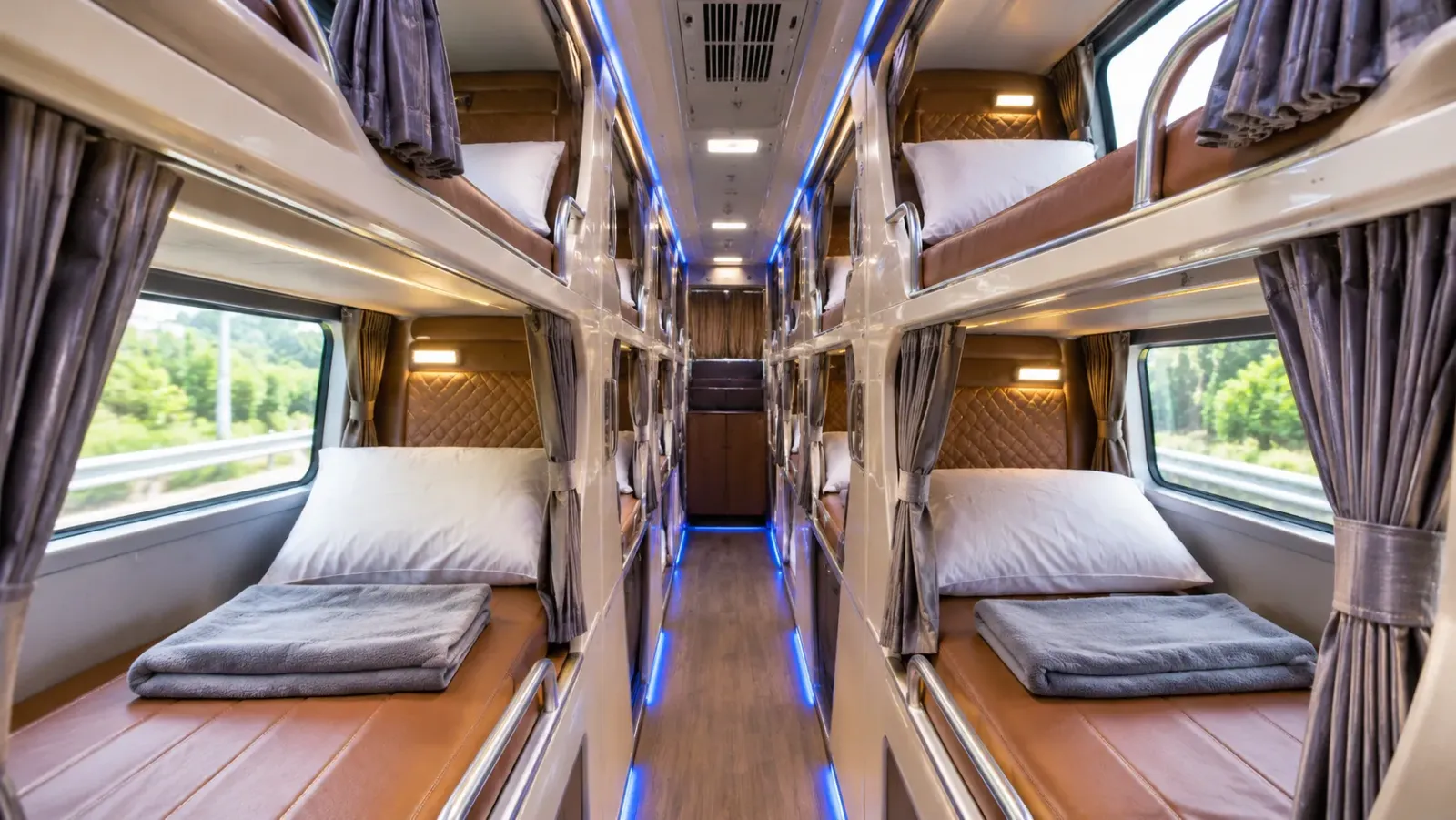
- Standard sleeper bus: reclining beds in rows across the width of the bus. Cheapest for overnight legs, but cramped for taller travellers.
- VIP cabin sleeper: beds in semi-private pods, with more space for the same journey.
- Limousine van: a van with about 9 to 16 reclining seats, often with hotel pick-up. Comfortable for daytime hops, and a common choice for independent travellers on shorter routes.
Which One for Which Journey
A common rule of thumb among travel specialists, not an official standard: for daytime journeys under about five hours, such as Hanoi to Ninh Binh or Ha Long, a limousine van works well. For journeys over about six hours, or any overnight trip, choose a sleeper or VIP cabin, or take the train. Hanoi to Sapa sits at the upper limit for a van. For Hanoi to Hue or Da Nang and Ho Chi Minh City to Nha Trang, a long seated ride is tiring, so consider a bed or the train.
Booking and Practical Tips
- Lead time: aim to book one or two days ahead in quieter periods, and much earlier for major holidays.
- Choose a reputable operator and check reviews, the pick-up point and the vehicle type, since the same route is sold in several grades.
- Pick-up points differ. Some services collect from hotels and others leave from a bus station on the edge of town; confirm where you board and where you arrive.
- Keep valuables with you. Hold your passport, phone and wallet in a small bag rather than in the luggage hold.
- Direct buses on the coast road between Hue and Hoi An normally go through the Hai Van Tunnel, so you will not see the pass. Choose that if the journey is only a link in a busy trip.
Private Cars, Easy Riders and Sightseeing Transfers
A private car with a driver costs more than a bus or train, but it removes waiting, lets you stop where you like and handles luggage. It makes most sense on legs where the road is the attraction, for families and groups sharing the cost, or when timings are tight.
- Sightseeing transfers combine the journey with stops. The best-known example is Hue to Hoi An, where the road passes An Bang Cemetery, Lap An Lagoon, the Hai Van Pass and the Marble Mountains. Our Hue to Hoi An Full-Day Tour (see the end of this guide) is a one-way sightseeing transfer by bus along this route; check the tour page for what is included before you book.
- Easy Rider tours put you on the back of a motorbike with an experienced local rider. Luggage arrangements vary by operator; confirm how larger bags will be carried before booking.
- Airport and city transfers are easiest through your hotel, a ride-hailing app or an official airport taxi.

Getting Around Inside the Cities
Ride-Hailing and Taxis
In the main cities, ride-hailing apps such as Grab and Be are widely used and show the fare before you book, which avoids haggling. Use official taxi companies or the apps, and agree the fare or insist on the meter if you hail a cab on the street.
Metro and City Buses
- Ho Chi Minh City: Metro Line 1 opened on 22 December 2024 and runs about 20 km between Ben Thanh Station, near Ben Thanh Market, and Suoi Tien Terminal, with 14 stations. Check opening hours and fares before you ride, as they can change.
- Hanoi: two metro lines operate: Line 2A from Cat Linh to Ha Dong, and the elevated section of Line 3 from Nhon to Cau Giay. Check opening hours before you ride. Neither currently reaches the Old Quarter directly, and the underground section of Line 3 towards Hanoi Railway Station is still under construction, so a taxi or ride-hailing app is usually easier for sightseeing.
- City buses run in Hanoi, Ho Chi Minh City, Da Nang, Hue and other cities. They are very cheap, but routes and stops are easier to follow with a map app.
Motorbikes and Licences
Rental shops are easy to find, but the legal position is a separate question. For motorcycles that require a driving licence, foreign visitors generally need a valid International Driving Permit issued under the 1968 Vienna Convention together with their national licence covering the appropriate motorcycle category, unless another recognised licensing arrangement applies. A car-only licence or a 1949 Geneva Convention permit alone does not establish permission to ride. Rules and enforcement change, so check the current requirements with the relevant authorities, confirm that your travel insurance covers the vehicle and activity, and wear a properly fastened helmet. For the legal framework, see the consolidated Law on Road Traffic Order and Safety. If you would rather not ride yourself, consider a reputable guided Easy Rider service or a car with a driver.
Booking Order, Timing and Tet
Check entry rules first in our Vietnam visa and entry requirements guide. Then book in this order: international flights, then domestic flights and sleeper trains, then sleeper buses and limousine vans, and finally transfers, which can wait until your plan is firm. Where one booking depends on another, such as an early flight after a late bus, leave a buffer.
- Tet 2027: Lunar New Year falls on Saturday 6 February 2027. The announced seven-day break for public-sector employees runs from 4 to 10 February, and private businesses may follow different arrangements. Transport can fill up before and after the holiday. Vietnam Railways runs a special Tet timetable from 23 January to 25 February 2027. Our Tet 2027 guide, which cites the Government's 2027 holiday guidance, covers what is open and how to plan around it.
- Typhoon and flood season in central Vietnam can delay flights and close roads and rail sections. Keep a spare day in the centre and read our flood and typhoon season guide. For seasons by region, see Best Time to Visit Vietnam.
- Allow margins on travel days. Arrive at airports early, build a gap between a long transfer and an evening activity, and check the day before that your pick-up time is unchanged.
Sample Combinations by Trip Length
These show how the options above fit together on routes we have already planned in detail.
| Trip | Transport pattern | Where to read the full plan |
|---|---|---|
| One week, one region (north, centre or south) | No domestic flight between the stops on any of the three routes; you may need one to reach the start or leave from the end. Road transfers for Ha Long, Ninh Binh, Hue to Hoi An and the Mekong Delta. | One Week in Vietnam |
| Central Vietnam, 5–6 days | Arrive in Hue or Da Nang, cross between Hue and Hoi An by road, with the train as an option, and leave from Da Nang. | Central Vietnam Itinerary |
| Two weeks, Hanoi to Ho Chi Minh City | Road transfers in the north, fly Hanoi to Hue, cross to Hoi An by road or rail plus car, fly Da Nang to Ho Chi Minh City, then road for Cu Chi and the Mekong Delta. | Vietnam in 2 Weeks |
Frequently Asked Questions
Is it better to fly or take the train from Hanoi to Ho Chi Minh City?
For most travellers, fly. The scheduled flight time is about 2 hours (not door to door), while the train takes roughly 32 to 40 hours depending on the service. Take the train in sections, such as Hanoi to Hue overnight and Hue to Da Nang by day, if you want the experience without losing days.
Is the overnight train worth it?
It can be. The sleeper from Hanoi to Hue takes roughly 12½ to 14 hours and may save a hotel night, but sleep quality and arrival times vary. Flying is faster. Choose it if you like trains or want to arrive in the morning, and skip it if you need a full night's rest before a busy day.
Should I take a sleeper bus or a limousine van?
Use a limousine van for daytime journeys under about five hours, and a sleeper or VIP cabin bus, or the train, for longer or overnight journeys. This is a rule of thumb rather than an official standard. Check the vehicle type and pick-up point when you book.
Can tourists rent a motorbike in Vietnam?
Rental is widely available, but check the legal requirements for the vehicle you intend to ride. For a motorcycle requiring a licence, a valid 1968 Vienna Convention permit and the matching national motorcycle licence are generally required unless another recognised arrangement applies. Check with the relevant authorities and your insurer before renting.
How far ahead should I book transport?
Aim to book sleeper buses and limousine vans one or two days ahead in quieter periods and much earlier for major holidays. For flights and trains, book as early as your plans allow, especially for Tet 2027, when long-distance train tickets went on sale on 5 September 2026.
Is there a train from Hue to Hoi An?
Not directly. Hoi An has no railway station. Take the train from Hue to Da Nang and then a taxi or transfer of about 45 minutes to an hour to Hoi An. Our Hue to Hoi An guide, linked above, compares every way to make the trip.
Can I use ride-hailing apps in Vietnam?
Yes, in the main cities. Grab and Be are widely used and show the fare before you book. Coverage is thinner in small towns and rural areas, where a taxi arranged through your hotel is usually easier.
Plan Your Moves Between Cities
If the Hue to Hoi An leg is on your route, our Hue to Hoi An Full-Day Tour combines the journey with the sights along the way. For a private itinerary that connects your stops the way you prefer, share your dates and interests through Customize your Vietnam tour.
Related articles

Money in Vietnam 2026–27: Cash, Cards, QR Payments, ATMs and Tipping

Hue Imperial City & Royal Tombs 2026–27: Tickets, Combos and Which Tombs to Choose

Vietnam Visa & Entry Requirements 2026–27: Visa-Free Entry, E-Visas and What to Expect on Arrival

Vietnam’s 2025 Province Mergers: Old and New Place Names and What They Mean for Your Trip

Water Puppet Shows in Hanoi vs Saigon: Where to Watch and How to Choose

Best Time to Visit Vietnam: A Month-by-Month Guide to the North, Centre and South

Central Vietnam Flood & Typhoon Season: When It Happens and How to Plan Your Trip