
Hue to Hoi An via the Hai Van Pass: How to Make the Trip and What You’ll See
Hoi An Tours & Day TripsBy Pham Phuong Anh
The road from Hue to Hoi An can take three hours or a whole day, depending on whether you cross the Hai Van Pass or slip through the tunnel beneath it. This guide compares tours, private cars, Easy Riders and the heritage train, with real timings, the stops on the way and what to ask before you book.

Table of contents
Hue and Hoi An sit roughly 120 to 130 kilometres apart by road, and the Hai Van Pass rises between them. How you cross that ridge decides what the day looks like: over the old coastal road with stops for the views, under it through the tunnel in a few minutes, or along the shoreline by train. This guide sets out each option, what you actually see on the way and what to confirm before you book.

The coast road between Hue and Da Nang is best seen in daylight, when every bend opens a new view.
The Short Answer
- If you want the pass itself, travel by a sightseeing day tour, a private car with driver or an Easy Rider motorbike tour, and make sure the route goes over the pass road rather than through the tunnel.
- If you want the coastline without the winding road, take the heritage train from Hue to Da Nang, which runs along the coast below the pass, then continue to Hoi An by road. Hoi An has no railway station.
- If you only need to get there, a direct bus or limousine van is the quickest and simplest choice, but these normally use the tunnel and do not stop for sightseeing.
- Travel in daylight and, from roughly September to December, keep a plan B in case heavy rain closes the pass road for a few hours or longer.
Pass or Tunnel? Check Which One Your Ride Takes
Most confusion about this journey comes from one detail: there are two ways through the mountains. The Hai Van road tunnel opened in 2005 and runs for about 6.3 kilometres beneath the ridge; a second tube opened in 2021. Through traffic, including most direct buses and vans, uses the tunnel because it is shorter and quicker than the climb, typically saving around half an hour.
The old road over the Hai Van Pass is now used mainly by travellers who want the views. Motorbikes cannot be ridden through the tunnel, so riders normally take the old pass road.
A listing that says "Hue to Hoi An" does not guarantee the pass, so ask these questions when you book any transfer:
- Does the vehicle drive over the Hai Van Pass road, not through the tunnel?
- Is there a stop at the summit, and is there time to look around?
- How many large suitcases can each person bring?
- What happens if the pass road is closed by weather on the day?
- Does drop-off cover your hotel, including beach areas outside Hoi An's old town?
Hue to Hoi An Options Compared
| Option | Over the pass? | Typical time | Sightseeing stops | Best for |
|---|---|---|---|---|
| Sightseeing day tour | Yes, as listed on the itinerary | About 8 hours | Several, fixed in advance | A guided day with no planning |
| Private car with driver | Yes, if you ask for it | Half a day to a full day | Your choice | Families, groups, flexible timing |
| Easy Rider (riding pillion) | Normally; motorbikes can't use the tunnel | Most of a day | Several, with the rider | Travellers who want the open-air ride |
| Riding a motorbike yourself | Normally; motorbikes can't use the tunnel | Most of a day | Your choice | Experienced, properly licensed riders only |
| Heritage train plus road transfer | No, the line runs along the coast below it | About 3 to 4 hours by train, plus 45 minutes to an hour by road | Scheduled station stop at Lang Co; no guided sightseeing stops | Rail fans and anyone prone to car sickness |
| Direct bus or limousine van | Normally no, through the tunnel | Roughly 3 to 4 hours | None | Getting there quickly and simply |
Times are approximate and depend on traffic, weather and how long you stop.
Sightseeing Day Tour
A sightseeing tour turns the transfer into a guided day out rather than a direct point-to-point ride. Our Hue to Hoi An Full-Day Tour picks up from hotels in Hue at 07:30 and stops at An Bang Cemetery, Lap An Lagoon, Lang Co Beach, the Hai Van Pass and the Marble Mountains before dropping you at your Hoi An hotel at around 15:30. It runs one way only, with an English- and Vietnamese-speaking guide, a snack lunch and bottled water. The itinerary describes travelling along the Hai Van Pass, but it does not confirm a visit inside Hai Van Gate, time at the summit or whether admission fees are included, so ask about these when you book. As with any transfer, also confirm the luggage allowance and the route on your date, especially in the rainy season.
Private Car with Driver
A private car gives you control over the timing and the stops, which suits families and small groups. Ask for the route over the Hai Van Pass by name, list the stops you want and agree on the drop-off point. Without that request, many drivers will take the tunnel because it is faster.
Easy Rider: Riding Pillion
Easy Rider tours put you on the back of a motorbike with an experienced local rider, so you get the open-air views without riding yourself. Operators usually send large bags ahead by car, but check this before you book. Bring a jacket: the summit can be cooler and windier than the coast.
Riding a Motorbike Yourself
The pass is a winding mountain road shared with cars and some trucks. Ride it only if you are an experienced rider, check that your licence is valid for motorbikes in Vietnam before you set off, and make sure your travel insurance covers you. If any of that is in doubt, an Easy Rider tour is the safer way to enjoy the same road.
Direct Bus or Limousine Van
Buses and limousine vans run between Hue and Hoi An every day and are the simplest way to make the trip. They normally go through the tunnel and straight down the highway, so you will not see the pass or stop on the way. Choose this if the journey is only a link in a busy itinerary.
What You See on the Way, Stop by Stop
The classic route heads south-east from Hue towards the coast, then follows lagoons and beaches to the foot of the pass before dropping into Da Nang and on to Hoi An. These are the stops most sightseeing routes include, in order.
An Bang Cemetery
Near the coast east of Hue, An Bang is a village cemetery known as the "City of Ghosts" for its hundreds of large, brightly decorated family tombs. It is an unusual first stop and a reminder of how much families here invest in honouring their ancestors, so keep your voice down and stay on the paths.
Lap An Lagoon and Lang Co
South of Hue, the road reaches Lap An Lagoon, a calm stretch of brackish water at the foot of the mountains, dotted with oyster farms. Next to it, the sandy bay at Lang Co is the last flat ground before the climb. Both lie on the Hue side of the pass and make easy photo stops in the morning light.

Lap An Lagoon lies at the foot of the mountains on the Hue side of the pass, a short stop before the climb.
The Hai Van Pass and Hai Van Gate
From Lang Co the road climbs in tight bends through forest, with the sea opening up below. At the top stands Hai Van Gate (Hai Van Quan), an old fortified gate on the boundary between Hue and Da Nang. It was restored and reopened to visitors in August 2024. Since 2 June 2026, the standard admission fee has been 70,000 VND per visit for Vietnamese and international visitors; children under 13 enter free, and a few other groups qualify for free or reduced entry. Driving over the pass road itself is free. On a clear day, the view south takes in the curve of Da Nang Bay.

On a clear day, the view from the top of the pass reaches across Da Nang Bay.
Da Nang's Coast and the Marble Mountains
The descent brings you into Da Nang and along its beaches towards the Marble Mountains, a cluster of limestone and marble hills with caves and pagodas. Thuy Son is the main mountain open to visitors. At the time of writing, Da Nang's official tourism site lists an entry fee of 40,000 VND and an elevator at 15,000 VND each way, so carry some cash. If you are staying in Da Nang, the Marble Mountains and Hoi An half-day tour combines both places in an afternoon and evening outing.
Arriving in Hoi An
Hoi An is the end of the line for most routes, and it has been part of Da Nang City since July 2025. If you arrive in the afternoon, you still have time to settle in before the lanterns come on in the old town. Read our Hoi An Ancient Town ticket guide before you go exploring, and see our Hoi An page for things to do.
Taking the Heritage Train Instead
The railway between Hue and Da Nang follows the coast around the headland below the Hai Van Pass, past the Tam Giang–Cau Hai lagoons and Lang Co Bay. It is one of the most scenic rail journeys in Vietnam; in October 2026 Condé Nast Traveler ranked the Hue–Da Nang heritage train tenth in its list of the world's most beautiful train journeys.
Vietnam Railways runs a dedicated tourist service, the Central Heritage Connection, with one morning and one afternoon departure in each direction. The journey takes about three to four hours, with a scheduled stop at Lang Co station. Departure times have changed during 2026, so check the time for your travel date on the heritage train's booking site (ketnoidisan.dsvn.vn) or through Vietnam Railways' other sales channels, and go by the time printed on your ticket. Fares vary by seat and day. Regular north–south trains also stop at Hue and Da Nang if their times suit you better.
Ask for a window seat on the sea side of the carriage. Hoi An has no station, so allow 45 minutes to an hour by road from Da Nang Station to Hoi An, depending on traffic. Like the road, the line can be interrupted after rockslides in the wet season.

The Hue–Da Nang railway follows the shoreline below the pass, a gentler way to see the coast.
Weather, Season and Road Closures
Central Vietnam's heavy-rain season runs from roughly September to December. After prolonged rain, landslides can close the Hai Van Pass road, and in strong wind or flooding even the tunnel and its approach roads have been closed for a few hours. Cloud and mist often hang over the summit at this time of year, which can hide the view.
None of this means you should skip the trip. Keep your plans flexible, check the forecast the day before, and ask whoever you book with how they handle closures. If the pass road is closed, ask your operator whether the tunnel route is open. The train can be an alternative when the railway is running normally, but heavy storms and landslides can disrupt road and rail at the same time. Our central Vietnam flood and typhoon season guide explains when the risk peaks and what tends to stop first.
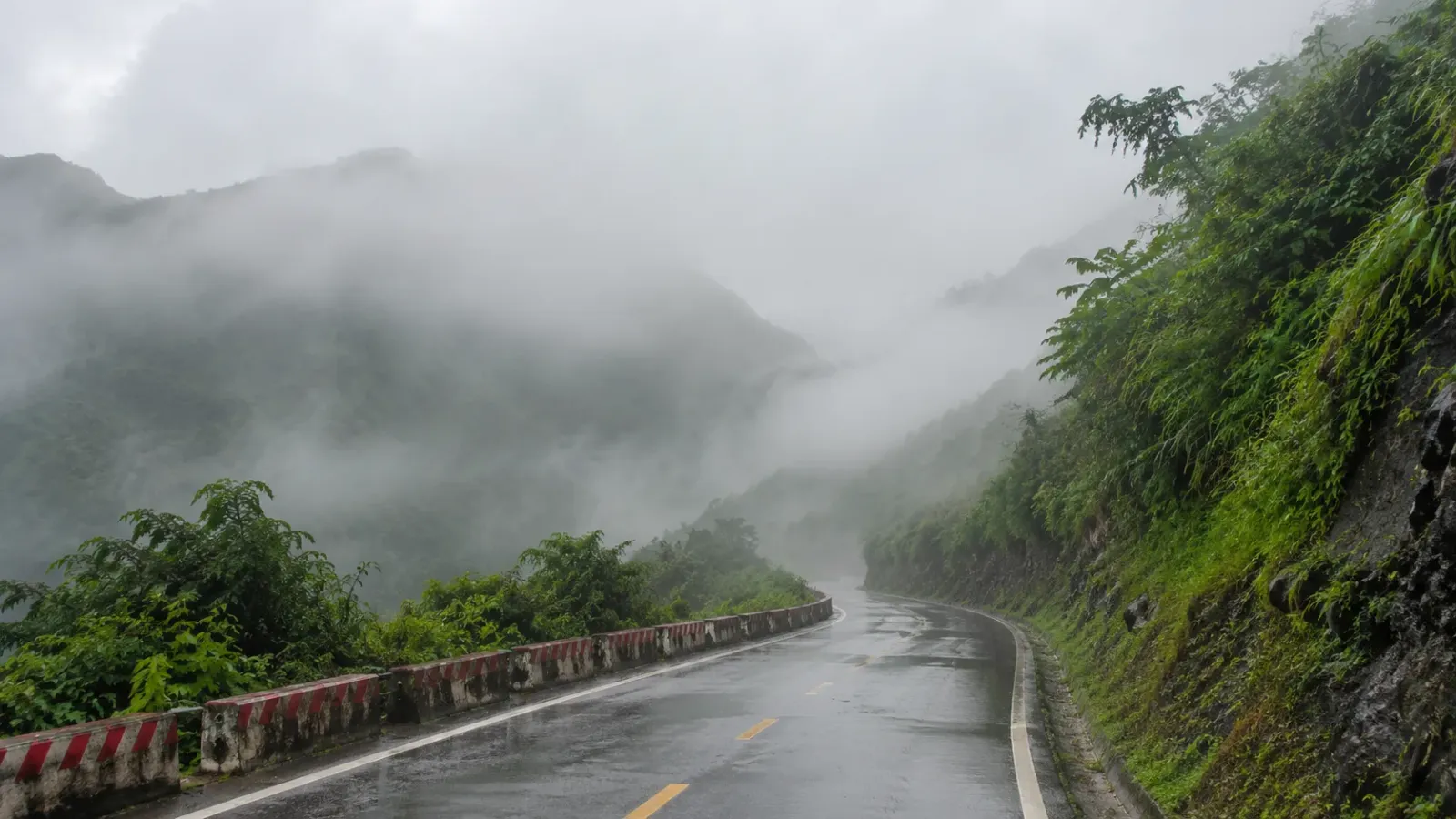
From September to December, mist and rain can hide the summit views, so keep a plan B.
Luggage and Practical Tips
- Go in daylight. The whole point of the pass, and of the train, is the view, so avoid late departures.
- Sort out your luggage. Ask how your bags will travel and how many you can bring. On a tour or in a private car they usually go in the vehicle, while Easy Rider operators usually send them ahead by car, but confirm the allowance before you book.
- Carry cash in small notes for entry fees, the elevator at the Marble Mountains and drinks along the way.
- Bring a light layer. The summit can be cooler and windier than Hue or Hoi An.
- Prepare for bends if you get car sick. The climb from Lang Co is steep and winding; the train is the gentler option.
- Check the drop-off. Some Hoi An hotels are near the beach rather than the old town, so make sure your transfer covers your address.
Going the Other Way: Hoi An to Hue
Everything above works in reverse. Private cars, Easy Riders and buses run north as well as south, and the heritage train also runs from Da Nang to Hue in the morning and the afternoon. The tour we list runs from Hue to Hoi An only, so if you are heading north, arrange a private car or one of the other options. Starting from Hoi An, you reach the Marble Mountains first and Lang Co after the pass, so plan your stops in that order.
Frequently Asked Questions
How long does it take to get from Hue to Hoi An?
A direct bus or van usually takes around three to four hours. The train to Da Nang takes about three to four hours, plus 45 minutes to an hour by road to Hoi An. A sightseeing day over the Hai Van Pass takes most of the day; our listed tour runs from about 07:30 to 15:30.
Does the bus from Hue to Hoi An go over the Hai Van Pass?
Direct buses and limousine vans normally use the Hai Van Tunnel, so you will not see the pass. If you want the pass road, choose a sightseeing tour, a private car or an Easy Rider tour, and confirm the route when you book.
Can you ride a motorbike through the Hai Van Tunnel?
No. Motorbikes cannot be ridden through the tunnel; riders normally use the pass road.
Is there a train from Hue to Hoi An?
Not directly, because Hoi An has no railway station. Take the train from Hue to Da Nang, a scenic coastal ride of about three to four hours, then continue to Hoi An by road.
Is there a fee at the top of the Hai Van Pass?
Driving over the pass road is free. Since 2 June 2026, the standard fee to visit Hai Van Gate at the summit has been 70,000 VND per visit for Vietnamese and international visitors. Children under 13 enter free, and a few other groups qualify for free or reduced entry.
Can you cross the Hai Van Pass in the rainy season?
Usually, yes, but from roughly September to December heavy rain can close the pass road for hours or longer, and mist can hide the views. Check conditions the day before and ask your operator how they handle closures. The tunnel route or the train may be alternatives, but severe weather can disrupt road and rail at the same time.
Whichever way you travel, the stretch between Hue and Hoi An is one of the most rewarding in central Vietnam. If you would like the day planned for you, the Hue to Hoi An Full-Day Tour covers the main stops in one guided journey. For a longer trip, see how this leg fits into our two-week Vietnam itinerary, or plan a private itinerary around your own dates.
Related articles

Water Puppet Shows in Hanoi vs Saigon: Where to Watch and How to Choose

Nha Trang Island Hopping 2026–27: Which Islands, Which Boat and What to Expect Now

Visiting the DMZ from Hue: Which Sites to See and How to Plan Your Day Trip

3 Days in Ho Chi Minh City: A Day-by-Day Itinerary for First-Time Visitors

Best Time to Visit Vietnam: A Month-by-Month Guide to the North, Centre and South

Central Vietnam Flood & Typhoon Season: When It Happens and How to Plan Your Trip

Cai Rang Floating Market 2026–27: What It’s Like Now and How to Visit