Central Vietnam Flood & Typhoon Season: When It Happens and How to Plan Your Trip
Vietnam Travel TipsBy Pham Phuong Anh
Heavy rain, river floods and the occasional typhoon shape central Vietnam from roughly September to December. This guide shows when the risk peaks in Hue, Hoi An, Da Nang, Phong Nha and the south-central coast, which trips stop first and how to keep your plans flexible without skipping the region.

Table of contents
Central Vietnam's wet season runs from roughly September to December, and October and November are usually the riskiest months. The main threat is not only typhoons but days of heavy rain that push rivers into low-lying streets in Hue and Hoi An, halt island boats and cave trips, and sometimes block mountain roads. Many disruptions ease within a few days, but severe or repeated floods can close roads and attractions for longer, so you can still travel here in autumn if you keep one or two spare days, favour sights that do not depend on boats or calm seas, and check official warnings before each move. This guide explains when the risk peaks in each destination, what tends to stop first and how to plan around it.
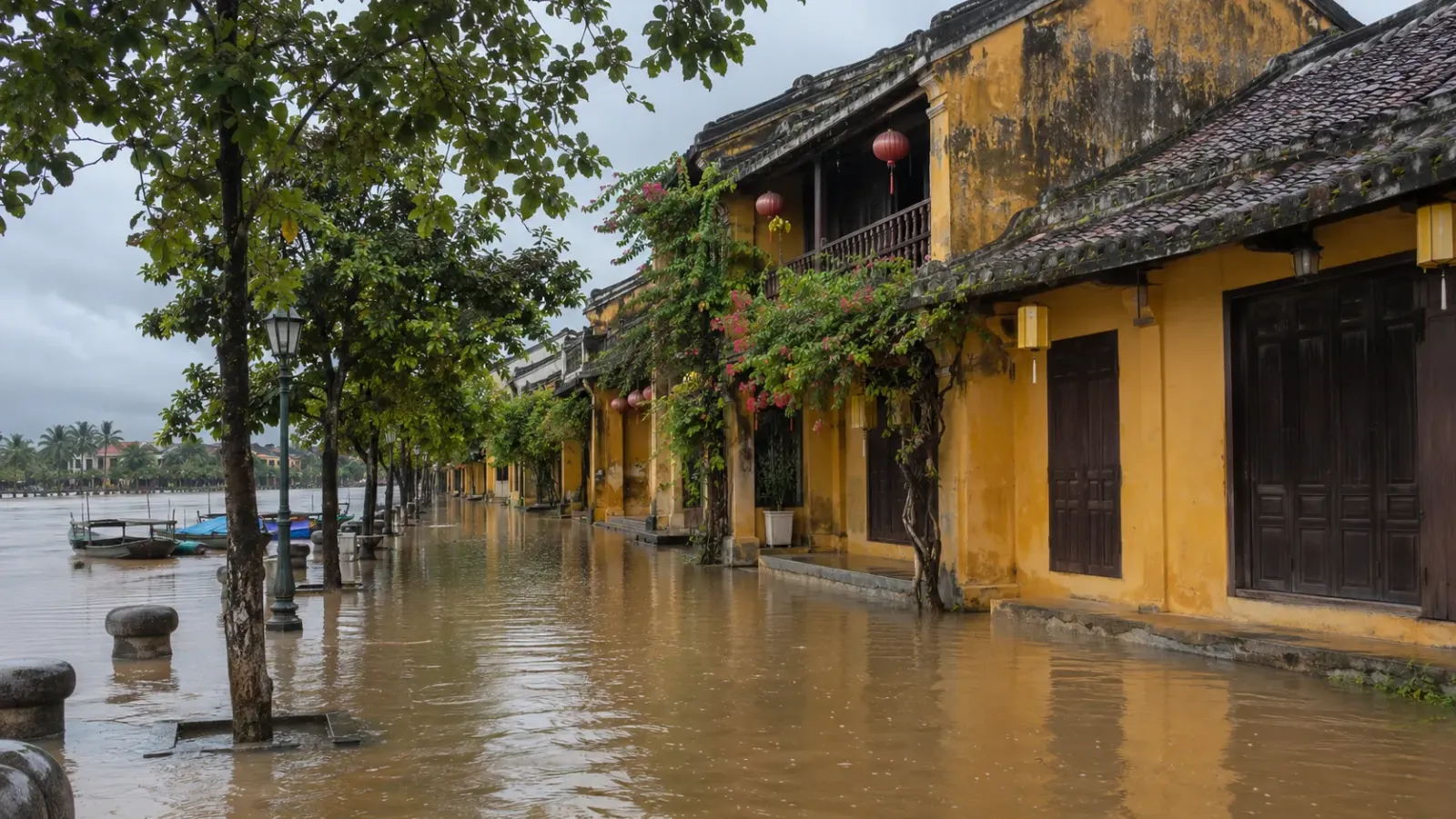
In the wettest weeks the Hoai River can spill into Hoi An's riverside streets; check local advice before visiting the Ancient Town.
The season at a glance
Central Vietnam's wettest months tend to arrive later than those of the north and south. Along the central coast, rain usually builds from September, peaks in October and November and eases through December, but the timing varies from Hue and Hoi An down to Nha Trang.
| Period | Hue and Phong Nha | Da Nang and Hoi An | Quy Nhon and Nha Trang |
|---|---|---|---|
| September | Rain building; early storms possible | Rain building; sea starts to get rougher | Rain can begin, especially around Nha Trang; conditions vary along the coast |
| October | Peak rain and flood risk | Peak rain and flood risk | Rain increasing |
| November | Peak rain and flood risk | Peak rain and flood risk; Hoi An's riverside is vulnerable | Peak rain and flood risk |
| December | Easing, but heavy rain still possible | Easing, with cooler, grey spells | Still wet, especially early in the month |
| January | Often cool and rainy; can stay damp into February | Often cool and cloudy, with lighter rain | Usually drier |
| Roughly February to August | Generally drier and more settled from late winter | Generally drier and more settled | Generally drier and more settled |
These are typical patterns, not fixed dates. Some years the first big flood arrives in early October; in others the worst rain falls in late November.
Floods vs typhoons: what actually disrupts a trip
Typhoons get the headlines. The UK government's travel advice describes Vietnam's tropical storm season as running from May to November, and on the central coast storms are most likely in October and November. When a storm approaches, authorities can ban boats from going to sea, close airports for a few hours and ask tourist sites to shut until it passes.
Heavy rain and flooding can disrupt trips even without a named storm. Cold air arriving from the north can combine with moist sea air to bring several hundred millimetres of rain to Hue and Da Nang in a few days. Rivers rise, and when reservoirs upstream release water, low-lying streets downstream can flood quickly. In early November 2026, for example, a cold-air rain event raised rivers from Quang Tri southwards and briefly flooded sections of Hoi An's riverside.
Floodwater can recede within a few days, but serious or repeated rain events may close roads and attractions for longer, and clean-up or safety checks can delay reopening. Extreme years do happen: in late October 2025, the Bach Ma station in the Hue area recorded 1,739.6 mm of rain in a single day, which Vietnamese authorities reported as a national one-day rainfall record, and parts of Hue and Hoi An were under water for several days. Watch flood warnings, not just storm tracks.
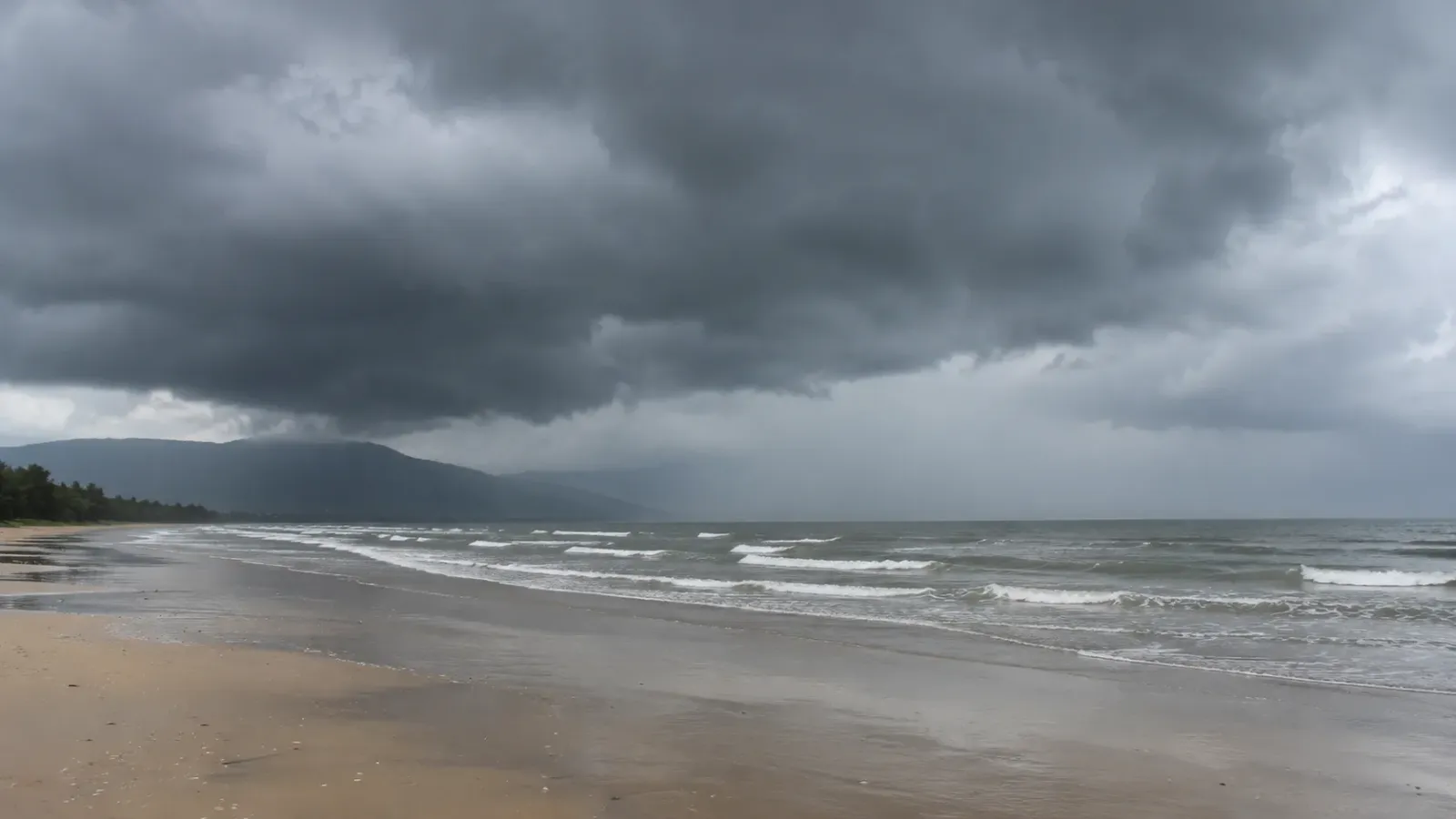
Heavy rain can disrupt travel on the central coast even when no typhoon is forecast.
How it plays out in each destination
Hue
Much of Hue is low-lying and laced with rivers and canals around the Perfume River, so it floods more readily than many visitors expect. When water rises, the Imperial City and the royal tombs may close for safety. In the floods of late 2025, Hue's heritage sites closed from 27 to 30 October, reopened on the morning of 31 October, then closed again on 3 November when floodwater rose once more. A reopening does not always mean the disruption is over.
Cafes, covered markets and indoor attractions can be good alternatives in light rain, as long as your area is not flooded. A guided walking food tour can work on a showery day when routes are open and the operator confirms it is running safely; during flood warnings, choose indoor options instead. See our Hue tours and day trips for more ideas.
Hoi An
Hoi An is the town most associated with floods. The Hoai River runs along the edge of the Ancient Town, and when it overflows, the riverside streets go under first: in November 2025, Bach Dang, Nguyen Thai Hoc and Nguyen Phuc Chu were among the streets flooded. In bigger events, water can spread further into the Ancient Town and surrounding neighbourhoods.
In November 2026, heavy rain briefly flooded sections of the Hoai River waterfront while visitors continued to explore streets that stayed dry. That does not make floodwater sightseeing safe. Avoid flooded streets, do not wade through floodwater and do not take leisure boat rides on flooded streets: in November 2025, Hoi An's local authorities banned such trips as dangerous. Follow local authorities and your hotel for access and evacuation advice.
- Choose accommodation on higher ground or away from the riverfront if you are travelling in October or November.
- Expect some shops and restaurants along the river to close while water is high, and lantern-lit evenings to be quieter.
- Water-based outings, such as the basket boats in the coconut forest on our Bay Mau and Hoi An tour, depend on water levels and may be rescheduled.
Our Hoi An tours and day trips page lists other options in and around the town.
Da Nang and Ba Na Hills
Da Nang is a practical base in the wet season. It has the region's main airport and is usually less affected by river flooding than Hoi An or Hue, although low-lying streets can still flood in big storms. If Hoi An's riverside is under water, staying in Da Nang and visiting Hoi An once the authorities reopen access is a sensible fallback.
Up in the mountains, Ba Na Hills depends on its cable cars, and cable car operations depend on wind and weather. The park has closed entirely ahead of typhoons in the past, for example for three days during Typhoon Noru in September 2022. On wet but calm days it may still operate, but cloud can hide the views from the Golden Bridge. See our Da Nang tours and day trips for more.
Phong Nha
In Phong Nha-Ke Bang National Park, river and stream activities are the first to stop when water levels rise. The Son River boat trip into Phong Nha Cave and the river activities at Dark Cave are the most sensitive, and dry caves such as Paradise Cave can also close when access is unsafe. Our guide to Paradise Cave vs Phong Nha Cave vs Dark Cave explains which cave is least affected by rain. Browse Phong Nha tours to compare options.
Quy Nhon and Nha Trang
Farther south, conditions vary along the coast. Nha Trang can already be wet in September, and rain across this stretch usually peaks from October into December. It can be severe: in November 2025, heavy rain caused record floods across the south-central coast, including in Quy Nhon and around Nha Trang. Island boat trips from Nha Trang run only when the sea is calm enough, so treat snorkelling days in this period as weather-dependent.
What tends to stop first
Not every activity is affected equally. In broad terms, anything on the sea or a river stops first, mountain routes come next, and city sightseeing on dry streets is the most resilient.
| Activity | Why it is sensitive | What usually happens |
|---|---|---|
| Island boat trips (Cham Islands, Nha Trang islands) | Small boats need calm seas | Departures are suspended whenever the authorities ban boats from going to sea, sometimes at short notice |
| River and cave trips (Phong Nha, basket boats) | Depend on river levels and currents | Paused while water is high; reopen after safety checks |
| Cable cars and mountain parks (Ba Na Hills) | Sensitive to strong wind and storms | May run on wet days; can close ahead of a storm |
| Mountain roads, Hai Van Pass and the railway | Landslides and rockfalls after heavy rain | Sections can close for hours or days; traffic is diverted where possible |
| Flights | Airports close during the strongest winds | Closures can last hours; cancellations and delays may continue afterwards |
| Heritage sites (Hue, Hoi An) | Low-lying grounds flood | Temporary closures, sometimes repeated, with reopening after water recedes and sites are cleaned |
A few practical notes on specific trips. The Cham Islands day tour still welcomes visitors outside the dry season, but crossings depend entirely on sea conditions; in July 2026, about 300 visitors were held on the island for nearly a day by a sea ban. The Hue to Hoi An scenic tour crosses the Hai Van Pass, where the road can close after landslides; if that happens, routes and stops may change. Airports tend to close for hours rather than days: as Typhoon Bualoi approached on 28 September 2025, Da Nang and Hue's Phu Bai airports suspended operations for several hours. Even so, cancellations, backlogs and road access can affect onward travel for longer.
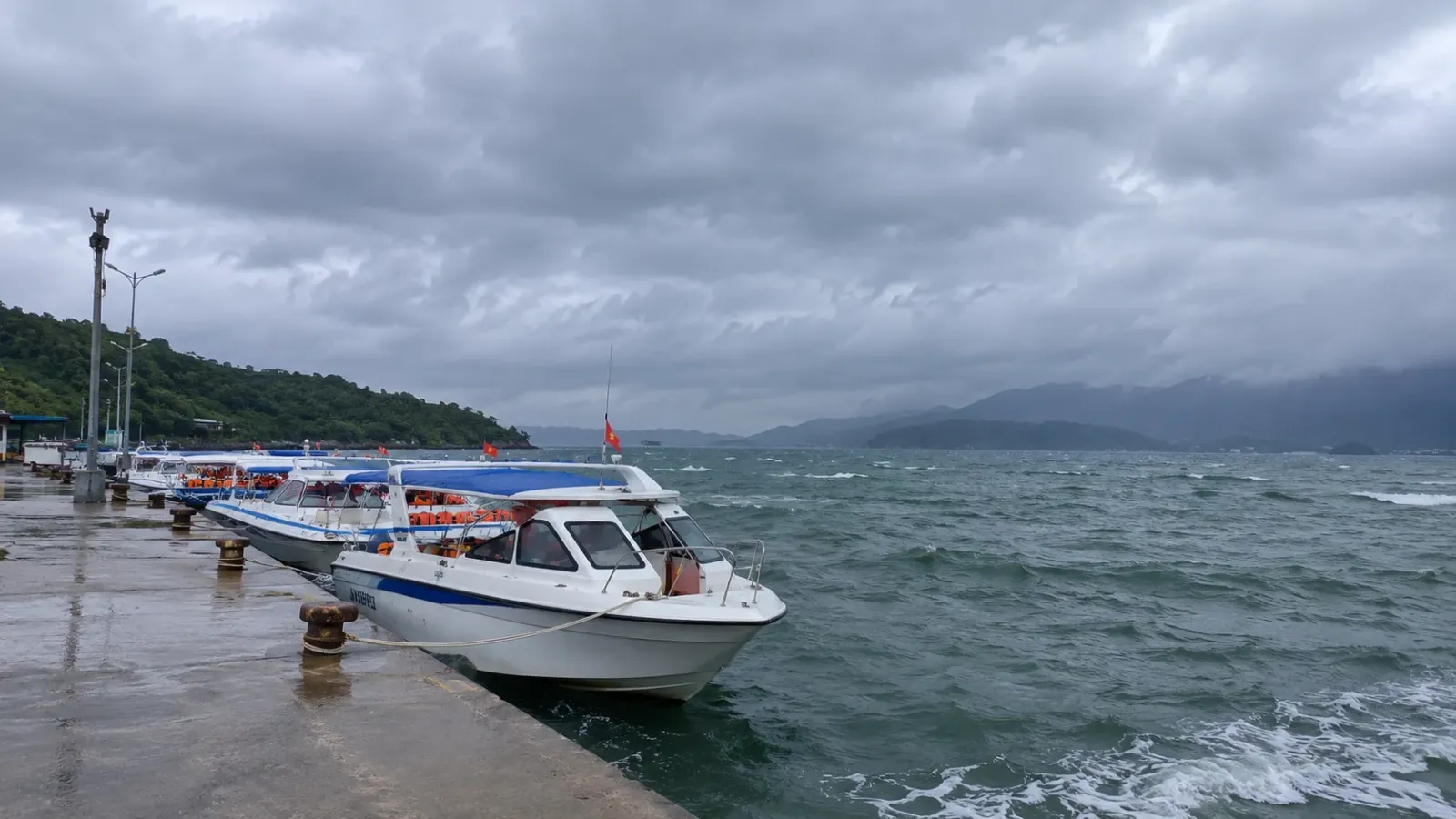
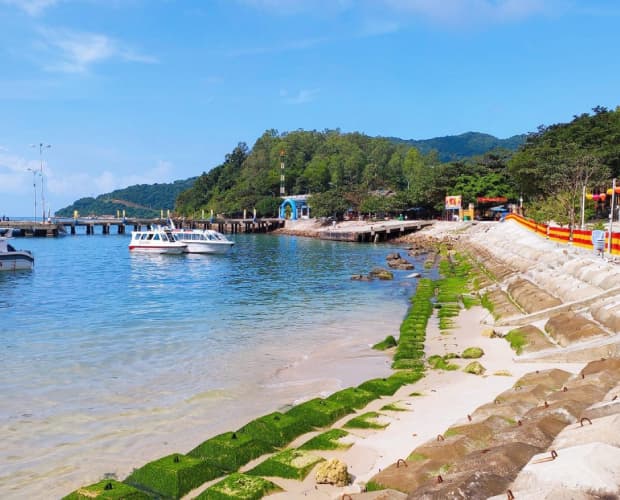
Island boats are often the first trips to stop when seas are rough or a sea ban applies.
Should you still go in October or November?
Yes, if your trip is built around culture, food and cities rather than beaches, and if your dates have some give. Autumn brings fewer crowds, green countryside and a moody, atmospheric side of Hue and Hoi An that many visitors enjoy. Plenty of days are simply cloudy or showery.
It is a weaker choice if:
- your main goal is beach time, swimming or snorkelling, especially on the islands;
- you have a tight schedule with tours, trains and flights on consecutive days;
- you would be travelling with very young children or anyone with limited mobility who could not easily cope with a sudden change of plan.
If you can choose your dates, roughly February to August is generally the more settled period on the central coast, although conditions vary by destination and calm seas are never guaranteed. Our two-week Vietnam itinerary shows how the seasons compare across the country, and our Tet guide covers travelling around the Lunar New Year in February.
How to build a flood-season itinerary
- Add one or two spare days in the centre. A buffer lets you move a boat trip or a heritage visit without losing it altogether.
- Put weather-dependent trips early. Schedule island, river and mountain excursions at the start of your stay, so there is time to rebook if they are cancelled.
- Choose flexible, well-placed hotels. Look for free cancellation and, in Hoi An and Hue, accommodation away from the riverfront.
- Leave slack around flights. Avoid same-day connections to international flights after a domestic leg in October and November.
- Use Da Nang as a fallback base. Its airport and road links make it easier to wait out a flood or reroute.
- Keep indoor options ready. Museums, cooking classes, covered markets, cafes and spas can fill a rainy day, provided they are open and the area around them is not flooded.
If you would rather have someone else juggle the logistics, we can build a tailor-made itinerary with buffer days and alternatives worked in from the start.
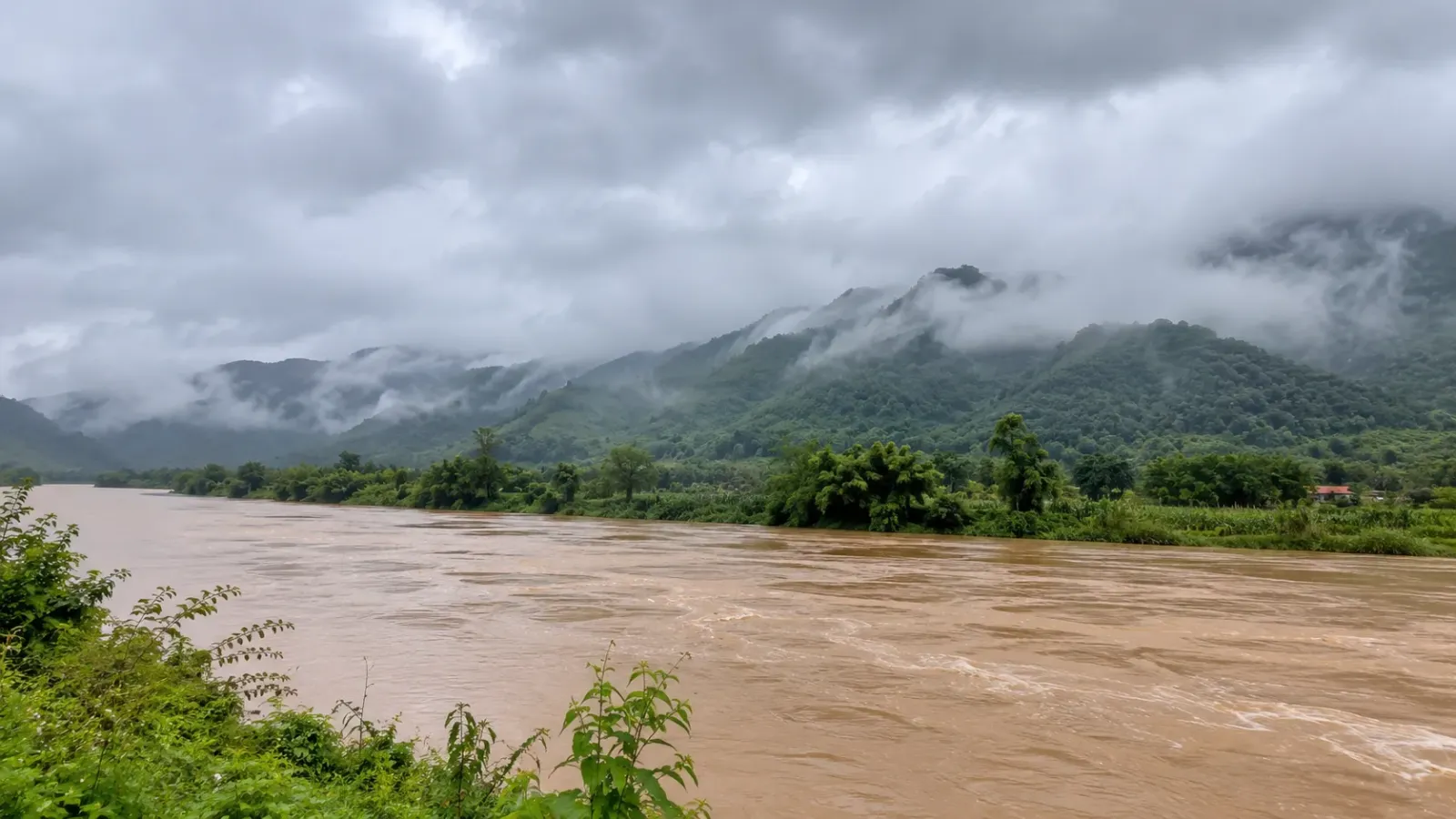
Rivers can rise quickly after heavy rain upstream, so build some slack into October and November routes.
Warnings, bookings and insurance
Where to check warnings
- Vietnam's National Centre for Hydro-Meteorological Forecasting (nchmf.gov.vn) issues official forecasts and storm and flood warnings. The site is mostly in Vietnamese, but a browser translation works well enough to read the headlines and local forecasts.
- For news in English, the UK government's travel advice points to VnExpress International and Vietnam News.
- Your hotel and your tour operator will often hear first when a site, road or boat service has closed.
Some floods develop quickly, so do not rely on a long warning period. If a storm or flood warning is issued for where you are staying, follow the instructions of local authorities, including any evacuation orders, avoid crossing flooded roads or fast-moving water, and stay away from riverbanks and the shoreline.
Bookings and insurance
Tours may be cancelled or changed when weather makes them unsafe. Cancellation terms are set for each tour and shown on the tour page and in your booking, and our cancellation policy explains how changes work. Check those terms before you pay, especially for boat and island trips.
Buy travel insurance that covers your whole itinerary and the activities you plan, and read what it says about natural disasters and missed connections. Arrange it when you book, rather than after a storm has been forecast.
2026 season update
Last checked: 16 November 2026.
- Vietnam's national forecasting centre expected fewer storms and tropical depressions than average over the East Sea (South China Sea) from October to December 2026, against the backdrop of a strong El Niño. From September to mid-November it recorded one storm and one tropical depression, and only the depression directly affected the mainland.
- Fewer storms did not mean no floods. A cold-air rain event in early November 2026 raised rivers from Quang Tri southwards and briefly flooded sections of Hoi An's riverside.
- For December 2026, forecasters still expect spells of moderate to heavy rain from Ha Tinh to Hue and along the south-central coast, with fewer storms than average through early 2027.
We will update this section as the season develops. Always rely on the latest official forecast rather than a seasonal outlook.
What to pack
- A lightweight rain jacket or poncho, plus a compact umbrella for town.
- Quick-drying sandals with good grip, and a spare pair of shoes.
- A dry bag or waterproof phone pouch, and a power bank in case of power cuts.
- A light jumper or fleece for cool, damp evenings, especially in Hue and at Ba Na Hills.
- Insect repellent and any regular medication, with a few days' spare supply.

Illustrative packing list for the wet season: rain cover, grippy sandals and a way to keep your phone dry.
FAQ
Is it safe to visit Hoi An in November?
It can be, if you stay flexible and cautious. October and November are among the highest-risk months for flooding around Hoi An's riverside. Some floods develop quickly, so monitor official alerts, stay away from flooded streets and the riverfront, follow local instructions, including evacuation orders, and keep a spare day in your plans.
How long do floods usually last?
There is no fixed answer. Floodwater can recede within a few days, but serious or repeated rain events can close roads and attractions for longer. In 2025, Hue's heritage sites closed from 27 to 30 October, reopened on 31 October and closed again on 3 November as floods returned.
Will my Cham Islands boat trip run in the rainy season?
It may, but there is a real chance of cancellation. Boats to the Cham Islands only run when the sea is safe and no sea ban is in place, so treat any island day from September to December as weather-dependent and keep a back-up plan.
Do flights get cancelled during typhoons?
Some do. Airports in the region can suspend operations during the strongest winds, often for hours, and airlines then reschedule. Knock-on delays can last longer, so leave time between a domestic flight and an onward international departure.
Is December a better time to visit central Vietnam?
Generally, yes. Rain usually eases through December, although heavy spells are still possible, particularly early in the month and on the south-central coast. Days are cooler and often grey, so it suits sightseeing more than beach time.
When is the driest time to visit central Vietnam?
Roughly February to August is generally the most settled period on the central coast, although Hue can stay damp into February and local conditions vary. Spring tends to be milder, while summer is hotter and better suited to the beach.
Ready to plan? Browse our Central Vietnam tours and day trips and choose the trips that suit your dates.