
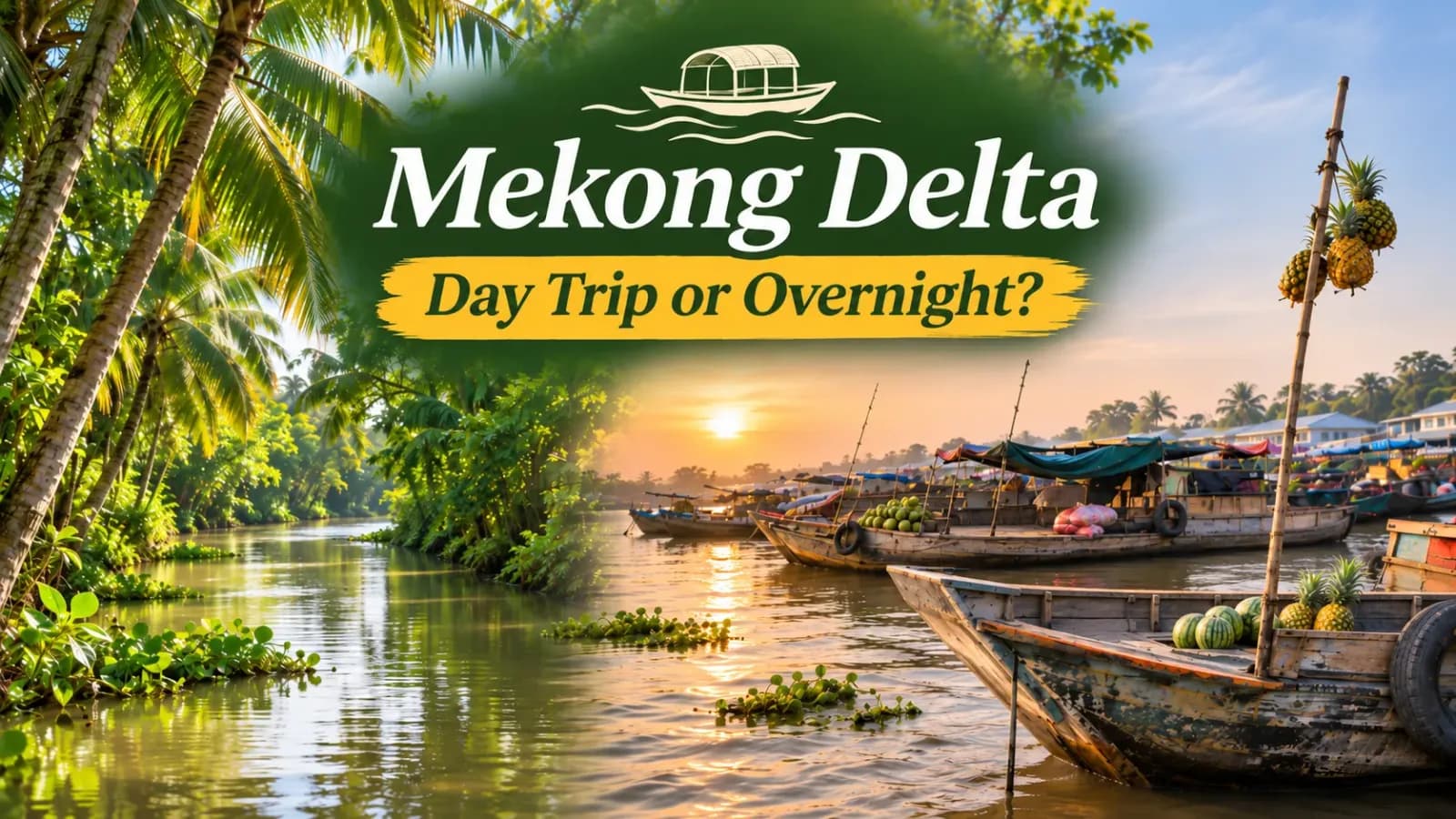
Cai Rang Floating Market 2026–27: What It’s Like Now and How to Visit
Mekong Delta Tours & Day TripsBy Pham Phuong Anh
Cai Rang is still the Mekong Delta’s best-known floating market, but it is smaller and busier with tourist boats than older photos suggest. This guide explains when to arrive, how to reach it by boat from Ninh Kieu Wharf, what to eat on the water and how to check fares and stops before you pay.

Table of contents
Photographs of Cai Rang Floating Market usually show a river packed with wooden boats piled high with pineapples, pumpkins and watermelons. The market is still there, and it is still the best-known floating market in the Mekong Delta, but a morning on the water today looks different from many of those older pictures. Knowing what to expect, and when to arrive, makes all the difference.
This guide is for travellers planning a stay in Can Tho, the delta's largest city, or weighing up whether the market is worth the journey from Ho Chi Minh City. Based on reporting available in November 2026, it covers what the market is like now, the best time to be on the water, how to get there by boat, what to eat and buy, and why the smaller market at Phong Dien is no longer a reliable alternative.
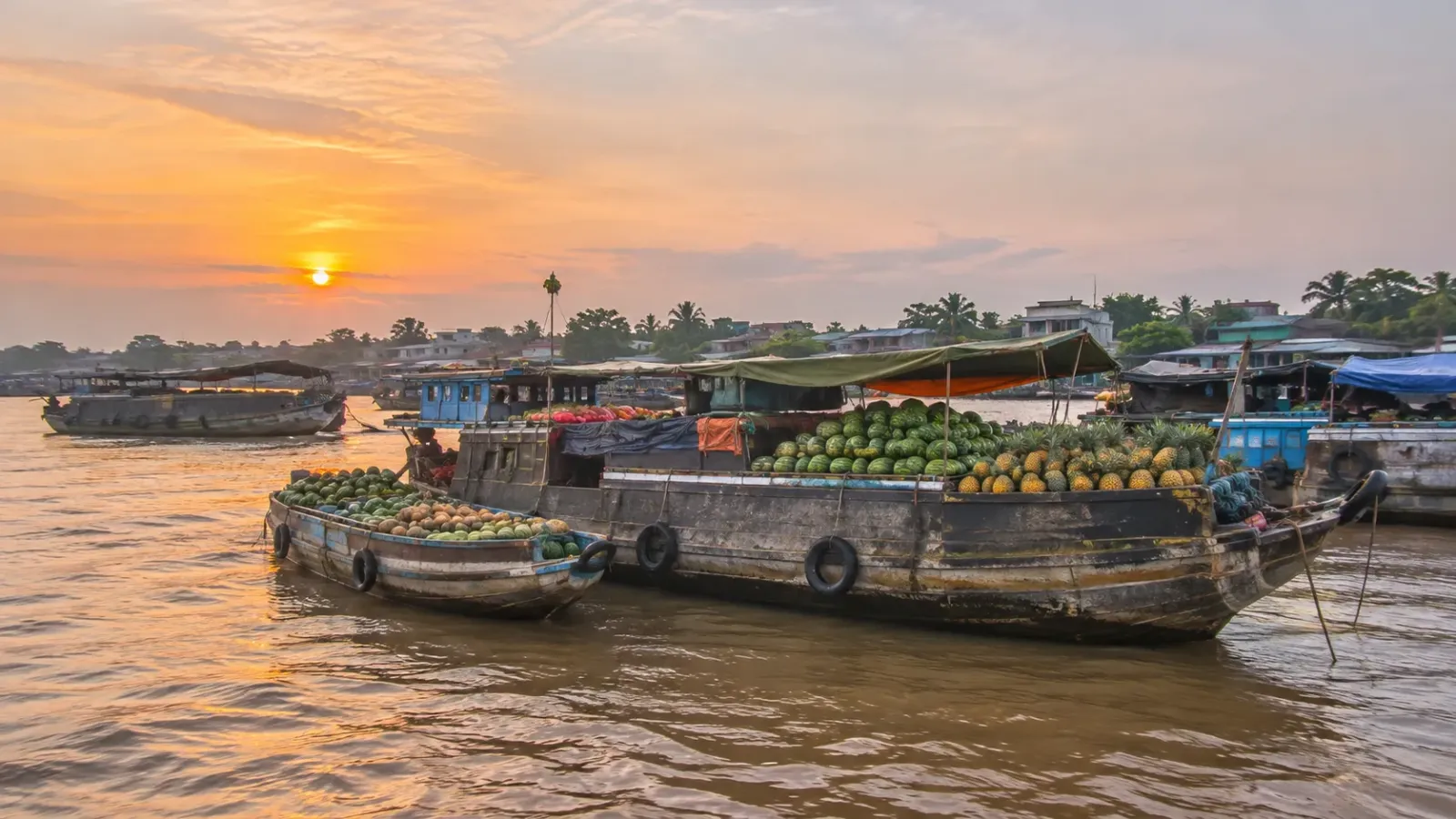
Large wholesale boats anchor mid-river while smaller boats come alongside to buy.
Cai Rang at a Glance
If you want the short version: go early, go by boat, and treat Cai Rang as a working river market that now shares its water with plenty of visitors. Arrive while trading is still under way, and confirm the fare and the stops included before you set off.
| Topic | What to know |
|---|---|
| Where | On the Can Tho River, a branch of the Hau River, in Cai Rang ward, about 6 km from downtown Can Tho |
| Typical trading period | Usually around 4am to 9am every day; trading may wind down earlier |
| Best viewing window | Early morning, roughly 5am to 7am, around first light |
| Getting there | About 30 minutes by boat from Ninh Kieu Wharf in central Can Tho |
| Boat fares | Vary by operator, boat and route; in August 2026 one operator quoted VND100,000 per person for a shared market visit |
| Heritage status | National Intangible Cultural Heritage of Vietnam since 2016 |
What the Market Is Like Now
A Working Market, Smaller Than the Photos
Cai Rang grew up roughly a century ago as a trading hub for farm produce, at a time when rivers and canals were the main way to move goods around the delta. Large boats from Can Tho and neighbouring provinces anchor in the river and sell in bulk, while smaller boats come alongside to buy. In 2016 Vietnam's Ministry of Culture, Sports and Tourism added the market to the national list of intangible cultural heritage.
The market has shrunk considerably. As roads improved, trucks took over much of the work that river boats once did, and fewer traders now come by water. Tuoi Tre newspaper has reported that the market once drew around 600 boats at its peak, while a count in July 2024 found just over 100 trading boats, outnumbered by small boats carrying tourists. Numbers vary from morning to morning and by season, so treat any figure as a rough guide.
What hasn't changed is the way the market works. Traders still hang a sample of what they sell from a tall pole at the bow, so buyers can spot a boat full of sweet potatoes or cabbages from across the river. If you come expecting a living river market rather than the crowded scenes of older postcards, Cai Rang is still a rewarding way to start a day in Can Tho.
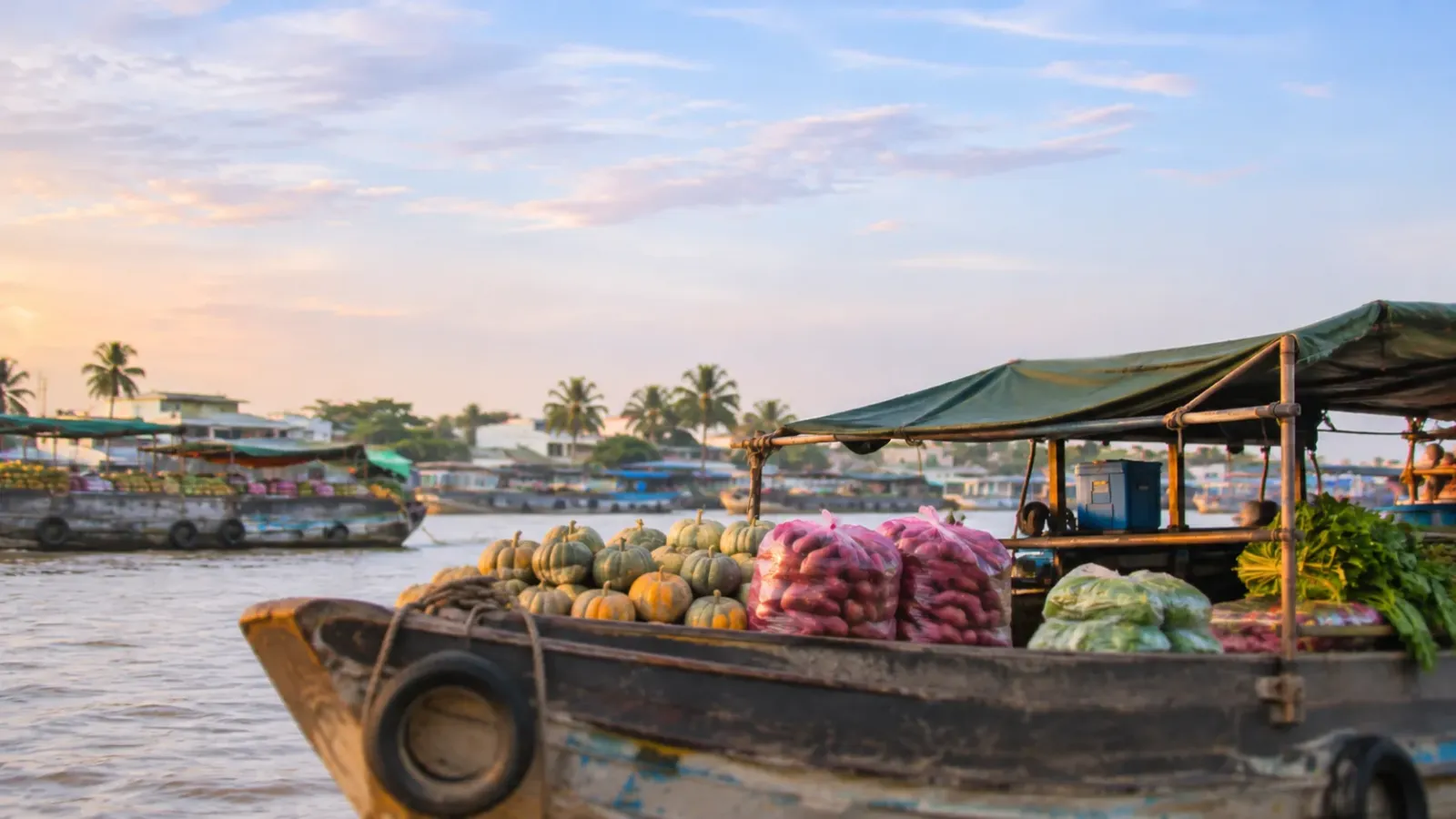
Each boat hangs a sample of its cargo from a tall pole, known locally as a cây bẹo.
What Changed in 2026
Cai Rang was in the local news throughout 2026, and a few developments matter to visitors:
- Published fares. Ahead of the National Day holiday at the end of August 2026, Can Tho's tourism authorities instructed tour businesses and the management boards of Ninh Kieu Wharf and An Binh market wharf to display their prices and sell at the listed rates. That is an instruction rather than a guarantee that every boat follows it, so always confirm the fare yourself.
- A pier closed to pick-ups. In February 2026, the Cai Rang ward authorities stopped passenger pick-ups and drop-offs at the floating-market pier from 22 February until further notice, after complaints about inflated fares. The notice applied to that pier, not to the market. Ask your hotel or operator which boarding points are currently authorised.
- Closer oversight. In September 2026, after a visitor's complaint about a disappointing private boat trip spread online, Can Tho's tourism authorities said they had met with the operator involved, called for corrective measures and asked local officials to strengthen oversight.
- Plans to protect the market. Local authorities are drafting a new plan to preserve and develop the market. Plans like this can take time and may change, so check local updates closer to your visit.
When to Go
Time of Day
Trading usually starts at around 4am and winds down by about 9am, with the most activity in the early morning, roughly 5am to 7am, around first light. Because the boat ride from Ninh Kieu Wharf takes about 30 minutes, leaving the wharf at around 5am to 5:30am puts you on the water while the market is usually at its liveliest. Arrive after about 8am and you are likely to see far fewer trading boats and more boats carrying visitors.
Early starts also bring the best light for photographs and cooler air on the river, which is worth having in the delta's heat.
Season and Weather
The market runs all year. The dry season, from about December to April, usually brings sunny mornings and the least rain, and is the most popular time to visit the Mekong Delta. The rainy season, from about May to November, often brings showers rather than all-day rain, along with greener scenery. Many local guides suggest the middle of the year, around June to August, for a wider choice of tropical fruit on the boats, though what is on sale depends on the harvest.
Tet and Public Holidays
Around Tet 2027 and other long public holidays, such as National Day in early September, domestic demand for boats and hotels in Can Tho may be higher. If you are travelling at these times, reserve your accommodation and boat in advance.
How to Get There
From Ho Chi Minh City
Can Tho is roughly 170 km from Ho Chi Minh City, around three to four hours by road depending on traffic and stops. A standard same-day trip from Ho Chi Minh City is unlikely to reach the market during its busiest hours, so the practical way to see it is to spend the night in Can Tho and head out on the river the next morning. If you are still deciding whether to visit the Mekong Delta on a day trip or stay overnight, our comparison guide sets out the timings of each option.
A note on place names: since 1 July 2025, Can Tho City has also covered the former Soc Trang and Hau Giang provinces, so you may see older names on maps and signs.
By Boat from Ninh Kieu Wharf
Most visitors reach the market by boat from Ninh Kieu Wharf, Can Tho's riverfront promenade. The ride downriver takes about 30 minutes and is part of the experience, passing riverside houses, moored boats and the city waking up. Look for the posted fares, confirm the operator, the route and what is included, and agree the total before you board.

The boat ride from Can Tho's riverfront to the market takes about 30 minutes.
Shared Boat, Private Boat or Guided Trip
- Shared boat: usually the cheapest way to go, but you may leave when the boat fills and follow a set route.
- Private boat: priced per boat rather than per person, so it can suit families and small groups who want to leave earlier or linger at the market.
- Guided trip: can cost more but adds context, a fixed departure time and stops after the market. Booking through your hotel or a tour operator also avoids negotiating at the wharf.
Departure times, routes, minimum passenger numbers, food and stops differ between operators, so check the details before you pay. Avoid accepting offers from people who approach you on the street or near Cai Rang Bridge, where visitors have complained about touts and unposted prices.
What to See, Eat and Buy on the Water
Reading the Poles
Look up as you weave between the large boats. The produce tied to each tall pole tells you what the boat is selling, from pumpkins and taro to onions and seasonal fruit. Most of the trade is wholesale, so these boats sell by the sack or the boatload rather than the piece, but some will sell a little fruit to visitors.
Breakfast and Coffee Afloat
Small boats move through the market selling breakfast and drinks to traders and visitors alike. A bowl of noodle soup handed across from a floating kitchen, or an iced coffee passed from a neighbouring boat, is one of the simple pleasures of a morning at Cai Rang. Many morning boat trips build breakfast or coffee on the water into the visit, so check whether yours does.
Since late August 2026, Can Tho's Culture and Arts Centre has also staged a weekly programme of đờn ca tài tử, the traditional chamber music of southern Vietnam, performed on boats at the market on Saturday mornings. Schedules can change with the programme and the weather, and the music is not part of every boat trip.
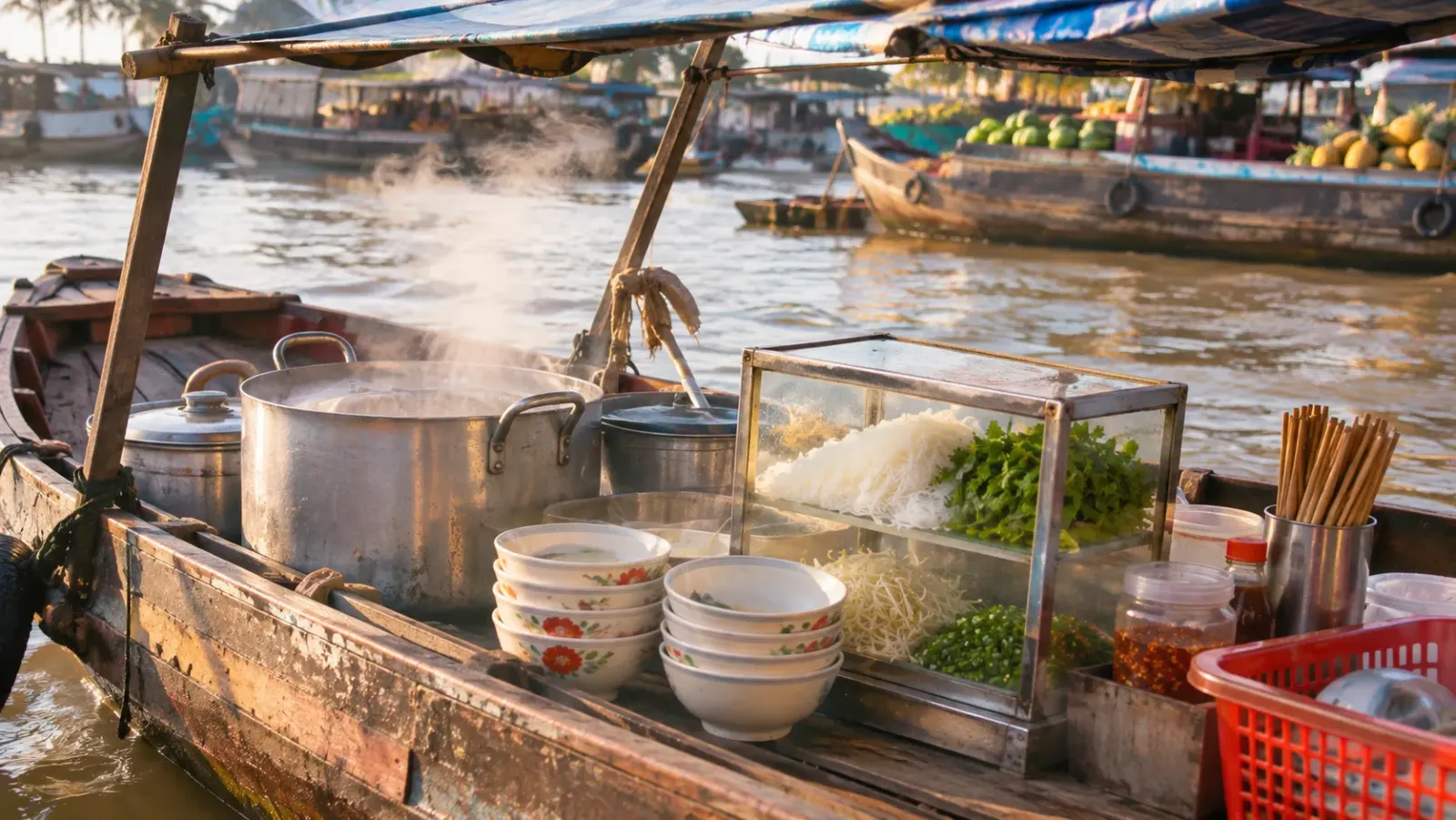
Small food boats may serve noodle soup and coffee to traders and visitors during the morning.
After the Market: Noodle Workshops and Orchards
Many boat trips continue to a traditional rice-noodle workshop beside the river, where you can watch rice being ground, spread into thin sheets, dried and cut into noodles. Others add a walk through the fruit orchards on the islands and banks around Can Tho, which makes a pleasant contrast after the bustle of the market.
Etiquette and Practical Tips
- Agree the price first. Check the posted fare, confirm what is included and pay the agreed amount only.
- Confirm the stops and photography. Before you pay for a private boat, ask which stops are included and whether filming or photography is fine during the trip.
- Carry small notes. Food boats and fruit sellers deal in cash, and small change makes buying easier.
- Board safely. Use an authorised boarding point, wear the life jacket provided, keep your hands inside the boat and ask the crew for help when stepping between boats or onto pontoons.
- Ask before photographing people up close. Many traders live aboard their boats, so a smile and a gesture go a long way.
- Keep the river clean. Hold on to wrappers and cups until you are back on land.
- Dress for the weather. Bring a hat and sunscreen, and a light rain jacket in the wet season.
- Buy something. A coffee, a bowl of noodles or some fruit is the most direct way to support the people who keep the market going.
Cai Rang or Phong Dien?
Phong Dien, further up the Can Tho River at a junction roughly 17 km from the city centre, was once known as a smaller, quieter floating market. Trading there has declined sharply. In early 2025 Al Jazeera described it as having shrunk to fewer than a dozen boats and largely dropped from tour itineraries, and at least one local operator now says it no longer runs as a floating market at all.
For most travellers, Cai Rang is the more dependable choice. If you are curious about Phong Dien, ask a current local operator whether anything is trading that morning before you book a boat, and check whether you would still pay the full fare if there is little to see.
Seeing Cai Rang on a VietMediaTravel Trip
Our two-day Cai Be and Can Tho trip spends the night in Can Tho. On day two, after breakfast at the hotel at 06:00, the boat leaves for Cai Rang at 07:00, followed by a traditional noodle workshop, the Khmer Buddhist Munir Ansay Pagoda and the fruit orchards of Con Son before the drive back to Ho Chi Minh City, arriving around 17:00 to 17:30.
Because the boat is scheduled to leave at 07:00, you may still see some trading, but you will miss the earliest and usually busiest period. If being on the water at first light matters to you, confirm the morning schedule before booking, or ask us to plan a private itinerary around an earlier start.
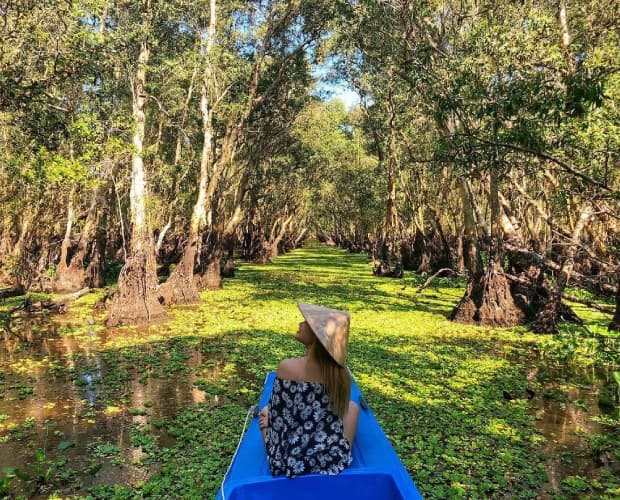
With more time, the three-day route via Chau Doc and Tra Su Forest also visits Cai Rang on day two before continuing to the flooded cajuput forest of Tra Su and a night in Chau Doc.
Frequently Asked Questions
Is Cai Rang Floating Market still worth visiting?
Yes, if your expectations are realistic. There are far fewer trading boats than in its heyday and many tourist boats, but it is still a working wholesale market, and a sunrise boat ride with breakfast on the water is a memorable way to see daily life in the delta.
What time should I arrive?
Aim to be on the water between about 5am and 7am. As the boat ride from Ninh Kieu Wharf takes around 30 minutes, leave the wharf at about 5am to 5:30am. Trading usually winds down by around 9am, and sometimes earlier.
Can I see Cai Rang on a day trip from Ho Chi Minh City?
It is difficult. Can Tho is around three to four hours from Ho Chi Minh City by road, and a standard same-day departure is unlikely to reach the market during its busiest hours, so staying overnight in Can Tho is the practical choice.
How much does a boat to the market cost?
Fares vary by operator, boat type and route. In August 2026 one operator quoted VND100,000 per person for a shared market visit, while another listed VND2.25 million per trip for a 12-passenger twin-hull boat leaving from its own wharf. These are examples from individual operators, not standard fares. Check the current price, departure point and inclusions, and agree the total before you board.
Does the market open at night?
No. Trading takes place in the early morning. City leaders discussed developing the market for day-and-night activity in January 2026, but this was a proposal and had not been put in place as of November 2026.
Cai Rang rewards an early alarm and realistic expectations. Pair it with a night in Can Tho and a slower day in the countryside, or browse our Mekong Delta tours to find a route that fits your plans.


Related tours
Mekong Delta: Cai Be, Can Tho, Chau Doc & Tra Su Forest 3-Day Tour
Departs from Ho Chi Minh city
from$165