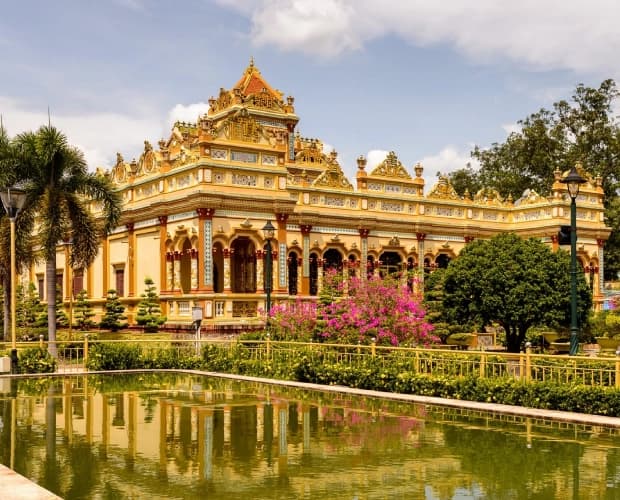
Mekong Delta Day Trip or Overnight? How to Choose the Right Trip from Ho Chi Minh City
Mekong Delta Tours & Day TripsBy Pham Phuong Anh
Not sure whether to see the Mekong Delta in a day or stay the night? This guide compares real departure and return times, what a day trip can and cannot reach, what an overnight in Can Tho adds at dawn, when a third day to Chau Doc makes sense and which option suits your pace and interests.

Table of contents
Many visitors to Ho Chi Minh City set aside time for the Mekong Delta, the vast river region that Vietnamese people often call Miền Tây, “the West”. Its fruit orchards, coconut-lined canals and riverside villages start about an hour and a half’s drive from the city, so a day trip is easy to fit in. Yet many travellers wonder whether a single day does the delta justice, or whether it is worth staying the night.
The honest answer depends on what you want to see and how much time you have. This guide compares a day trip, a two-day trip with a night in Can Tho and a three-day route to Chau Doc, using the actual timings of our tours from Ho Chi Minh City, so you can choose with realistic expectations.
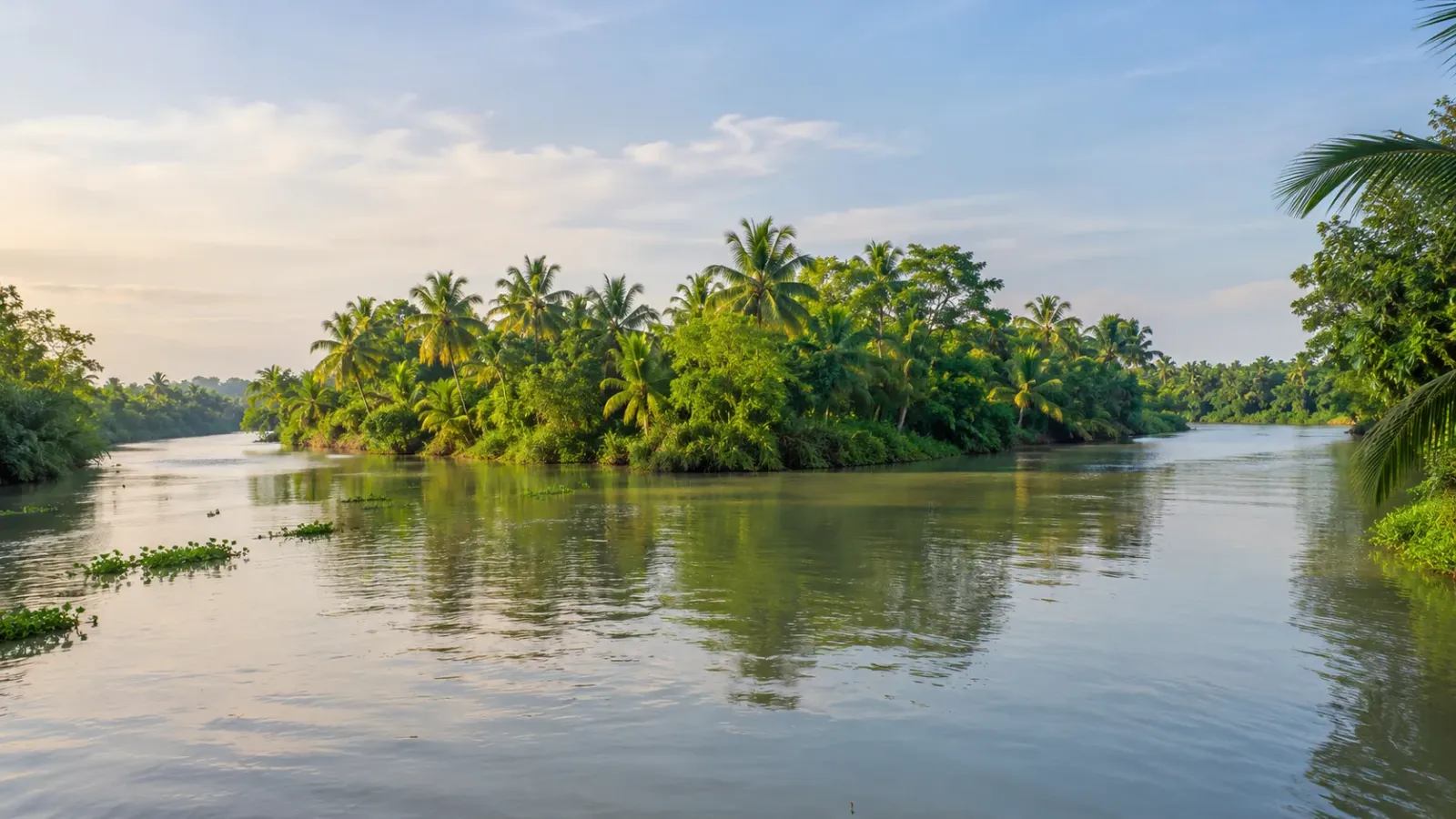
The Mekong splits into broad channels and islands in southern Vietnam, a landscape best explored by boat. Illustrative image.
Day Trip or Overnight: The Short Answer
If you have only one free day, a day trip to My Tho, Ben Tre or Cai Be is a rewarding introduction to orchards, canals and river life. If seeing a working floating market matters to you, or you would rather not spend a large part of one day in a vehicle, stay at least one night in Can Tho. Add a third day if you want to reach Chau Doc and Tra Su Forest, or if you plan to continue to Cambodia.
Timings below reflect the VietMediaTravel itineraries linked in this guide and may vary with traffic and the tour you choose.
| Feature | Day trip | 2 days, 1 night | 3 days, 2 nights |
|---|---|---|---|
| Where you go | My Tho and Ben Tre, or Cai Be | Cai Be, then Can Tho | Cai Be, Can Tho, Tra Su Forest and Chau Doc |
| Typical timings | Pickup 07:00–08:00, back around 16:30–18:30 | Pickup 07:00–07:30 on day 1, back around 17:00–17:30 on day 2 | Pickup 07:00–07:30 on day 1, back around 17:30–18:00 on day 3, or on to Phnom Penh |
| Floating market | No busy floating market; the Cai Be route passes the site of its former wholesale market | Boat trip to Cai Rang Floating Market on the morning of day 2 | Cai Rang Floating Market on day 2 |
| Where you sleep | Your hotel in Ho Chi Minh City | A hotel in Can Tho | Hotels in Can Tho and Chau Doc |
| Best for | Short stays and a first taste of the delta | Floating markets and a more relaxed pace | Wetland scenery, Chau Doc’s culture and travellers heading to Cambodia |
What a Mekong Delta Day Trip Covers
A Typical Day from Ho Chi Minh City
Day trips leave early. On our tours, pickup from eligible District 1 hotels or a central meeting point is usually between 07:00 and 08:00, and the drive to My Tho takes about an hour and a half, depending on traffic. Once you arrive, the day moves at a steady pace: a boat ride on the river, stops at an orchard and a local workshop, a short ride in a hand-rowed sampan and a riverside lunch.
Most of our day trips arrive back in the city between about 16:30 and 18:30. That leaves roughly four and a half to six hours in the delta itself, with around three and a half to four and a half hours on the road in total, or more in heavy traffic.
Where Day Trips Go: My Tho, Ben Tre and Cai Be
The classic day trip heads to My Tho, on the Tien River, and across the water to Ben Tre, known for its coconut groves. A typical route visits Vinh Trang Pagoda, cruises past the four islands named after the Dragon, Unicorn, Phoenix and Tortoise, and stops on Unicorn Island for tropical fruit and a performance of Đờn ca tài tử, the southern folk music that UNESCO inscribed on its Representative List of the Intangible Cultural Heritage of Humanity in 2013. Many routes add a honey bee farm, a coconut candy workshop and a sampan ride through canals shaded by water coconut palms. Our small-group My Tho and Ben Tre day trip follows this pattern, with optional cycling around Tan Thach village or time in a hammock after lunch.
Cai Be, further upriver, offers a different kind of day. Our Cai Be and Tan Phong Island day trip combines a boat trip on the Tien River with a hands-on cooking class, village cycling and a visit to Ba Kiet’s Ancient House. It returns later, at around 18:00 to 18:30, in exchange for more time in the countryside.
What a Day Trip Usually Can’t Include
The floating market in so many photos of the Mekong Delta is usually Cai Rang, near Can Tho, and it is busiest in the early morning. That makes it very hard to reach in time on a standard day trip from Ho Chi Minh City. Cai Be once had a well-known floating market too, but local authorities reported in 2024 that it no longer operates, as growers and traders have moved to road transport. Day trips through Cai Be show you the river and the market’s former site rather than a busy trading hub.
A few operators run same-day trips to Can Tho with a very early departure. They can work if you are short of time, but expect a long day with much of it spent in a vehicle.
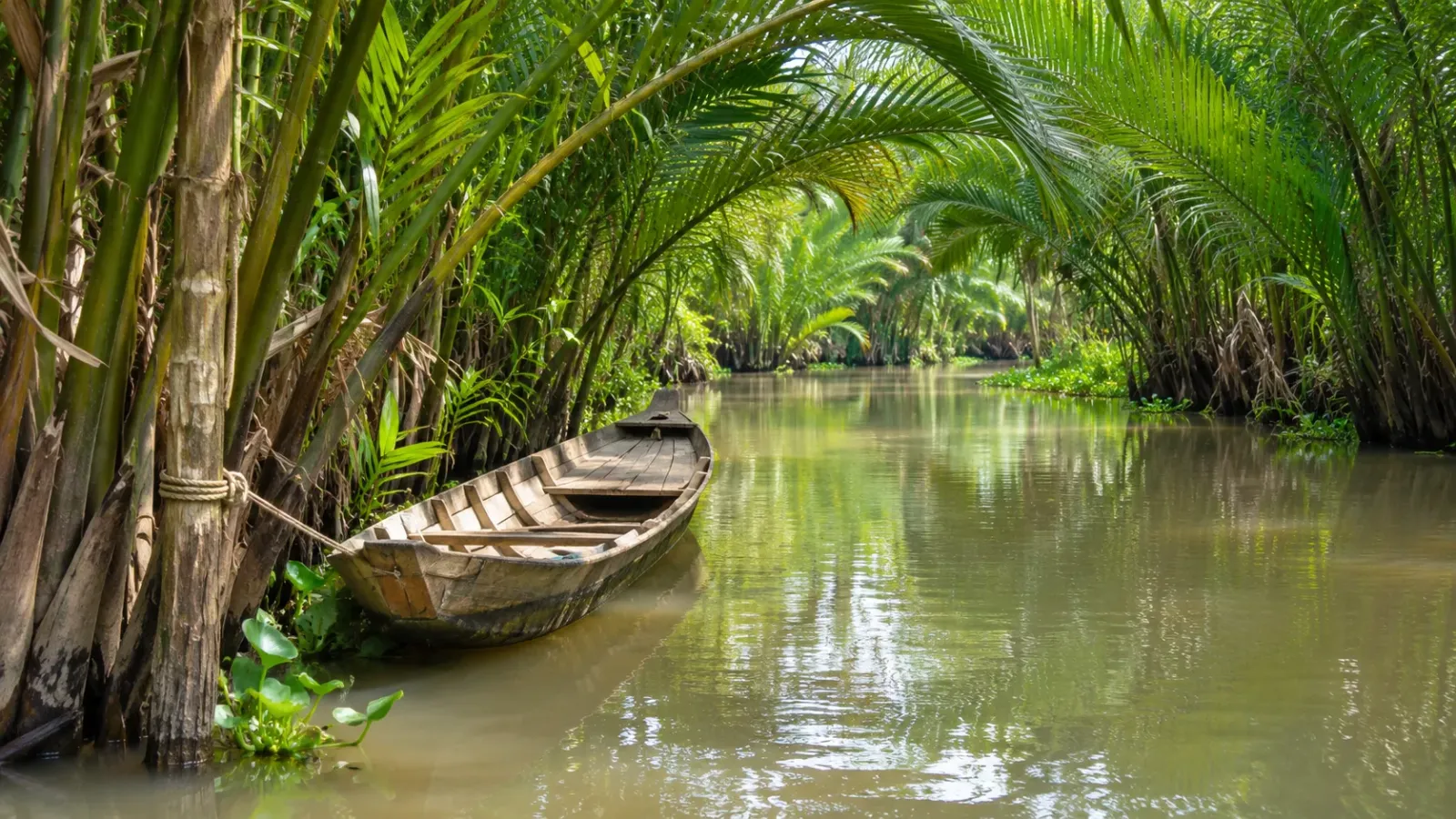
Hand-rowed sampan rides through narrow, palm-shaded canals are part of most of our Mekong Delta day trips. Illustrative image.
What an Overnight Stay Adds
A Floating Market at Dawn
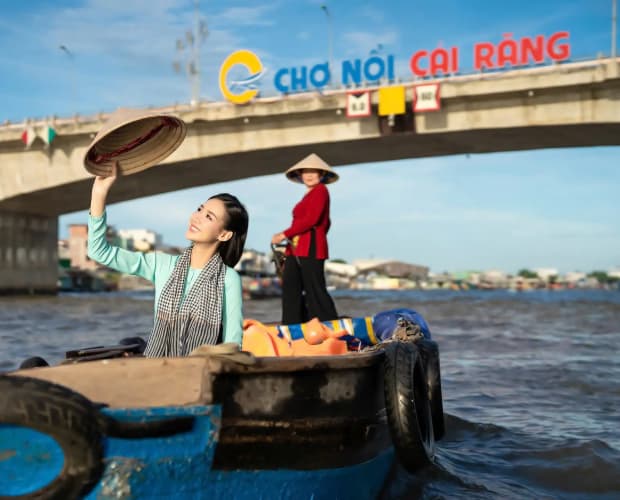
Staying the night puts you within easy reach of Cai Rang Floating Market in Can Tho, which Vietnam added to its list of National Intangible Cultural Heritage in 2016. Trading begins before sunrise, and the market is generally at its busiest from around 5am to 7am, thinning out after about 8am. Boats loaded with fruit and vegetables gather on the Can Tho River, and traders hang samples of what they sell from tall poles so buyers can spot them from a distance.
It helps to set realistic expectations. Cai Rang is still a working market, but it is smaller than in older photographs, and tourist boats are now a visible part of the morning. On our two-day tour, the boat leaves at 07:00 after breakfast, while trading is still under way. Because the scheduled departure is at 07:00, travellers hoping to see the market at its earliest and busiest should confirm the morning schedule before booking. The boat trip is included on our tour; if you arrange an extra boat independently, agree the price before you board.
Can Tho After Dark and Before Breakfast
Can Tho is the delta’s main city. Dinner is not included on our two-day tour, which leaves the evening free to stroll along Ninh Kieu Wharf on the riverfront and try local food. The next morning, when the delta is at its liveliest, you are already there rather than on the road. Staying overnight also spreads the driving over two days: you leave Can Tho after lunch on day two and are back in Ho Chi Minh City at around 17:00 to 17:30.
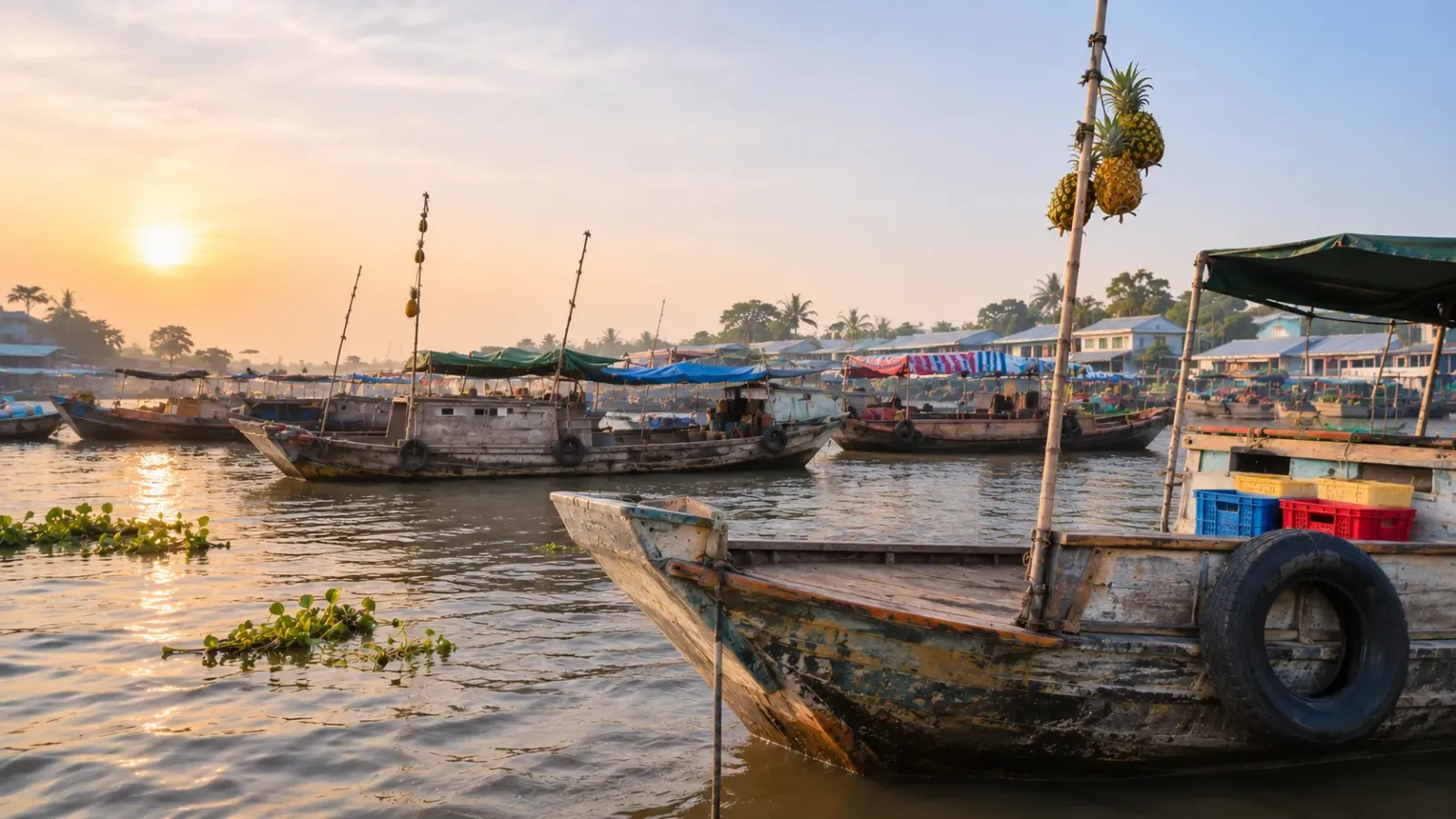
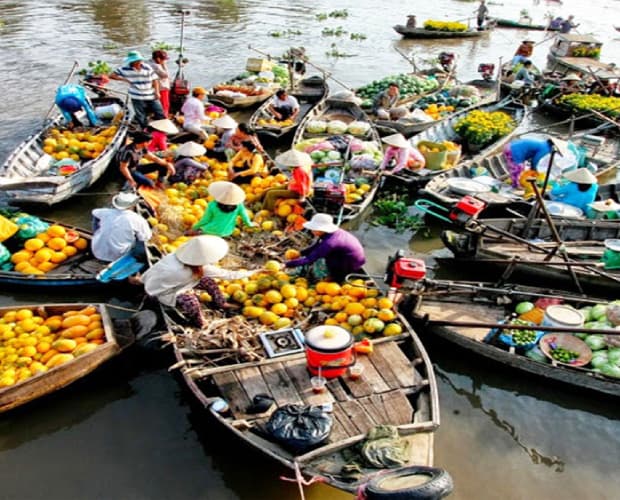
Traders on Mekong floating markets hang samples of their produce from tall poles so buyers can spot them from afar. Illustrative image.
Two Days or Three? Adding Chau Doc and Tra Su Forest
Two Days: Cai Be and Can Tho
Two days suits most travellers. Our two-day Cai Be and Can Tho trip starts with a Tien River boat ride, a coconut candy workshop, fruit and folk music, a sampan ride, a cooking class and village cycling around Cai Be. After a night in a three-star hotel in Can Tho, with a four-star option available, day two covers Cai Rang Floating Market, a traditional noodle workshop, the Khmer Buddhist Munir Ansay Pagoda and the fruit orchards of Con Son before the drive back.
Three Days: Chau Doc, Tra Su and the Option to Continue to Phnom Penh
A third day takes you to Chau Doc, near the Cambodian border, a town known for its spiritual landmarks, Cham communities and riverside life. On our three-day route via Chau Doc and Tra Su Forest, day two continues from Cai Rang to Tra Su Forest for a rowing boat ride through the flooded cajuput forest, followed by a night in Chau Doc.
On the last day you choose between two endings. You can return to Ho Chi Minh City after visiting a floating village, a Cham village, Chau Doc Market, Hang Pagoda and Ba Chua Xu Temple, arriving at around 17:30 to 18:00. Or you can continue to Phnom Penh by fast boat or bus, depending on availability, with the itinerary estimating about five hours by boat, though journey times vary by operator and border formalities. The Cambodian visa fee is not included. Cambodia’s official e-Visa information does not list this river crossing as an e-Visa entry point, and the crossing used can differ if you travel by bus, so confirm your transport, border checkpoint and entry requirements for your nationality before booking.
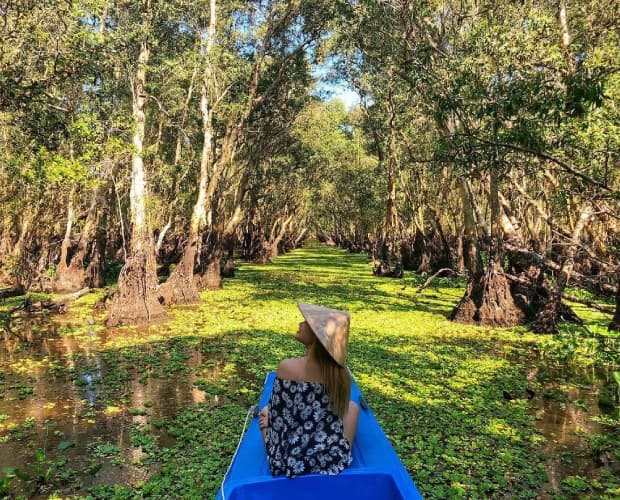
Tra Su is at its most striking in the high-water season, roughly September to November, when the forest floor disappears beneath water carpeted with green duckweed.
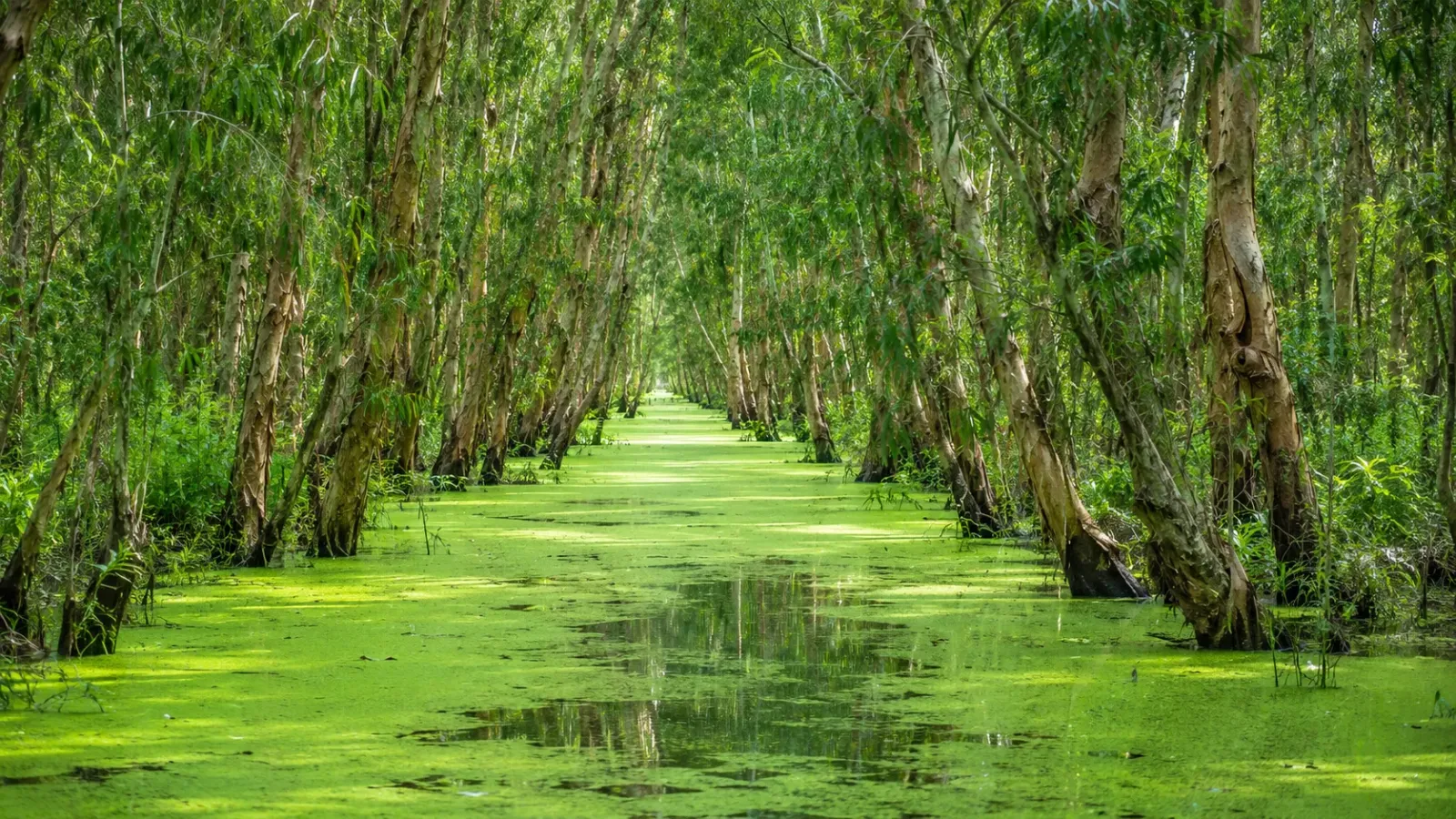
Flooded cajuput forests turn vivid green in the high-water season, roughly September to November. Illustrative image.
A Note on “2-Day” Tours That Return to Saigon Each Night
Some tours combine the Cu Chi Tunnels and the Mekong Delta over two days but do not include a hotel. On our two-day Cu Chi and Mekong tour, for example, you visit the tunnels on day one and My Tho and Ben Tre on day two, sleeping at your own hotel in Ho Chi Minh City in between. These trips are a convenient way to see both places, but they work like two separate day trips rather than a night in the delta, so they do not include an early-morning floating market. For help choosing which tunnel site to visit, see our Cu Chi Tunnels guide.
Which Option Suits You?
- Only one free day: take a day trip to My Tho and Ben Tre, or to Cai Be if you prefer a cooking class and cycling to a busier sightseeing route.
- Floating markets are a priority: stay at least one night in Can Tho.
- Travelling with young children: a day trip keeps things simple, while an overnight trip splits the time on the road, though the second morning starts early. Check the child rates and conditions on each tour page.
- Photography and slow travel: two or three days give you early mornings and late afternoons in the delta, when the light is softer.
- Heading to Cambodia: the three-day route can end in Phnom Penh, turning the border crossing into part of the journey.
- Your own pace or a different route: ask us to plan a private itinerary around your dates.
When to Go and Practical Tips
Dry Season, Rainy Season and High Water
The dry season, from about December to April, is the most popular time to visit, with plenty of sunshine and little rain, although the heat builds towards April. The rainy season runs from about May to November, bringing frequent showers and lush green scenery. In the upper delta around Chau Doc, the high-water season, roughly September to November, transforms the wetlands and is a lovely time to see Tra Su Forest.
What to Expect and Bring
- Early starts: day trips and overnight tours both pick up at around 07:00 to 08:00, and floating markets begin before dawn.
- Sun and rain protection: bring a hat, sunscreen and insect repellent, plus a light rain jacket in the wet season.
- Comfortable clothes and shoes: you will step on and off boats and may cycle along narrow village paths.
- Some small cash: extra drinks are not included on our tours, and small change is handy for snacks and souvenirs.
- Solo travellers on overnight tours: a single-room supplement is not included in the standard price.
Place Names After Vietnam’s 2025 Province Merger
Since 1 July 2025, several Mekong Delta provinces have been merged. My Tho and Cai Be are now in Dong Thap Province, formed by merging Tien Giang and Dong Thap; Ben Tre is now part of Vinh Long Province; Can Tho City has expanded to include the former Soc Trang and Hau Giang provinces; and Chau Doc lies in an enlarged An Giang Province. Older maps, signs and guidebooks may still show the previous names.
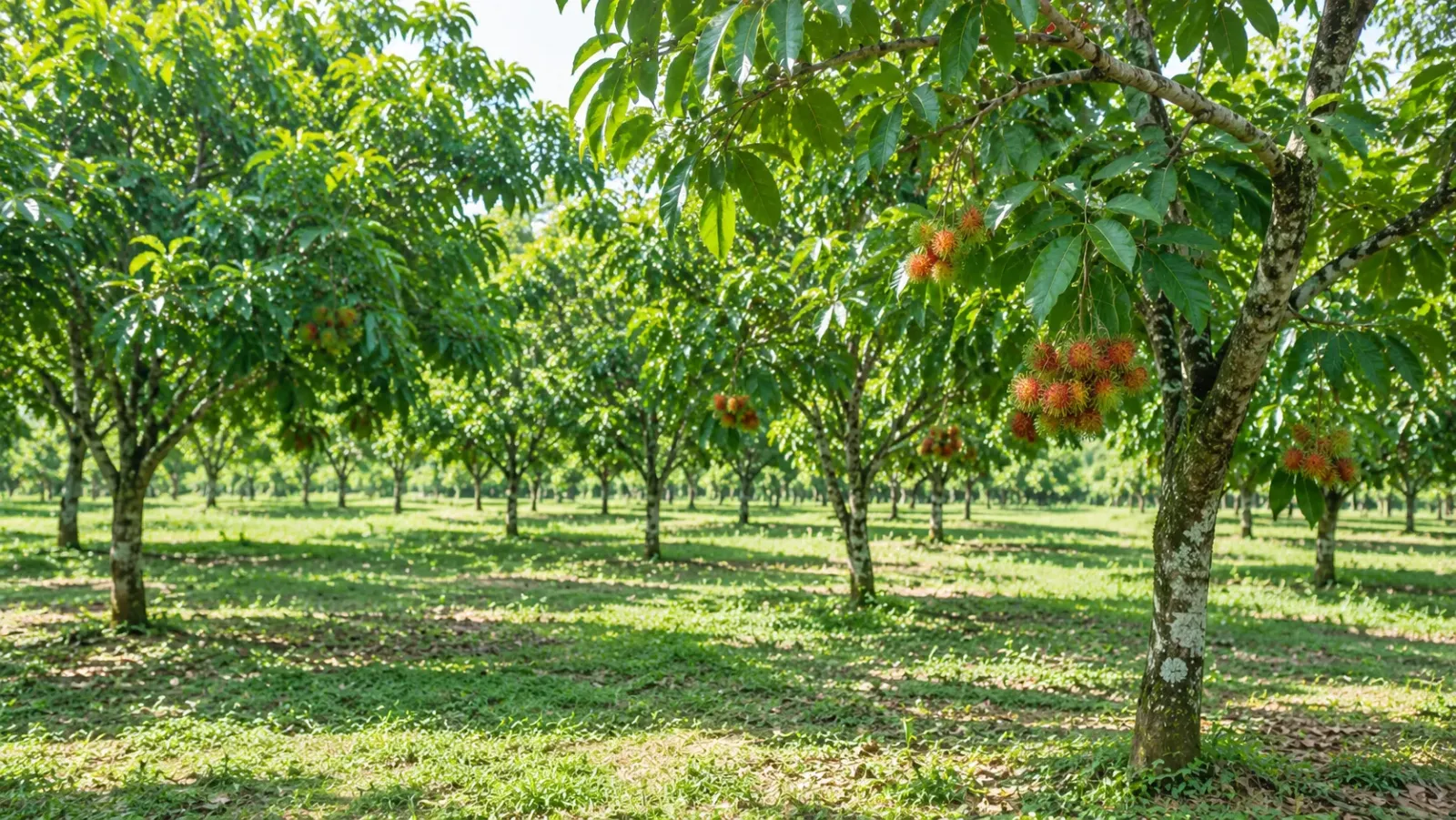
Orchard stops let you taste whatever fruit is in season, from pomelo and rambutan to dragon fruit. Illustrative image.
Frequently Asked Questions
Can I see a floating market on a Mekong Delta day trip?
Not a busy one on a standard day trip from Ho Chi Minh City. The best-known market, Cai Rang near Can Tho, is busiest in the early morning, so an overnight stay in Can Tho is the practical way to see it. Day trips to Cai Be may pass the site of its former wholesale floating market, which no longer operates as the busy trading hub shown in older photographs.
How long is the drive from Ho Chi Minh City to the Mekong Delta?
About an hour and a half to My Tho, depending on traffic. Can Tho is further. The expressway section between My Thuan and Can Tho opened in December 2023, but the journey from central Ho Chi Minh City still depends on traffic and stops, so allow around three to four hours on a group tour. Our two-day tour leaves Can Tho at 13:30 and is scheduled back in Ho Chi Minh City at 17:00 to 17:30.
Do the two-day Cu Chi and Mekong tours include a hotel?
No. Our two-day Cu Chi Tunnels and Mekong Delta tours do not include accommodation; you sleep in Ho Chi Minh City between the two days. For a night in the delta, choose a trip that stays in Can Tho or Chau Doc.
Is the Mekong Delta suitable for children?
Yes. Boat rides, fruit tasting and workshops tend to appeal to families. The main challenge is time on the road, so younger children may find a simple day trip, or an overnight trip that splits the driving, easier than a very long day that also includes the Cu Chi Tunnels.
Can I continue from the Mekong Delta to Cambodia?
Yes. Our three-day route can end in Phnom Penh, travelling from Chau Doc by fast boat or bus, depending on availability. The Cambodian visa fee is not included, and the e-Visa is not listed for this river crossing, so check which border checkpoint you will use and the current entry requirements before you travel.
Whether you have one free day or three, the Mekong Delta rewards a little planning. Browse our Mekong Delta tours to compare routes, timings and travel styles.
Related tours

Mekong Delta: Cai Be, Can Tho, Chau Doc & Tra Su Forest 3-Day Tour
Departs from Ho Chi Minh city
from$165