
Cu Chi Tunnels Guide: Ben Dinh vs Ben Duoc, Getting There and What to Expect
Cu Chi Tunnels Tours & Day TripsBy Du Lich Viet Editorial
Planning a visit to the Cu Chi Tunnels from Ho Chi Minh City? Discover the differences between Ben Dinh and Ben Duoc, compare travel options by guided tour, speedboat or public bus, and find practical tips on tunnel crawling, opening hours and choosing the right experience for your trip.

Table of contents
The Cu Chi Tunnels are one of the most popular day trips from Ho Chi Minh City, yet many travellers only discover on arrival that there are two separate sites to visit: Ben Dinh and Ben Duoc. Both are part of the same underground network, dug beneath the countryside northwest of the city and used during the Vietnam War, known in Vietnam as the American War. The two sites, however, offer quite different experiences.
In short, Ben Dinh is easier to reach, more developed for visitors and busier. Ben Duoc is farther from the city and is generally described as quieter, with visitor tunnel sections often said to feel narrower than those at Ben Dinh. This guide compares the two, explains how to get there from Saigon and covers what to expect once you arrive.
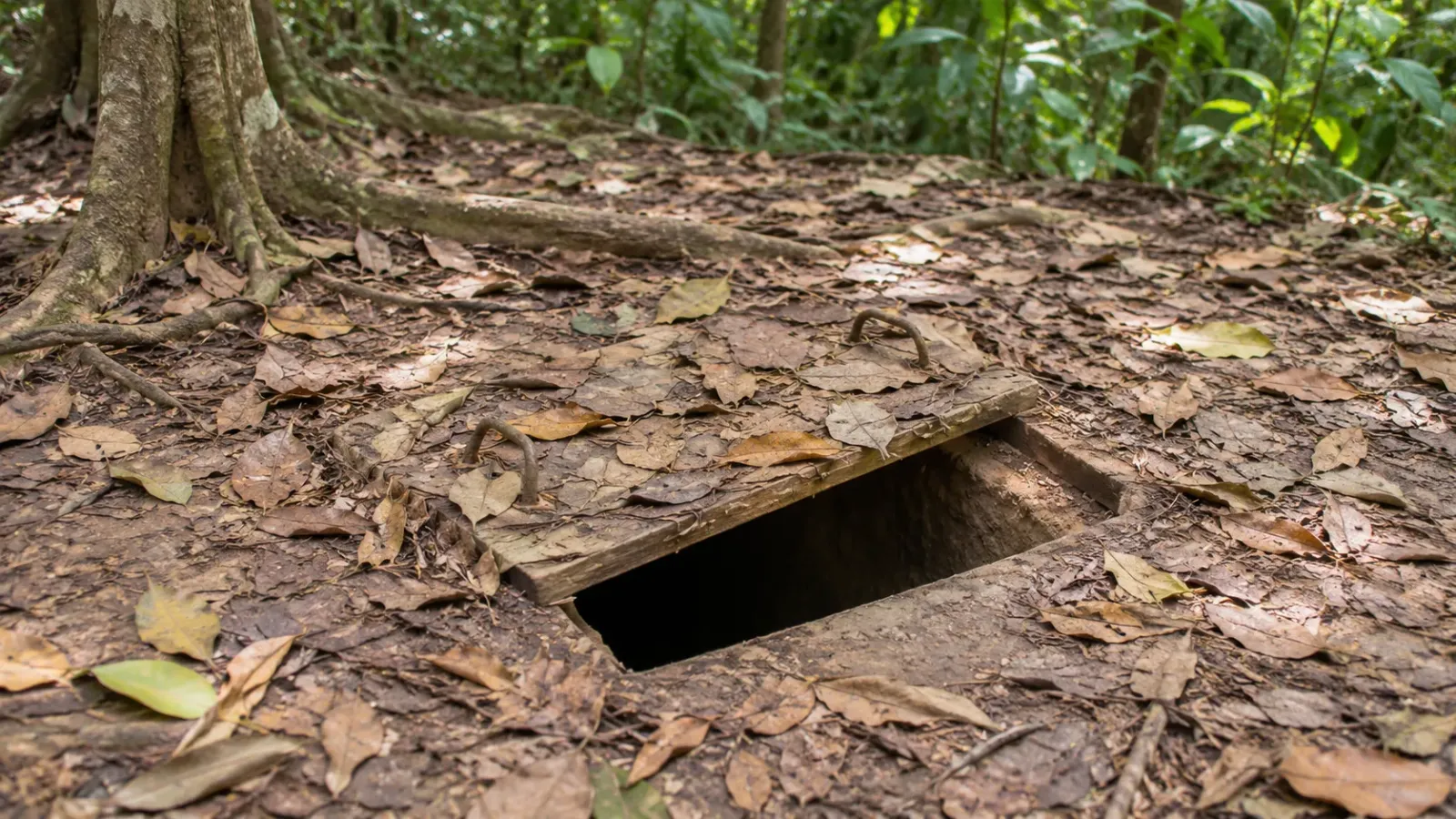
A concealed trapdoor reveals one of the hidden entrances to the Cu Chi Tunnels.
Ben Dinh or Ben Duoc: The Short Answer
If you are short on time, travelling with children or visiting for the first time, Ben Dinh is usually the practical choice. If you are drawn to the history, would rather avoid the crowds and don't mind a longer journey, Ben Duoc is worth considering.
| Feature | Ben Dinh | Ben Duoc |
|---|---|---|
| Wartime role | Base of the Cu Chi District Party Committee | Base of the Saigon–Gia Dinh Military Region and the Saigon–Gia Dinh Party Committee |
| Distance from the city | Closer to central Ho Chi Minh City | Further out, so allow extra travel time |
| Tunnels | Sections widened for visitors | Often described as narrower and closer to the original |
| Crowds | Often busier with organised groups | Usually quieter |
| Notable for | Easy access, including by speedboat on the Saigon River | Ben Duoc Memorial Temple |
| Best for | First-time visitors, families and short stays | History lovers and travellers avoiding crowds |
Ben Dinh: Easier to Reach, Busier and Set Up for Visitors
Ben Dinh served as the base of the Cu Chi District Party Committee and was recognised as a national historic site in 2004. As the closer of the two sites and the easier one for coaches to reach, it is a common stop on organised tours, so expect to share the paths with other groups.
What You'll See
A visit usually starts with a short documentary about how the tunnels were built and used. Your guide then leads you along forest paths past concealed trapdoors, camouflaged entrances and defensive traps, and into reconstructed underground spaces such as kitchens, field hospitals, bunkers and weapon workshops. Some tunnel sections here have been widened for visitors, though even a short crawl can be physically demanding.
Who It Suits
Ben Dinh works well if you have half a day, are visiting with family or simply want a clear, well-organised introduction to the tunnels. It is also the site reached on our speedboat trip along the Saigon River.
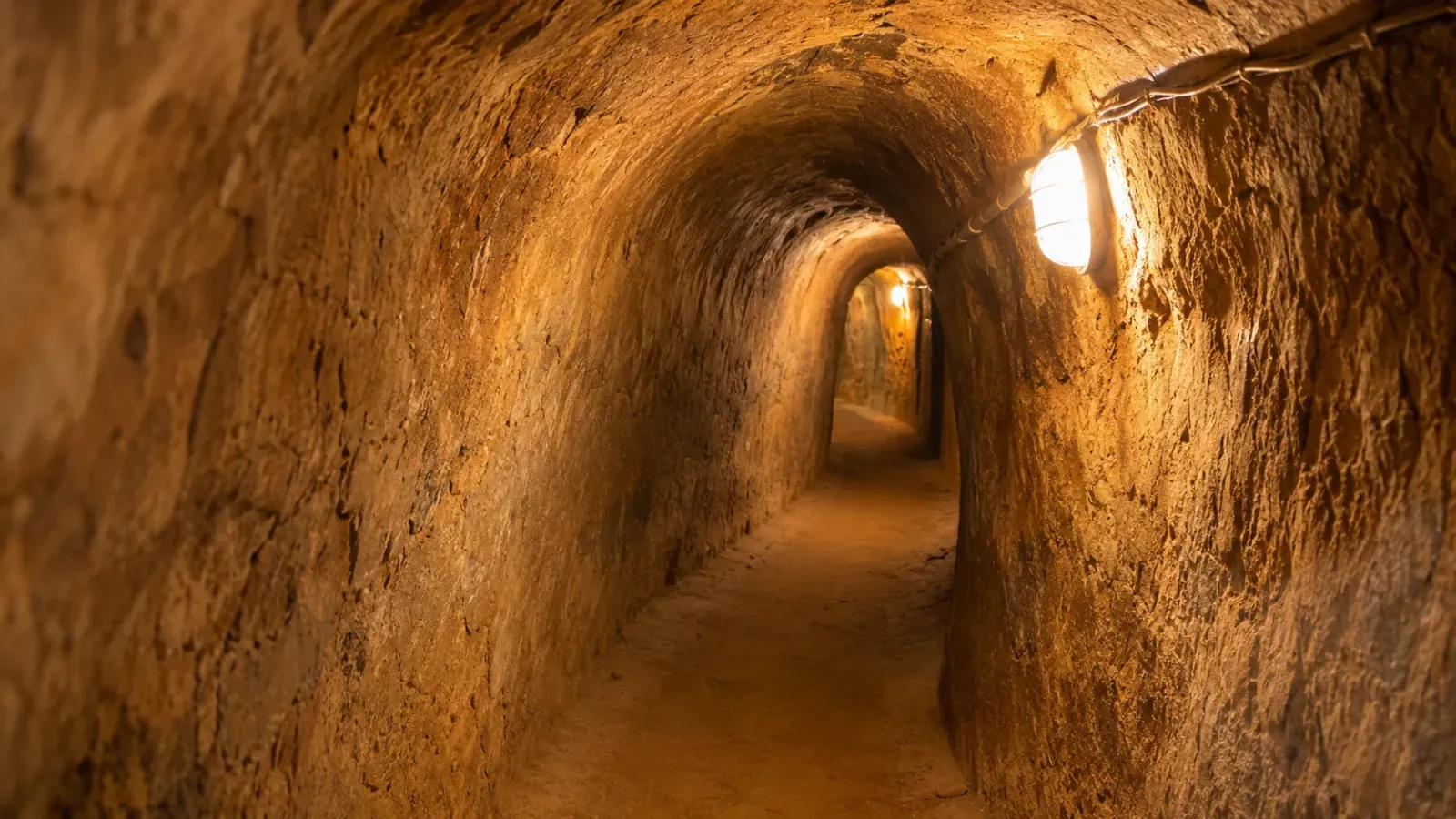
A narrow, illuminated tunnel passage illustrates the underground experience at Ben Dinh.
Ben Duoc: Quieter and Closer to the Original
Ben Duoc was the base of the Saigon–Gia Dinh Military Region and the Saigon–Gia Dinh Party Committee, and it was the first of the two sites to be recognised as a national historic site, in 1979. Because it lies further from the city, it sees fewer visitors. Its tunnels are often described as narrower and closer to their original size than the widened sections at Ben Dinh, though conditions vary along the route.
The Memorial Temple
Ben Duoc is home to the Ben Duoc Memorial Temple, which commemorates the soldiers and civilians of the Saigon–Cho Lon–Gia Dinh region who died during the wars of the 20th century. It is a place of remembrance for many Vietnamese families, so visit quietly and dress respectfully.
Who It Suits
Ben Duoc suits travellers with a strong interest in history, those returning to Cu Chi for a second look and anyone who prefers a calmer atmosphere.
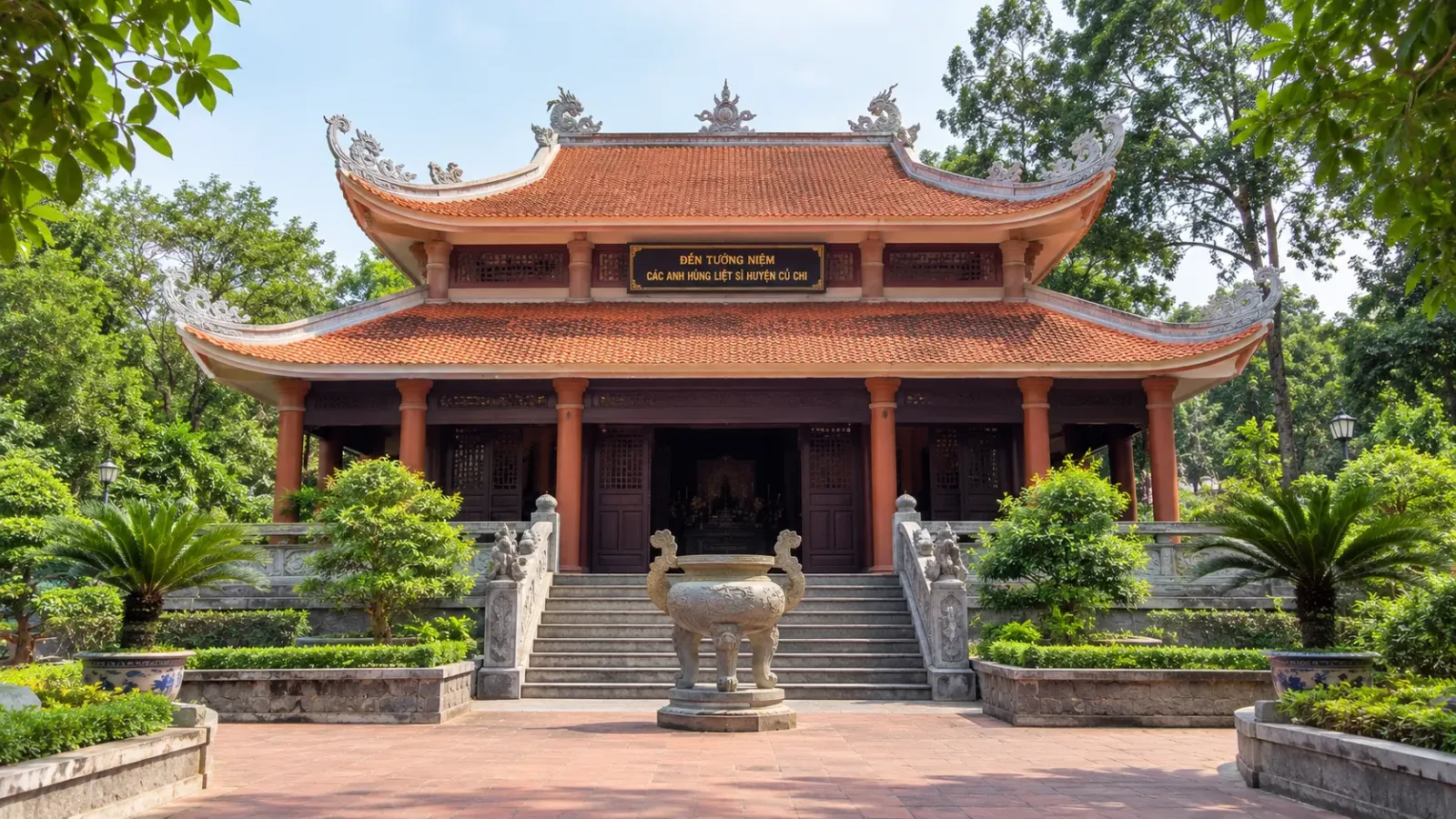
Ben Duoc Memorial Temple honours those who lost their lives during the wars.
How to Get to the Cu Chi Tunnels from Ho Chi Minh City
On a Guided Tour
A guided tour is the simplest way to visit. Our half-day Cu Chi tour by minivan offers morning and afternoon departures, an English-speaking guide and included entrance fees. The drive from central Ho Chi Minh City takes approximately 1.5 hours, depending on traffic. Pickup is available from eligible District 1 hotels, with exclusions, or from a designated meeting point. Check the specific pickup arrangements before booking.
By Speedboat on the Saigon River
For a change from city traffic, you can travel to Ben Dinh by speedboat along the Saigon River. Our speedboat tour collects you from eligible District 1 hotels or a central meeting point, transfers you to the pier and returns by boat, so the journey becomes part of the experience.

A speedboat journey along the Saigon River offers an alternative way to reach the Cu Chi Tunnels.
By Public Bus
Travelling by public bus is possible but slow. Take bus 13 from the Saigon bus terminal near 23/9 Park to Cu Chi Bus Station, then change to bus 79, which ends at Ben Duoc Temple. Allow around 2.5 to 3 hours each way. Reaching Ben Dinh by bus takes further connections. From 10 October 2026, route 13 was temporarily diverted on its return leg into the city because of Metro Line 2 works, so check live stops before you set off.
By Taxi or Ride-Hailing Car
A taxi or ride-hailing car gives you the most flexibility over timing and which site you visit. If you plan to return the same way, agree in advance whether the driver will wait while you visit.
What to Expect on the Day
Above Ground: Film, Traps and Hidden Entrances
Much of a visit takes place above ground. After the introductory documentary, you'll walk through the forest with your guide, stopping at concealed entrances, ventilation points and displays of the traps used to defend the network, while learning how people lived, worked and survived during the war.
Crawling the Tunnels: Optional, with Exits
Crawling through a tunnel section is optional. Even where the tunnels have been enlarged for visitors, they remain narrow, low, dark and warm, and you will need to crouch or crawl. Exit points along the way let you come up early if you need to. The experience is not suitable for anyone with claustrophobia, breathing difficulties or limited mobility, and you can still learn a great deal from the exhibits and above-ground stops if you skip the tunnels.
The Shooting Range
Some visits include the option of a shooting range, where visitors can fire historical rifles. It is charged separately and not included in tour prices.
A Wartime Snack: Cassava and Tea
Many visits finish with boiled cassava and hot tea, the simple food and drink that sustained people living and fighting in the area during the war.
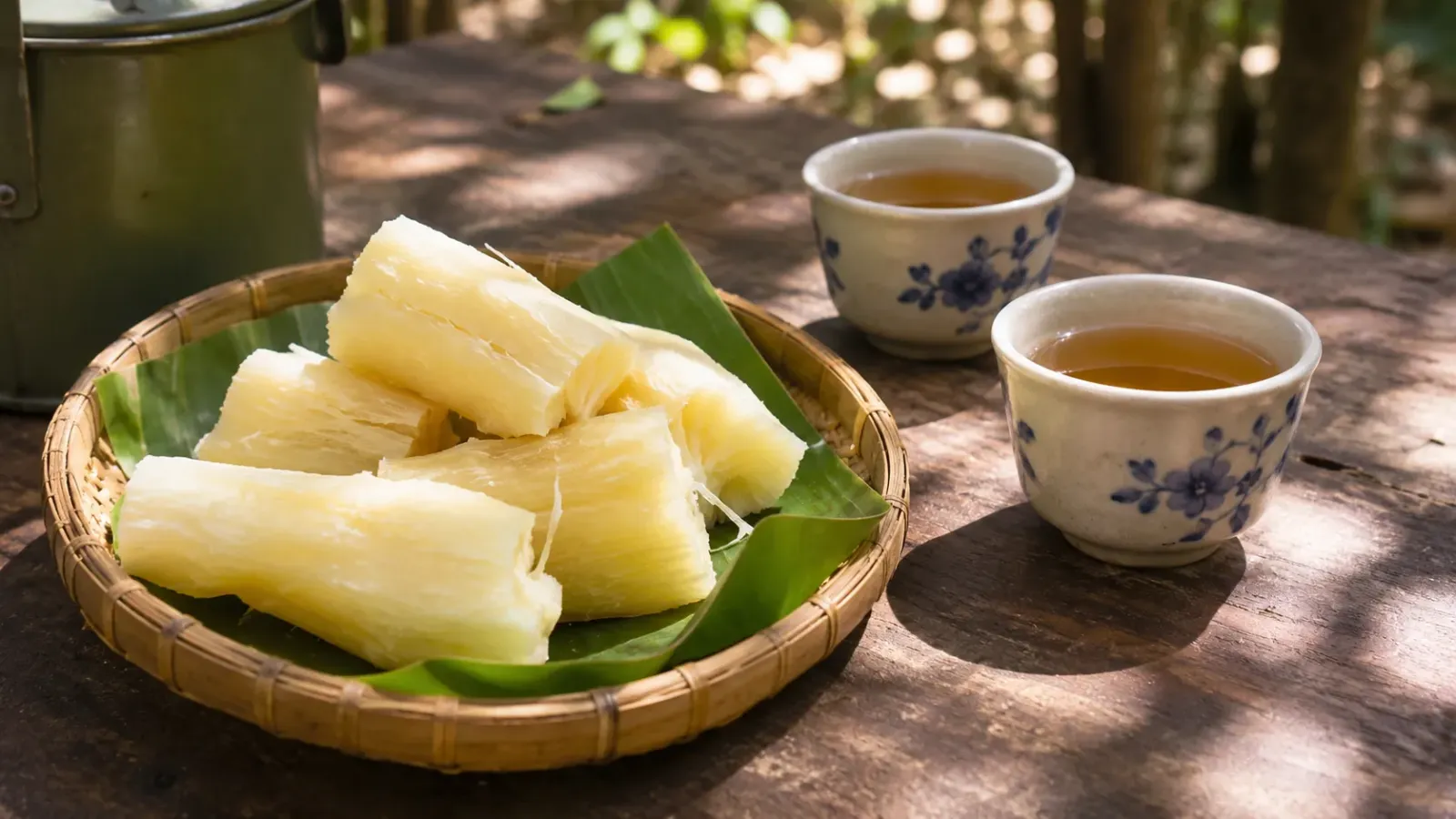
Boiled cassava and tea offer visitors a taste of the simple wartime diet.
Half-Day or Full-Day? Pairing Cu Chi with Saigon or the Mekong Delta
How you combine the tunnels with the rest of your trip depends on how much time you have in southern Vietnam.
- Half day: visit the tunnels only and be back in the city by mid-afternoon or early evening, depending on your departure time.
- Full day with Saigon: combine the tunnels with Saigon's landmarks for a well-rounded introduction to the city's history.
- Full day with the Mekong Delta: see Cu Chi and the Mekong Delta in one day. Expect an early start and a long but rewarding day.
- Two days: a two-day Cu Chi and Mekong Delta trip covers the tunnels on day one and the Mekong Delta on day two. Accommodation is not included.
Practical Tips for Visiting the Cu Chi Tunnels
- When to go: the dry season, roughly November to April, is the most comfortable time to visit. In the rainy season, paths can be muddy and mosquitoes more active. Mornings are generally cooler than the middle of the day.
- What to wear and bring: closed shoes, light clothes you don't mind getting dusty or muddy, insect repellent and drinking water.
- Children and accessibility: children can visit, and younger ones can stay above ground. The tunnels are not wheelchair accessible, and some paths are uneven.
- Be respectful: the tunnels are a war memorial as well as a visitor attraction, and they hold deep meaning for many Vietnamese families.
Opening Hours, Tickets and Location
Opening hours: the site opens daily from 7:00 to 17:00, including weekends and public holidays. Hours can change, so check before you go.
Tickets: entrance fees are included in our Cu Chi tours. Independent visitors pay admission at the gate, so check the current charges for your chosen site before travelling.
Location: Ben Dinh is in Nhuan Duc commune and Ben Duoc is in An Nhon Tay commune, both in the former Cu Chi district of Ho Chi Minh City. Following Vietnam's 2025 administrative reforms, older maps and guides may still show the previous district and commune names.
The Cu Chi Tunnels were designated a Special National Relic by the Vietnamese government in 2015.
Frequently Asked Questions
Which Cu Chi site do tours usually visit?
Ben Dinh is a common choice for organised visits because it is closer to the city and easier for coaches to reach. Our speedboat tour goes to Ben Dinh.
Do I have to crawl through the tunnels?
No. Crawling is optional, and you can see the entrances, displays and reconstructed spaces from above ground.
Can children visit the Cu Chi Tunnels?
Yes. Children can join the visit, and those who are too young or not comfortable in tight spaces can stay above ground with an adult.
How long do I need at the Cu Chi Tunnels?
Allow roughly two hours to explore the site itself. The minivan and speedboat options linked in this guide are each listed as seven hours including transfers; timings vary by itinerary and traffic.
Can I visit the Cu Chi Tunnels by public bus?
Yes. Bus 13 and then bus 79 will take you to Ben Duoc in around 2.5 to 3 hours each way. Route 13's city-bound stops changed in October 2026, so check the latest route before travelling.
Whichever site you choose, the Cu Chi Tunnels offer a powerful insight into life underground during the war. Browse our Cu Chi Tunnels tours to find the departure time and travel style that suit you.