Best Time to Visit Vietnam: A Month-by-Month Guide to the North, Centre and South
Vietnam Travel TipsBy Pham Phuong Anh
Vietnam has three climates, so no single month suits the whole country. This guide shows what each region is like month by month, when storms and floods are most likely on the central coast, how holidays affect crowds and how to order your route so you catch the best weather on the way.

Table of contents
Best Time to Visit Vietnam: The Short Answer
There is no single month when the whole of Vietnam has perfect weather. The country stretches a long way from north to south, and its northern, central and southern regions follow different seasons. The useful question is not "when is Vietnam best?" but "where is the weather best in the month I can travel?"
If you want to see all three regions in one trip, March and April are the easiest months. That is when the good-weather windows of the north, the central coast and the south overlap most widely, based on the seasonal pattern published by Vietnam's national tourism authority. It is still not guaranteed everywhere at once: the north can be grey in early March and the south is at its hottest by April.
- North (Hanoi, Ha Long Bay, Ninh Binh, Sapa): best from about September to November, with April to June a good second choice. Winter is cool, misty and grey; summer is hot, humid and stormy.
- Centre (Hue, Hoi An, Da Nang): best from about February or March to August. The rains peak in October and November, when storms and floods are most likely.
- South (Ho Chi Minh City, the Mekong Delta, Phu Quoc): best in the dry season from about December to April. In Ho Chi Minh City and the Mekong Delta, rainy-season showers often pass within a few hours, while Phu Quoc can have longer spells of rain and rough seas.
Last checked: November 2026. Seasons are averages, not forecasts, so check the latest outlook for your dates before you travel.
Vietnam's Three Climates at a Glance
Northern Vietnam has a cool winter and a hot, wet summer. The central coast keeps most of its rain for the autumn and early winter, the reverse of the north. The south stays warm all year and simply switches between a dry season and a rainy one. Mountain areas such as Sapa and Da Lat are cooler than the lowlands around them.
| Region | Usually drier and more settled | Usually wetter | Main thing to plan around |
|---|---|---|---|
| North (Hanoi, Ha Long Bay, Ninh Binh, Sapa) | About September to November, and April to June | About June to August | Summer heat and storms; cold, misty winters from December to March |
| Central coast (Hue, Hoi An, Da Nang) | About February or March to August | About September to January, heaviest in October and November | Storms and floods in the autumn |
| South (Ho Chi Minh City, Mekong Delta) | About December to April | About May to November | Short, heavy afternoon showers; the heat peaks before the rains |
For more ideas in each region, see our pages on Northern Vietnam, Central Vietnam and Southern Vietnam.

Cool, misty mornings are typical in northern Vietnam from about December to March.
Northern Vietnam: Hanoi, Ha Long Bay, Ninh Binh and the Mountains
The north has the most distinct seasons in the country. From December to March it is cool to cold, often foggy and overcast, which surprises travellers who expect tropical heat everywhere in Vietnam. April to June is warmer and usually clearer. June to August is hot, humid and wet, with the highest risk of storms. September to November brings cooler, clearer days and is the season many visitors prefer.
Hanoi and Ha Long Bay
Hanoi is pleasant for walking from about September to December and again from April to June. In winter, pack a warm layer: days are often grey and damp, though the city is lively in the weeks before Tet.
Ha Long Bay follows the same pattern. Autumn is generally the most settled time on the water, spring and early summer are warm and clear, and winter mornings are often misty, which softens the views but gives the bay much of its atmosphere. In summer, approaching storms can lead the authorities to suspend boat departures, so keep your dates flexible. Our guide to choosing a Ha Long Bay day trip or overnight cruise explains how weather affects each option. See also our Hanoi and Ha Long Bay pages.
Ninh Binh
Ninh Binh's boat trips run all year, but the scenery changes with the season. The rice along the river at Tam Coc usually turns gold in late May and early June. Trang An's caves and waterways look good in any month, although heavy rain can raise water levels and pause some routes. Our Tam Coc vs Trang An guide covers the timing in detail, and our Ninh Binh page has more ideas.
Sapa, Ha Giang and the Northern Mountains
The mountains are cooler than Hanoi all year. Late spring is lovely, with flowers and clearer skies, but the most famous season is early autumn: the rice terraces in the northern highlands usually ripen from about mid-September to mid-October. In Ha Giang, buckwheat flowers colour the karst plateau in October and November.
Winter in the mountains is cold and often foggy. Snow is possible in some Januaries, and the summit of Fansipan, Vietnam's highest peak, can drop below freezing on the coldest days, but snow in Sapa town itself is rare. Summer brings heavy rain, which can make trekking trails muddy and slippery.
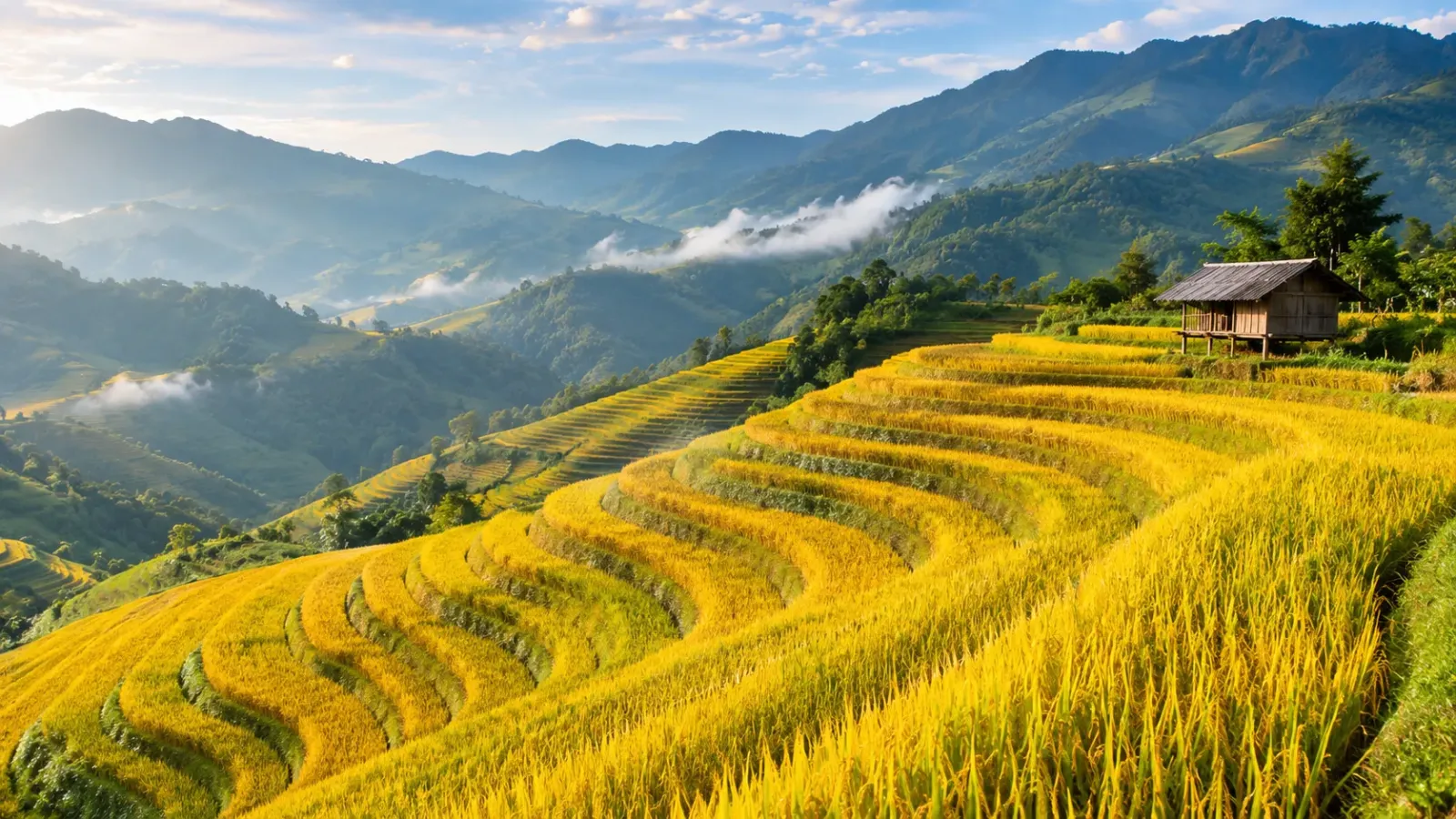
Terraces in the northern highlands usually ripen from about mid-September to mid-October.
Central Vietnam: Hue, Hoi An, Da Nang, Phong Nha and Nha Trang
The central coast runs on a different calendar from the north. Its warm, sunny months are roughly February or March to August, and July can bring classic beach weather. From September, the rains begin, and the autumn storm and flood season usually peaks in October and November and can last into early December.
Hue, Hoi An and Da Nang
Hoi An and Da Nang are at their best from about February to August, when days are warm to hot and skies are mostly clear. Hue is similar from about March to August. After the autumn peak, the rains ease, but Hoi An can stay cool, cloudy and showery into January, and Hue often into February.
October and November are the months to plan most carefully. Rivers can rise quickly after heavy rain: low-lying parts of Hue and Hoi An's Ancient Town flooded badly in 2025, and some riverside streets in Hoi An flooded again in November 2026. You can still visit, but keep a spare day, book flexible rooms and avoid tight onward connections. See our Hue, Hoi An and Da Nang pages for things to do in each.
Phong Nha
Phong Nha's wetter season generally runs from September to December, when high river levels can suspend boat trips into Phong Nha Cave and water activities at Dark Cave, and severe weather can close other sites. February to August is generally the more reliable period. Our guide to Paradise Cave, Phong Nha Cave and Dark Cave explains how the season affects each one, and our Phong Nha page has more.
Nha Trang
Farther south, Nha Trang generally has a shorter, later-year wet season, roughly from September to December. January to August is usually hot and sunny, so it can work as a beach stop in early spring, when Hue can still be cool and grey. See our Nha Trang page.
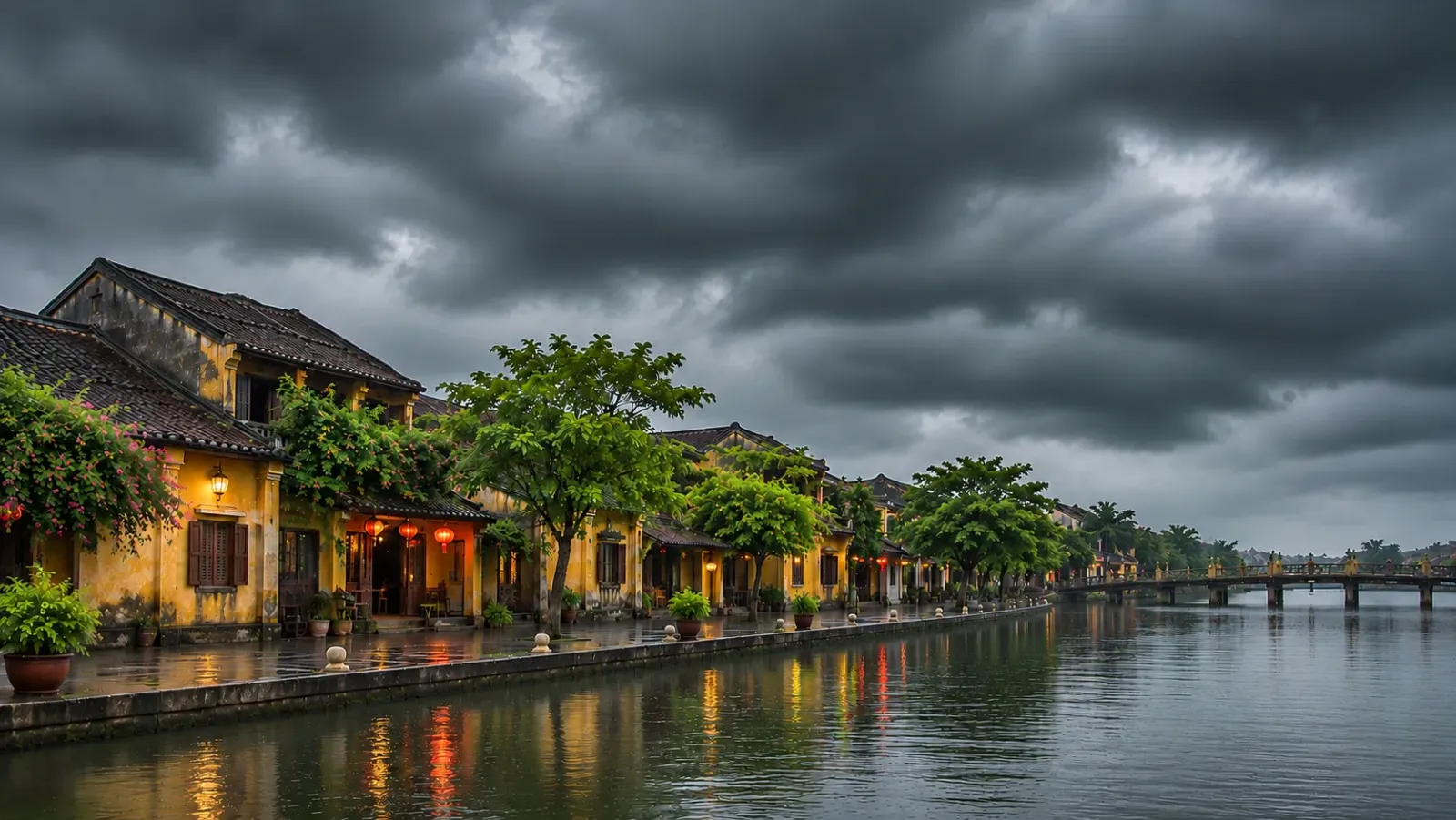
On the central coast, the heaviest rain usually falls in October and November.
Southern Vietnam: Ho Chi Minh City, the Mekong Delta and the Islands
The south is warm all year and has two seasons. The dry season, from about December to April, brings clear, hot days; the heat builds towards April. The rainy season runs from about May to November. In Ho Chi Minh City and much of the Mekong Delta, rain often falls in heavy afternoon showers that pass within a few hours, rather than all day. Offshore islands can have rougher seas and longer spells of rain.
Ho Chi Minh City and the Mekong Delta
Ho Chi Minh City can be visited in any month. In the rainy season, plan outdoor sightseeing for the morning and keep the afternoon for museums, cafés or a rest.
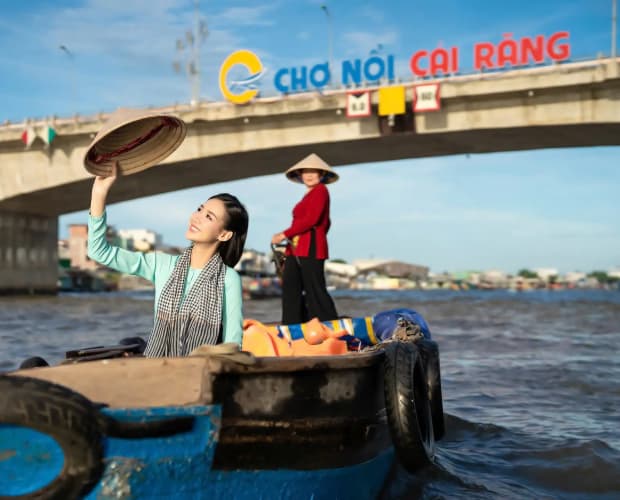
In the Mekong Delta, the dry season is the most popular time, with plenty of sunshine. The rainy months bring greener scenery, and in the upper delta around Chau Doc the high-water season, roughly September to November, is a striking time to see the flooded Tra Su cajuput forest. Cai Rang Floating Market trades all year in the early morning. For timing and route ideas, read our guides to a Mekong Delta day trip or overnight stay and Cai Rang Floating Market, or see our Ho Chi Minh City, Mekong Delta, Can Tho and Chau Doc pages.
Phu Quoc, Con Dao and Da Lat
Phu Quoc is usually at its best in December and January, and generally dry and sunny from about November to April. July to September is its stormiest period, when seas can be rough.
Con Dao has a different sea-weather pattern from Phu Quoc. From about March to September the seas are often calmer and better for diving, and turtles come ashore to nest from about May to September, although rain is still possible. October to December usually brings rougher seas and more rain.
Da Lat, in the Central Highlands, is cooler than the coast all year. Its rainy season runs from roughly April or May to October, while November to March is usually drier and clearer, with cool nights.
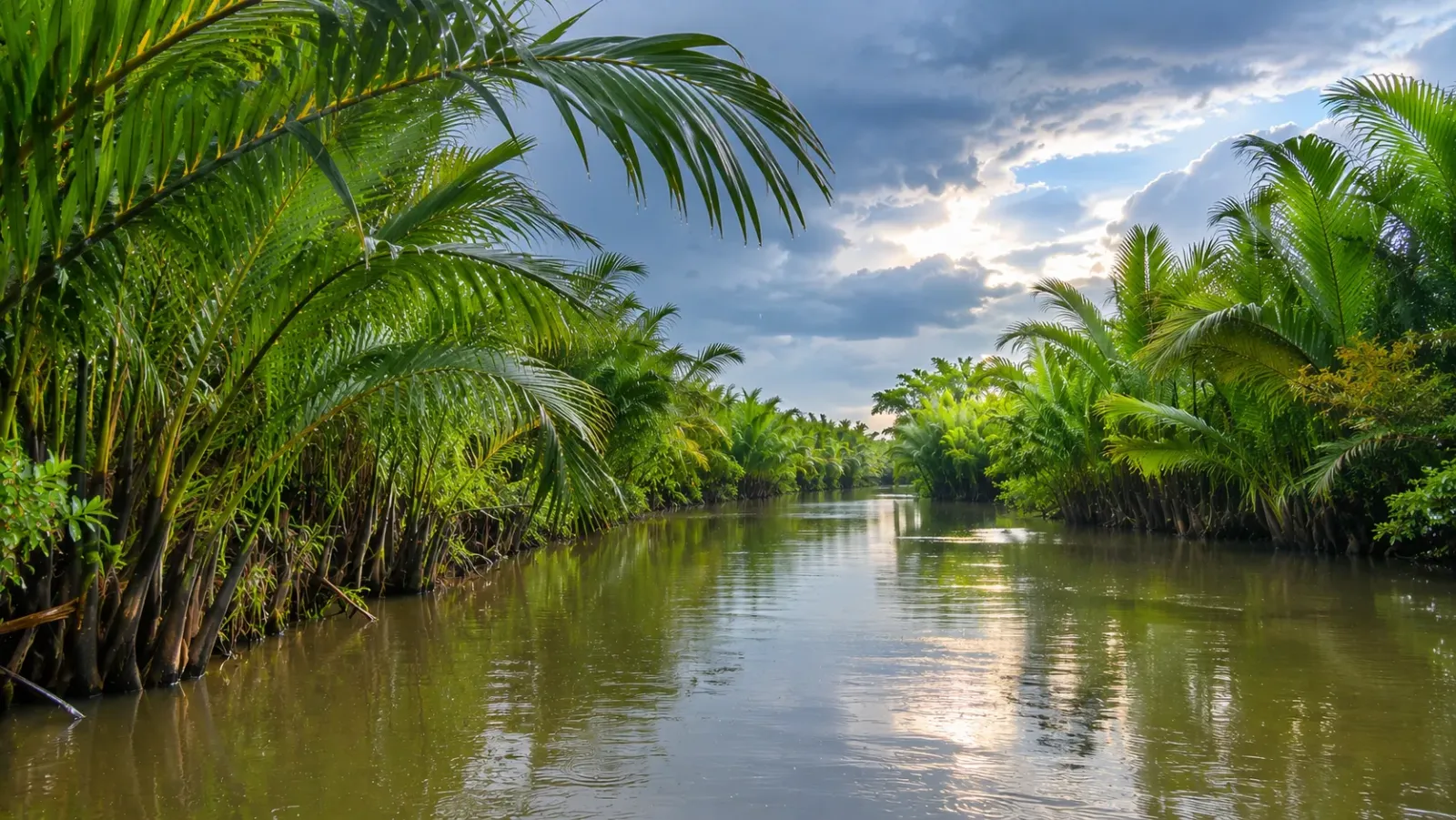
Rainy-season showers in the Mekong Delta often arrive in the afternoon and pass within a few hours.
Vietnam Weather Month by Month
This table summarises the usual pattern in each region. It describes a typical year, so a single month can still be wetter, drier, warmer or cooler than shown.
| Month | North (Hanoi, Ha Long Bay, Sapa) | Central coast (Hue, Hoi An, Da Nang) | South (Ho Chi Minh City, Mekong Delta) |
|---|---|---|---|
| January | Cold, often grey and misty; snow possible on the highest peaks | Cool and cloudy, with lingering showers | Dry, sunny and hot |
| February | Cool and misty, with drizzle; Tet celebrations | Hoi An and Da Nang warming up; Hue can still be cool and wet | Dry, sunny and hot |
| March | Still cool and often hazy, warming towards the end | Warm and mostly dry | Dry and hot |
| April | Warm and clearer | Warm to hot and sunny | Hottest stretch at the end of the dry season |
| May | Warm to hot; heat and humidity build. Tam Coc rice may turn golden from late May into early June | Hot and generally sunny in Hue, Hoi An and Da Nang | Rainy season begins, with afternoon showers |
| June | Hot and humid; rain and storm risk rising | Hot and sunny beach weather | Afternoon downpours |
| July | Hot, humid and wet; storm season on Ha Long Bay | Hot and sunny; peak beach season | Afternoon downpours; Phu Quoc's stormiest period begins |
| August | Hot, humid and wet | Hot and mostly sunny | Afternoon downpours |
| September | Cooling and clearing; golden rice in the mountains | Rains and storm season begin | Wet; high-water season begins in the upper delta |
| October | Cool, clear and settled; buckwheat flowers in Ha Giang | Peak rain; storms and floods most likely | Wet; high water in the upper delta |
| November | Cool, clear and dry | Peak rain continues; floods possible | Rains easing; dry season approaching |
| December | Cold season begins; often grey | Still wet, with some storm risk in early December | Dry season begins; sunny and hot |
Typhoon and Flood Season: What It Means for Your Trip
Storms that cross the East Sea (the South China Sea) are the biggest weather risk for travellers. In the north, the summer months bring the highest storm risk, especially on Ha Long Bay. On the central coast, the storm and flood season usually starts in September, peaks in October and November and can continue into early December. The south is less often in the direct path of storms, but heavy rain still causes local flooding.
Floods can be serious. In late October and early November 2025, some river gauges in Hue and Da Nang recorded historic flood peaks; Hoi An's Ancient Town was flooded, many visitors were moved to other hotels and cave tours in Phong Nha were disrupted. In November 2026, another spell of heavy rain caused localized flooding in parts of central Vietnam, including some streets beside Hoi An's Hoai River. Conditions vary by location and date, so if you travel to the central coast in the autumn, check forecasts and operator updates and plan for possible disruption.
- Watch the official forecast. Vietnam's National Centre for Hydro-Meteorological Forecasting publishes storm and rain warnings; check the latest alert for your destination in the days before you travel.
- Keep a spare day on the central coast and avoid tight same-day connections between cities.
- Book flexible rooms and, in Hue and Hoi An, consider staying on higher ground or away from the riverbank in October and November.
- Expect boat trips to stop in bad weather. Cruises, island trips and cave boat rides operate only when the authorities consider conditions safe.
- Check your booking terms. Each tour has its own conditions; our cancellation policy explains how changes work for tours booked with us.
Holidays, Festivals and Crowds in 2027
The weather is only half the story. Vietnam's public holidays fill domestic flights, trains and beach hotels, and a few festivals are worth planning a trip around.
| Date in 2027 | Holiday or festival | What it means for travellers |
|---|---|---|
| 1 to 3 January | New Year's Day weekend | Domestic travel can be busy; reserve transport and beach stays early |
| 6 February (break 4 to 10 February) | Tet, the Lunar New Year | The biggest celebration of the year; transport fills up and many small businesses close for several days |
| 16 April (break 16 to 18 April) | Hung Kings' Commemoration Day | A long weekend with busier roads and resorts |
| 30 April to 3 May | Reunification Day and International Workers' Day | A long weekend of heavy domestic travel; book beach stays early |
| 2 September (break 2 to 5 September) | National Day | A four-day break with heavy domestic travel; book early |
| 15 September | Mid-Autumn Festival | Lanterns, mooncakes and children's festivities; not a day off |
| 24 November | Vietnamese Culture Day | A newer paid day off for workers |
If Tet falls during your trip, read our guide to Tet 2027 in Vietnam for what closes, what stays open and how to book transport. Holiday breaks in this table follow the Government's published 2027 holiday schedule for public employees and workers with Saturdays and Sundays off; private businesses can set their own days, so recheck closer to your trip.
Best Time by Experience
If one experience matters most to you, plan the rest of the trip around its season.
| Experience | Best time | Keep in mind |
|---|---|---|
| Ha Long Bay cruise | About September to November, and April to June | Winter is misty; summer storms can suspend sailings |
| Ninh Binh boat trips | All year; late May to early June for golden rice at Tam Coc | Heavy rain can pause some routes |
| Northern rice terraces | About mid-September to mid-October | Fields are harvested soon after; Ha Giang's buckwheat follows in October and November |
| Phong Nha caves | About February to August | September to December is wetter, and river-based visits may be suspended |
| Central beaches (Da Nang, Hoi An) | About March to August | Rough seas and storms in the autumn |
| Nha Trang beaches | About January to August | Wetter from about September to December |
| Phu Quoc | About November to April, best in December and January | Stormiest from July to September |
| Con Dao | About March to September, for calmer seas and diving | Rougher seas and rain from about October to December |
| Mekong Delta and floating markets | All year; driest from December to April | High water around Chau Doc from about September to November |
To build a trip around one of these, you could pair an autumn visit with the Ha Long Bay 2-Day Cruise, see Tam Coc at harvest time on the Hoa Lu, Tam Coc and Mua Cave Full-Day Tour, take the Phong Nha Cave Full-Day Tour from Hue in the drier months, or see Cai Rang Floating Market on the second morning of the Cai Be and Can Tho 2-Day Tour. Check availability and conditions for your exact dates when you book.
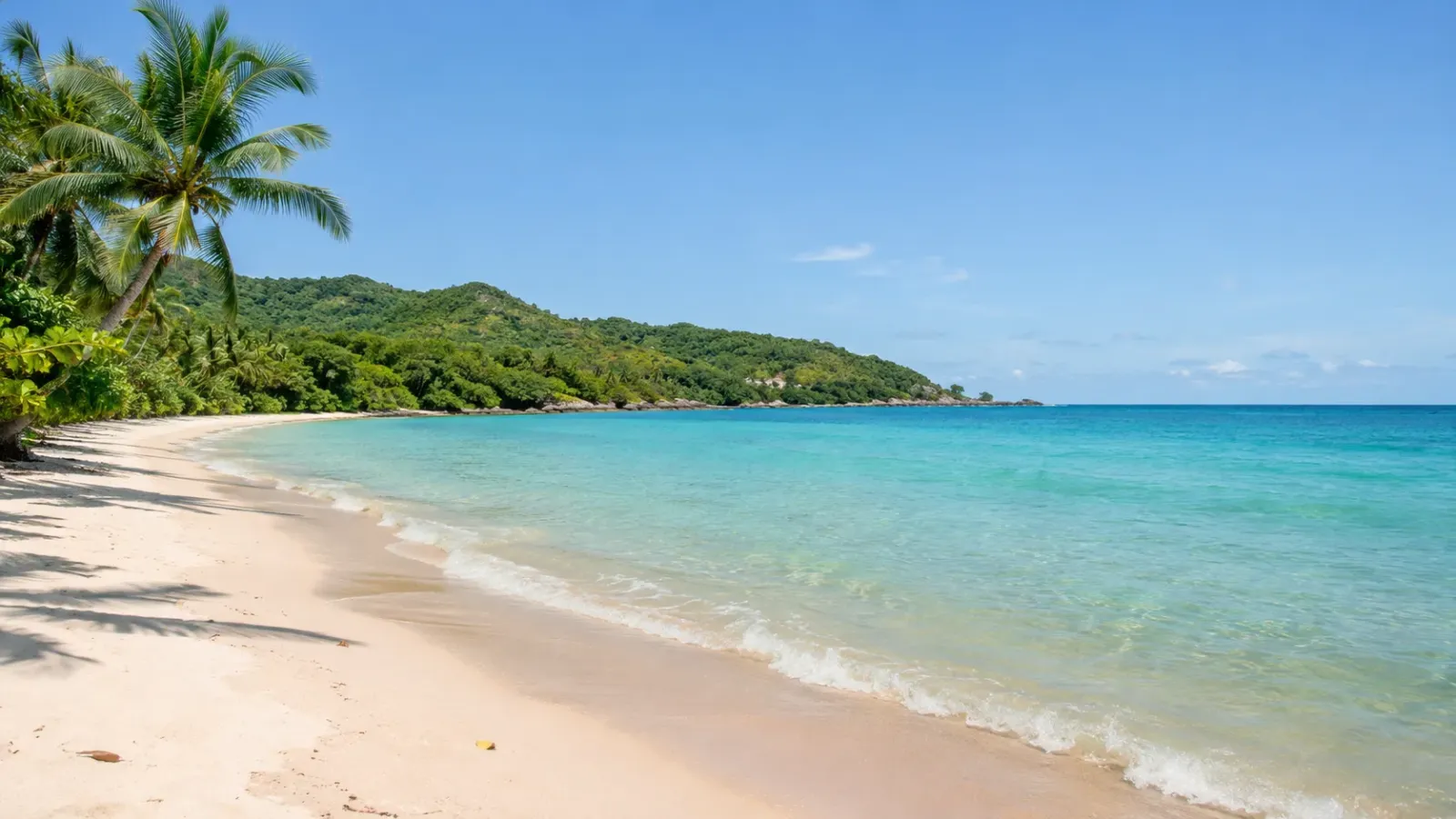
Island seasons differ: Phu Quoc is usually best from November to April, Con Dao from March to September.
Which Way Round? Timing a North-to-South Trip
Most first trips to Vietnam cover all three regions, so you will meet more than one season. You can soften the trade-offs by choosing the direction you travel and how long you spend in each region.
- September to November: start in the north while it is cool and clear, keep the central coast short and flexible, and finish in the south as its rains ease.
- December to February: pack layers for the north, give the central coast a little extra time in case of showers, and enjoy the dry season in the south. Starting in the warm south and ending in the north also works.
- March and April: the most forgiving months for a full trip. Either direction works, so choose the one that suits your flights.
- May to August: the central coast is at its sunniest, while the north is hot and stormy and the south has afternoon showers. Consider giving the centre more of your time.
For a ready-made route, see our Vietnam in 2 weeks itinerary, which also explains when to reverse it.
Frequently Asked Questions
What is the best month to visit Vietnam?
For a trip that covers the north, the central coast and the south, March and April are usually the easiest months, because the drier, more settled periods of all three regions overlap. If you are visiting only one region, its own best season matters more: autumn for the north, spring and summer for the central coast, and December to April for the south.
Is it worth visiting Vietnam in the rainy season?
Yes, with the right plan. In the south, rain usually comes as a heavy afternoon shower, and the countryside is green and less crowded. The central coast in October and November is the exception: that is the peak of the storm and flood season, so keep plans flexible or spend more time in the north or south.
When is typhoon season in Vietnam?
Storm risk is highest in the north in summer and on the central coast from about September to November, sometimes into early December. Check the National Centre for Hydro-Meteorological Forecasting for warnings before and during your trip.
Does it snow in Vietnam?
Occasionally, on the highest mountains of the far north. Snow is possible in some Januaries, and Fansipan's summit can fall below freezing, but snow in Sapa town itself is rare.
When is the best time for a beach holiday in Vietnam?
It depends on the coast. Da Nang and Hoi An are best from about March to August, Nha Trang from about January to August, and Phu Quoc from about November to April, with December and January the best months. Con Dao is different again: its seas are usually calmest from about March to September.
Can I visit Hue and Hoi An in October or November?
You can, but these are the wettest months of the year on the central coast and floods are possible. Keep at least one spare day, book flexible rooms and check forecasts closely. If your dates are flexible, February to August is drier.
Is Tet a good time to visit Vietnam?
It is a memorable time to see Vietnam's biggest festival, but transport is busy and many small businesses close for several days. Tet 2027 falls on 6 February. Our Tet guide explains how to plan around it.
Plan Your Trip Around the Seasons
If you would like a route timed to the weather for your dates, share your plans through our custom tour request form and our specialists will suggest an itinerary that puts each region in its best season. Prefer to plan it yourself? Browse all our tours, and check the latest forecast before you set off.
Related articles

Central Vietnam Flood & Typhoon Season: When It Happens and How to Plan Your Trip

Tet 2027 in Vietnam: Dates, What's Open and How to Plan Your Trip

Nha Trang Island Hopping 2026–27: Which Islands, Which Boat and What to Expect Now

Hue to Hoi An via the Hai Van Pass: How to Make the Trip and What You’ll See

Visiting the DMZ from Hue: Which Sites to See and How to Plan Your Day Trip

3 Days in Ho Chi Minh City: A Day-by-Day Itinerary for First-Time Visitors

Hoi An Ancient Town Ticket 2026–27: Fees, What It Covers and How to Use It