

Vietnam Visa & Entry Requirements 2026–27: Visa-Free Entry, E-Visas and What to Expect on Arrival
Vietnam Travel TipsBy Pham Phuong Anh
Whether you can fly in visa-free or need an e-visa depends on your passport. This guide shows who gets 45 days without a visa, how the 90-day e-visa works, what to prepare before you land and how to stay legal once you are here, with official links and the dates each rule is set to run until.
Table of contents
Vietnam Visa Requirements: The Short Answer
Your passport decides how you enter Vietnam. For most short-term visitors there are three ways in, and you will usually need only one of them:
- Visa-free entry if your passport is on Vietnam's exemption list. Citizens of 24 countries, including the UK, Germany, France, Japan and South Korea, can stay up to 45 days; for 12 of these countries the exemption is for tourism. A shorter list of mainly Southeast Asian countries, plus Chile and Panama, get between 14 and 90 days.
- An e-visa for everyone else, or for anyone who needs longer. It is open to all nationalities, lasts up to 90 days, can be single or multiple entry and costs US$25 or US$50 on the official portal.
- Phu Quoc's 30-day exemption if you fly straight to the island from abroad and stay on the island.
Whichever route applies, carry a passport with at least six months' validity. Use only the official government websites named below for any form, because look-alike sites charge extra and some are outright scams.
Rules last checked: 19 November 2026. Visa policy in Vietnam is set by government resolutions with fixed end dates, so check the official sources linked below before you book.
Which Entry Route Fits Your Trip?
| Route | Who it is for | Maximum stay | Government fee | Valid in | How to get it |
|---|---|---|---|---|---|
| Visa-free, 45 days | Citizens of 24 listed countries (12 of them for tourism only) | 45 days | None | All of Vietnam | Nothing to apply for; passport valid for at least six months |
| Visa-free, bilateral agreements | Citizens of Brunei, Cambodia, Indonesia, Laos, Malaysia, Myanmar, the Philippines, Singapore, Thailand and a few other countries | 14 to 90 days, depending on nationality | None | All of Vietnam | Nothing to apply for |
| E-visa | Any nationality | Up to 90 days, single or multiple entry | US$25 single entry, US$50 multiple entry | All of Vietnam, through 83 international border gates | Online at the official portal before you travel |
| Phu Quoc exemption | Any foreign passport holder arriving from abroad | 30 days | None | Phu Quoc only | Fly or sail directly to the island |
A quick way to decide:
- Your passport qualifies for visa-free entry, your travel purpose is covered and your trip fits within the permitted stay: you do not need a visa. Check your passport's validity and the entry conditions before you go.
- Your passport is not on a list, or your trip is longer than your visa-free stay: apply for an e-visa, choosing multiple entry if you plan to cross into Cambodia or Laos and come back.
- You are only visiting Phu Quoc: you can use the island exemption, but you will need a visa or another exemption to continue to the mainland.
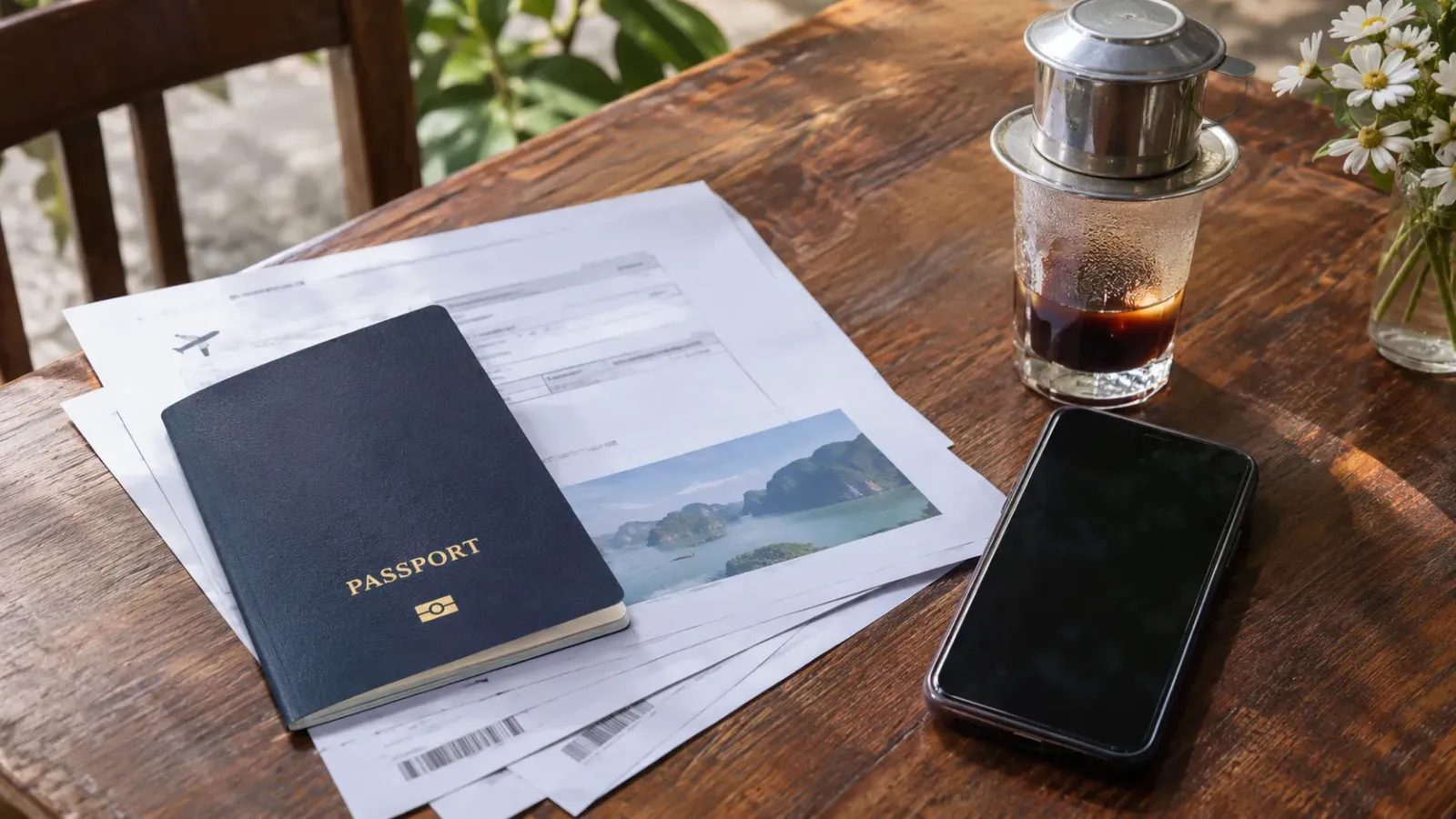
Most short-term visitors need only one entry route: visa-free, an e-visa or Phu Quoc's island exemption.
Visa-Free Entry: Who Qualifies and for How Long
45 Days Visa-Free: 24 Countries
Vietnam grants 45 days without a visa, counted from your entry date, to citizens of two groups of countries, as long as you meet the normal entry conditions. For the first group, the exemption applies whatever your reason for travel. For the second group, it was introduced under a tourism stimulus programme and applies to tourism. Both apply regardless of passport type, except that UK British National (Overseas) passports are not covered.
| Countries | Purpose | Legal basis | Runs until |
|---|---|---|---|
| Denmark, Finland, France, Germany, Italy, Japan, Norway, Russia, South Korea, Spain, Sweden, United Kingdom | Any purpose | Government Resolution 44/NQ-CP | 14 March 2028 |
| Belgium, Bulgaria, Croatia, Czech Republic, Hungary, Luxembourg, Netherlands, Poland, Romania, Slovakia, Slovenia, Switzerland | Tourism | Government Resolution 229/NQ-CP | 14 August 2028 |
If you are from the second group and travelling for work or another purpose, check which visa applies before you go. Visa-free entry does not, by itself, give you permission to work in Vietnam; if you plan to take a job or do other work, check the work permit and visa requirements before you travel. Both periods cover all of 2026 and 2027. The government can extend or change them, so treat the end dates as the current plan rather than a guarantee. The first group appears on the Ministry of Foreign Affairs' exemption list, and the second is set out on the Vietnam Government Portal.
Other Visa-Free Stays (14 to 90 Days)
Bilateral agreements give ordinary passport holders from several more countries a visa-free stay of a fixed length. The table follows the bilateral entries on the Ministry of Foreign Affairs' exemption list; the 45-day groups above come from the two government resolutions. Belarus is not on the current 12-country list in Resolution 44/NQ-CP; the Ministry of Foreign Affairs lists a separate bilateral exemption of 30 days per entry, up to 90 days in a calendar year, for ordinary passport holders.
| Country | Visa-free stay |
|---|---|
| Chile, Panama | 90 days |
| Cambodia, Indonesia, Kyrgyzstan, Laos, Malaysia, Mongolia, Myanmar, Singapore, Thailand | 30 days |
| Belarus | 30 days, up to 90 days in a calendar year |
| Kazakhstan | 30 days, up to 90 days in any 180-day period |
| Philippines | 21 days |
| Brunei | 14 days |
For ordinary tourist travel, citizens of countries such as the United States, Canada, Australia, New Zealand, India and Ireland will generally need an e-visa unless another valid exemption applies, such as Phu Quoc's 30-day rule for trips only to the island.
Conditions That Still Apply
- Passport validity: if you enter under the 45-day exemption, your passport must be valid for at least six months.
- British National (Overseas) passports: the UK exemption does not cover BN(O) passports, so holders need a visa.
- No waiting period between visits: the old rule requiring 30 days between two visa-free stays was abolished in 2020. You can leave for a neighbouring country and come back visa-free without waiting.
- Normal entry checks still apply: visa-free means you skip the application, not the border. Immigration officers can still refuse entry if you do not meet the entry conditions.
Want to Stay Longer?
The law allows visa-exempt visitors to be considered for a visa or an extension of their stay, but each case is decided by the immigration authorities and approval is not automatic. If your trip will run past your visa-free limit, apply for an e-visa of the right length before you leave home. It is simpler and more certain than trying to extend once you are here.
The Vietnam E-Visa, Step by Step
Who Can Apply and How Long It Lasts
Vietnam issues e-visas to citizens of every country and territory. An e-visa can be valid for up to 90 days and can be issued for a single entry or multiple entries. Apply before you travel. The e-visa is an entry document, not an extension: it takes effect only when you enter Vietnam on it, so it cannot lengthen a stay you are already on. If you are already in Vietnam and need more time, ask the immigration authorities about your options before your permitted stay ends.
Single or Multiple Entry?
A single-entry e-visa ends when you leave Vietnam. If your trip includes a side trip to Cambodia or Laos and you plan to return, choose a multiple-entry e-visa so you can come back on the same visa within its validity.
E-visa holders can enter and leave through 83 international border gates: airports, seaports and land crossings. That list was extended in December 2025 to include 41 more gates. It covers Vietnam's main international airports and the Vinh Xuong river and road crossing near Chau Doc, on the river route to Phnom Penh.
Fees and Processing Time
| Item | Government fee since 1 April 2026 |
|---|---|
| Single-entry e-visa | US$25 |
| Multiple-entry e-visa, valid for up to 90 days | US$50 |
These amounts come from the Ministry of Finance's fee circular, summarised on the Government Portal. The fee is paid online when you apply and is generally not refunded if the application is refused, so check every detail before you submit.
The published processing target is three working days after a complete application and payment, but actual processing can take longer. Apply at least two weeks before your flight as a buffer, so you also have time to fix any mistakes. Applications are processed on working days, so allow longer around public holidays, especially Tet. In 2027 the official Tet holiday runs from 4 to 10 February; our Tet 2027 guide explains what else closes.
How to Apply Safely
Apply only on the Immigration Department's portal at evisa.gov.vn; the department also lists thithucdientu.gov.vn as an official address. Look-alike websites often appear high in search results, many charge far more than the government fee, and the Immigration Department has warned travellers about fake sites.
- Type the address yourself, https://evisa.gov.vn/ or https://thithucdientu.gov.vn/, rather than clicking search ads, and check the full web address before you enter any personal or card details.
- Upload a clear photo of your passport's information page and a recent portrait that meets the portal's instructions.
- Enter your name, passport number and dates exactly as they appear in your passport. A mismatch can cause problems at the border.
- Children under 14 who are listed in a parent's passport are added to that parent's application. A child with their own passport needs their own e-visa.
- For your address in Vietnam, use your first hotel's current address. Many province and district names changed in 2025; our guide to the province mergers explains the new names.
- Save your registration code. Download and print the approved e-visa, and keep a copy on your phone.

Type the official portal address yourself and check every detail against your passport before paying.
What About Visa on Arrival?
There is no walk-up visa on arrival for tourists. A visa can be issued at an international border gate only in limited cases arranged in advance through an inviting organisation in Vietnam. For almost every independent traveller who needs a visa, the e-visa is the straightforward option.
Flying Straight to Phu Quoc: The 30-Day Rule
Phu Quoc island has its own exemption. Foreign passport holders arriving from abroad can stay on the island for up to 30 days without a visa, whatever their nationality. Some connections through another Vietnamese international airport also qualify, as long as you stay in the transit area and do not pass through immigration there. Not every itinerary allows this, so before booking ask your airline whether your exact connection is handled that way. A separately ticketed domestic flight usually means clearing immigration first, which requires a visa or another exemption.
The exemption covers Phu Quoc only. If you want to continue to Ho Chi Minh City or anywhere else on the mainland, you need a visa or another exemption. Arrange an e-visa in advance if there is any chance you will do this.
Arrival Checklist: Passport, Pre-Arrival Form and Customs
- Passport: at least six months' validity on arrival (required for the 45-day exemption) and at least two blank pages, as the UK government and Vietnam's tourism authority advise.
- Your e-visa: carry a printed copy as well as the one on your phone. Check that the details match your passport.
- Pre-Arrival Information form: the Immigration Department's online form for foreign arrivals at Tan Son Nhat, Noi Bai, Da Nang, Cam Ranh and Phu Quoc airports, piloted since 15 April 2026. Official notices describe it as a pilot that travellers are strongly encouraged to complete, within three days before arrival or on arrival, while some airlines tell passengers it is required. If you are landing at one of these airports, complete it and follow your airline's instructions. It is not a visa and does not replace one. Use only prearrival.immigration.gov.vn; the department has warned of fake versions used to steal card details.
- Cash: declare cash over US$5,000, or the equivalent in other currencies, or over VND 15 million to customs on arrival.
- Health declaration: since 1 July 2026, health declarations are not routinely required for all international arrivals; the Ministry of Health activates them only for specific diseases when needed.
- Onward plans: keep your hotel address and onward travel details handy in case the officer asks.
Arriving in Saigon? Our three-day Ho Chi Minh City itinerary covers getting from Tan Son Nhat into the city and planning your first days.
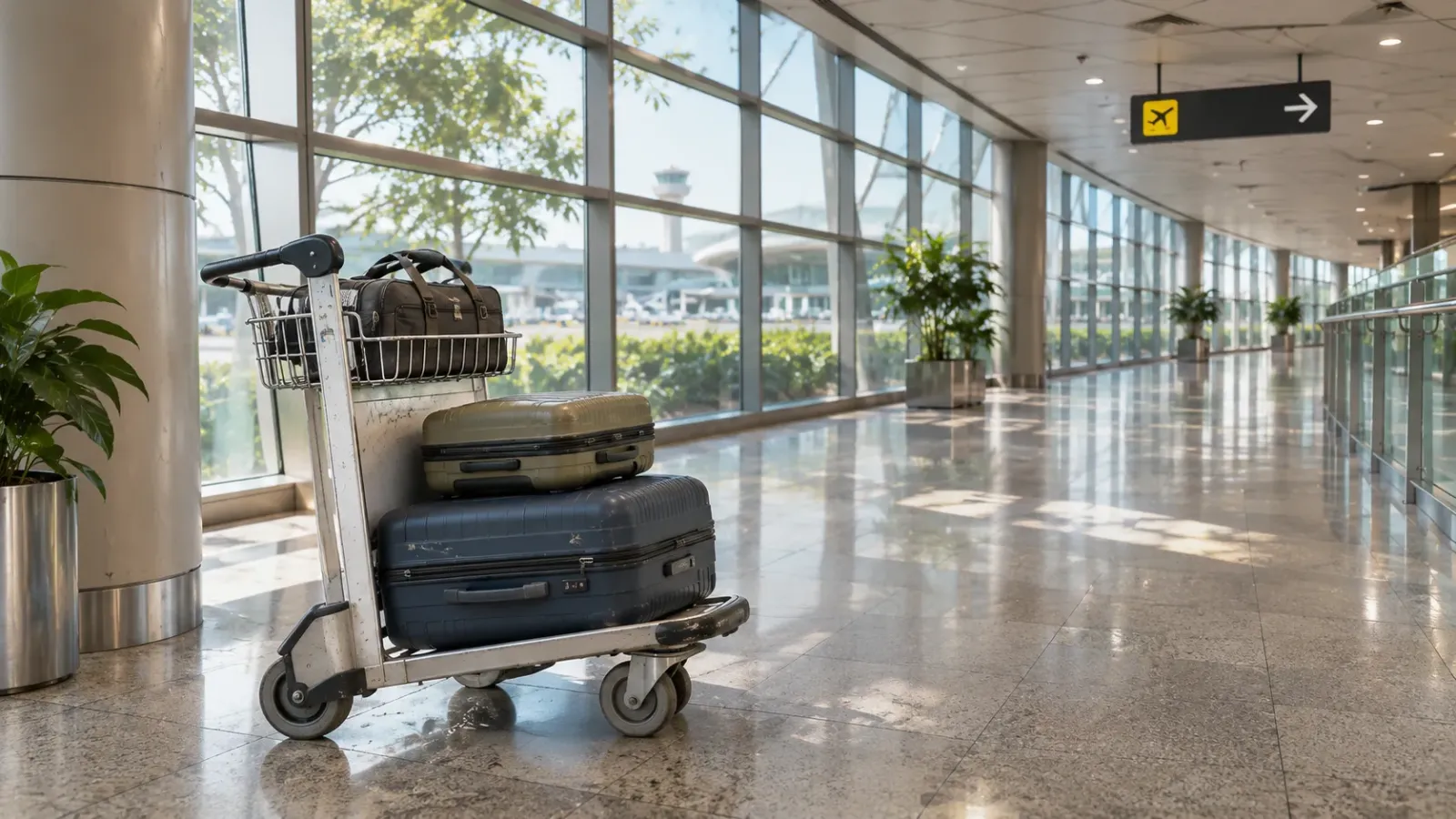
Keep your passport, e-visa printout and hotel address to hand when you reach the immigration desk.
During Your Stay: Hotel Registration, Extensions and Overstays
Hotel Registration
Every foreign visitor has to be registered with the local police. Your hotel or host does this for you, usually online and as soon as you arrive; for paper forms the limit is 12 hours, or 24 hours in remote areas. That is why reception asks for your passport at check-in. Some tours also need passport details before departure; our Ha Long Bay guide explains how this works for bay tickets.
Extensions
Extensions of stay are possible in some cases. They are handled by the immigration authorities, usually through a sponsoring organisation, and are not guaranteed. The government fee is US$10 per extension. Do not plan a trip that depends on getting one.
Overstays
Overstaying is an administrative offence. Under Decree 282/2025/ND-CP, in force since 15 December 2025, an overstay of under 16 days can bring a fine of VND 500,000 to 2 million. Fines rise with the length of the overstay; more than a year can bring a fine of VND 30 to 40 million. Deportation can also be applied depending on the case; it is not limited to overstays of more than a year. If a flight delay or illness means you might overstay, contact the immigration office before your permitted stay ends.
Leaving Vietnam and Side Trips to Cambodia
Many travellers combine Vietnam with Cambodia, often on the river route from Chau Doc to Phnom Penh. How you come back depends on how you entered:
- Visa-free entry: you can return visa-free, with no waiting period between visits.
- Single-entry e-visa: it ends when you leave, so you will need a new e-visa or a visa exemption to come back.
- Multiple-entry e-visa: you can return on the same visa until it expires.
On the Vietnamese side, the Vinh Xuong crossing near Chau Doc is on the e-visa border gate list, so you can leave there on an e-visa. On the Cambodian side the crossing is Kaam Samnor, and Cambodia sets its own rules. Vinh Xuong accepting Vietnamese e-visas does not mean Kaam Samnor accepts the Cambodian e-visa. Check the checkpoints listed on Cambodia's official portal, evisa.gov.kh, and confirm with your boat or bus operator which visa or arrival documents Cambodia accepts there before you travel.
Our Mekong Delta day trip or overnight guide explains the river route. The three-day Mekong Delta tour via Chau Doc and Tra Su can end in Phnom Penh; the Cambodian visa fee is not included. For the town itself, see our Chau Doc page.
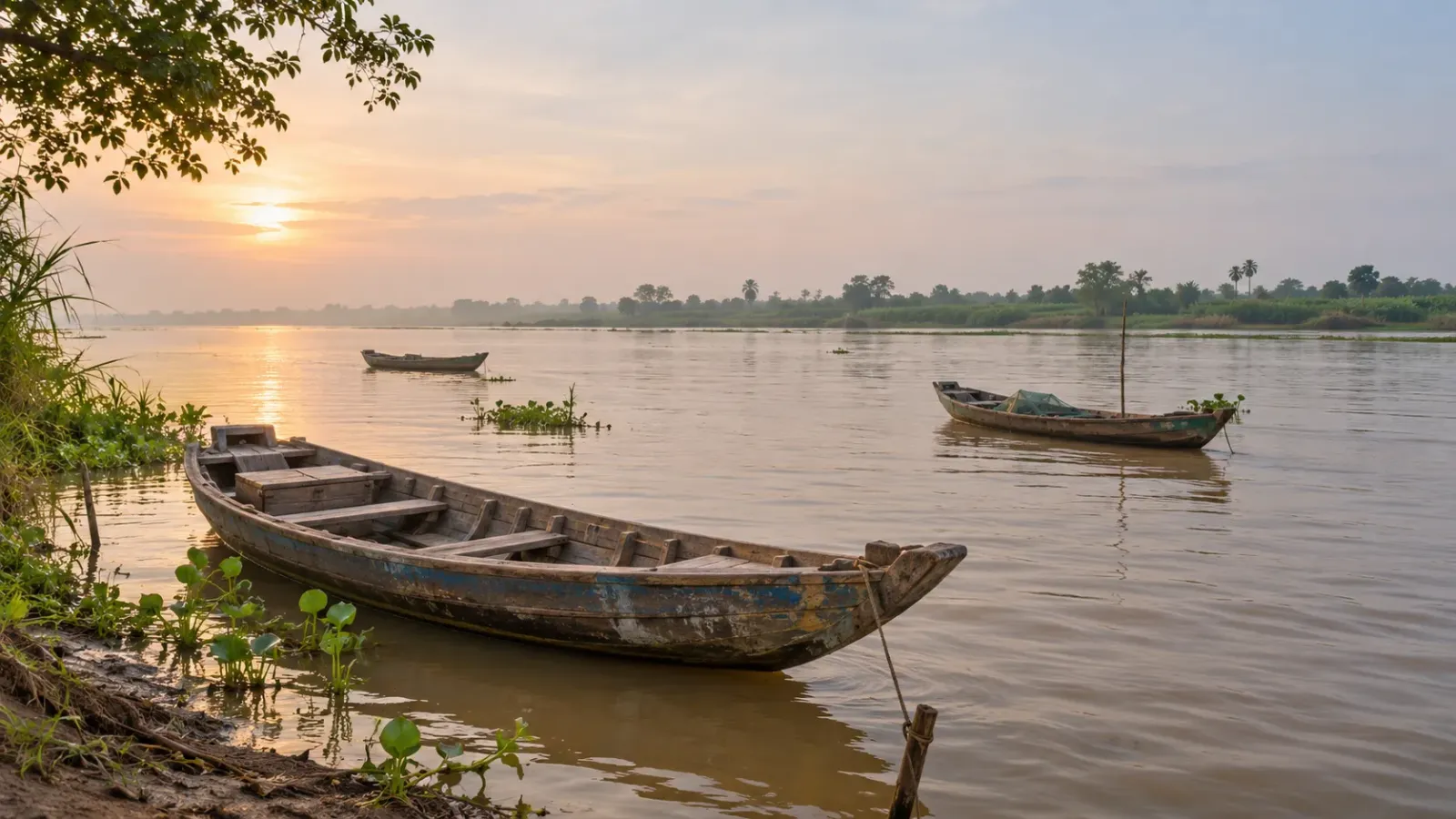
The river route from Chau Doc to Phnom Penh leaves Vietnam at Vinh Xuong, an e-visa border gate.
What Changed in 2026, and What to Watch in 2027
- New fee schedule: a Ministry of Finance circular in force since 1 April 2026 replaced the old visa fee rules. The single-entry fee stayed at US$25.
- More e-visa border gates: 41 gates added in December 2025 brought the total to 83, including many seaports and land crossings.
- Pre-Arrival Information pilot: launched at Tan Son Nhat in April 2026 and since extended to four more major airports. Officially it is encouraged rather than mandatory, but the government is working on a legal basis for it, so the rules could change. Check before you fly.
- Immigration law amendments: changes in force since 1 July 2026 added new visa types for skilled digital-industry workers and their families. They did not change the visa-free or e-visa routes for tourists.
- Health declarations: from 1 July 2026 they are no longer routine for all arrivals and are activated only when a specific disease requires it.
- Exemption end dates: the two 45-day lists run to March and August 2028. Watch for news of renewals or additions during 2027.
Common Mistakes to Avoid
- Applying on a look-alike site. The official addresses are evisa.gov.vn and thithucdientu.gov.vn; anything else is not the government portal.
- Believing you must wait 30 days before a second visa-free visit. That rule was removed in 2020.
- Assuming an e-visa is limited to 30 days. It can be issued for up to 90 days; choose the length and entry type that match your trip.
- Treating the pre-arrival form as a visa. It is an information form. If your passport needs a visa, you still need one.
- Assuming every UK passport is covered. BN(O) passport holders need a visa.
- Booking a single-entry e-visa for a Vietnam–Cambodia–Vietnam trip. Choose multiple entry, or apply for a new visa before you return.
Frequently Asked Questions
Do US, Australian or Indian citizens need a visa for Vietnam?
For ordinary tourist travel, generally yes. US, Australian and Indian passports are not covered by the nationality-based exemptions listed above, so you will usually need an e-visa unless another exemption applies, such as Phu Quoc's 30-day rule for trips only to the island.
Can I extend a 45-day visa-free stay?
The law allows it to be considered, but it is decided case by case and is not guaranteed. If you think you will need more than 45 days, apply for an e-visa of up to 90 days before you travel.
Can I leave Vietnam and come back visa-free?
Yes, if your passport qualifies. Since 2020 there has been no 30-day waiting period between visa-free stays.
Should I choose a single or multiple-entry e-visa for a side trip to Cambodia?
Multiple entry, if you plan to return to Vietnam on the same visa. A single-entry e-visa ends when you leave.
How early should I apply for an e-visa?
Applications are normally processed within three working days, but individual cases can take longer, so apply at least two weeks before you fly. Allow more time around Tet and other public holidays.
Do children need their own e-visa?
A child with their own passport needs their own e-visa. Children under 14 who are listed in a parent's passport are included on that parent's application.
Is the pre-arrival form required?
As of November 2026, official notices describe it as a pilot that foreign travellers arriving at Tan Son Nhat, Noi Bai, Da Nang, Cam Ranh and Phu Quoc are strongly encouraged to complete, although some airlines tell passengers it is required. If you land at one of these airports, complete it within three days before arrival or on arrival at the official site, and check your airline's instructions.
Plan Your Trip
Once you know how you will enter, the rest of the planning is easier. Our two-week Vietnam itinerary shows how to fit the north, centre and south into one trip, and our month-by-month guide to the best time to visit helps you pick your dates. If you would like a private route built around your visa dates, start with a customised tour. For questions about a booking, contact our team.
Related articles
Water Puppet Shows in Hanoi vs Saigon: Where to Watch and How to Choose

Best Time to Visit Vietnam: A Month-by-Month Guide to the North, Centre and South
Central Vietnam Flood & Typhoon Season: When It Happens and How to Plan Your Trip
Tet 2027 in Vietnam: Dates, What's Open and How to Plan Your Trip
Cham Islands from Hoi An: How to Get There, What to Expect and When to Go
Nha Trang Island Hopping 2026–27: Which Islands, Which Boat and What to Expect Now
Hue to Hoi An via the Hai Van Pass: How to Make the Trip and What You’ll See
Related tours

Mekong Delta: Cai Be, Can Tho, Chau Doc & Tra Su Forest 3-Day Tour
Departs from Ho Chi Minh city
from$165