Cham Islands from Hoi An: How to Get There, What to Expect and When to Go
Hoi An Tours & Day TripsBy Pham Phuong Anh
The Cham Islands sit about 15 km off Hoi An, close enough for a day trip but only when the sea allows. This guide covers the boats from Cua Dai, the island fee set in 2026, what to see on Hon Lao, what snorkelling is really like, staying overnight and how to plan around weather and sea bans.
Table of contents
The Cham Islands are the closest thing Hoi An has to an island escape: green hills dropping into clear water, a fishing village with one small market, and a marine reserve whose coral reefs are monitored every year. A fast boat reaches them from Cua Dai in well under an hour, so most visitors go there and back in a day.
What catches people out is the sea. Boats only sail when the port authority clears them, and that can change at short notice. A few practical things have also changed since the islands came under Da Nang City in July 2025: a new management regulation for the nature reserve was issued in May 2026, and the visitor fee is now set by Da Nang's own resolution, at 70,000 VND. This guide covers all of that, as of November 2026.
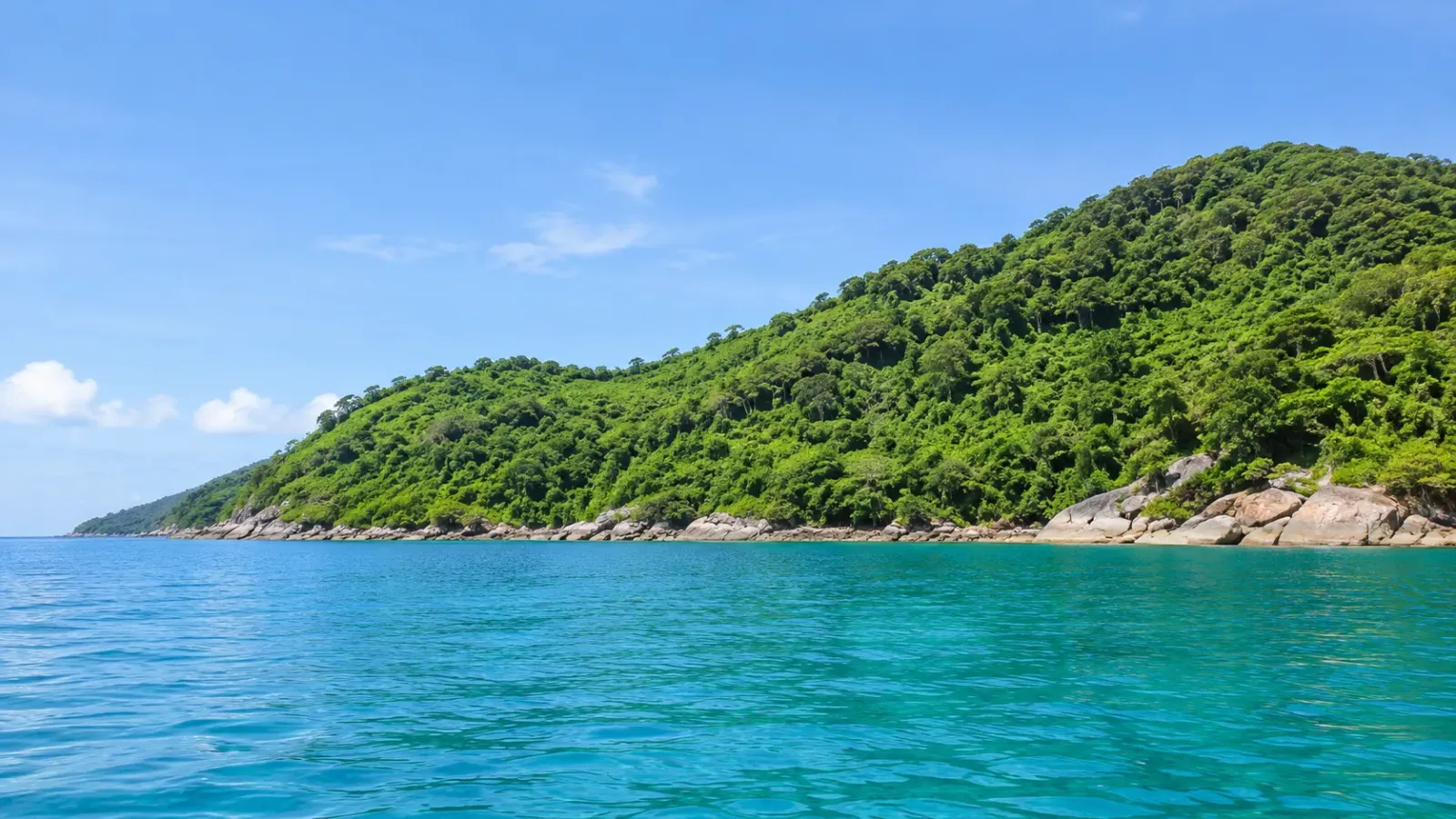
Most visits centre on Hon Lao, the largest of the eight islands and the only one with a village and pier.
The Short Answer
Take a speedboat or join a day tour from Cua Dai, on the coast east of Hoi An's old town. Pay the 70,000 VND sightseeing fee unless you qualify for an exemption, check whether your fare also covers the environmental charge, spend the day around Bai Lang village and one of the beaches, and be back on the mainland by mid-afternoon. Go between roughly March and August for the calmest seas, and keep a spare day in your plans in case boats are held in port.
| Topic | What to know |
|---|---|
| Distance | About 15 km offshore |
| Where boats leave | Cua Dai, east of Hoi An's old town |
| Crossing by speedboat | About 20–25 minutes in normal conditions, longer in a swell |
| Island charges | Sightseeing fee of 70,000 VND per person per visit since 10 June 2026 (children under 16 exempt); separate 20,000 VND environmental charge; check what your fare includes |
| Calmer months | About March to August; trips also run in other months when the sea allows |
| Day trip or overnight | Most people visit for the day; simple homestays exist if you want to stay |
| Bring | Passport or ID, cash, sun protection, a reusable bag |
Where the Cham Islands Are and Why They Are Protected
The Cham Islands, Cu Lao Cham in Vietnamese, are a group of eight islands about 15 km off the coast at Hoi An. Hon Lao, the largest, has the main village, the pier and nearly everything a visitor uses. The others are smaller, mostly uninhabited islands that you see from the boat or visit on a snorkelling stop.
Administratively, the islands form Tan Hiep, an island commune that has been part of Da Nang City since the July 2025 province mergers, which also brought Hoi An into the city. You will still see the islands described as part of Quang Nam or Hoi An in older guides.
On 26 May 2009, UNESCO recognised Cu Lao Cham – Hoi An as a World Biosphere Reserve, linking the islands and their reefs with Hoi An's old town and river system. The islands themselves are a nature reserve, and Da Nang issued a new management regulation for the reserve in May 2026. For visitors, the parts that matter are simple: tourist boats may only pick up, drop off and moor at designated places, anchoring on coral reefs and seagrass is strictly prohibited, and tour businesses working on the islands sign environmental commitments with the reserve's management board.
Getting There from Hoi An
Cua Dai: Where the Boats Leave
Boats to the islands leave from Cua Dai, at the mouth of the Thu Bon River on the coast east of Hoi An's old town. It is a short taxi or ride-hailing trip from most hotels in Hoi An. More than 70 licensed tourist speedboats, run by over 40 companies, operate on the Cua Dai to Cham Islands route, with between 12 and 79 seats each. Boats arrive at the pier in Bai Lang, the main village on Hon Lao.
Speedboat
Speedboats are how almost everyone crosses. Expect around 20 to 25 minutes on the water in normal conditions, longer and bumpier if the sea is up. You can buy a seat with an operator at Cua Dai or through a hotel or agency in Hoi An. Fares vary by operator, so compare what is included, especially the island fee and environmental charge, before you pay. The reserve's guidance lists morning departures from about 8:00 to 10:00 and returns from about 13:30 to 14:00, varying by season.
Local Wooden Boat
Slower wooden boats also run between Cua Dai and the islands. The reserve's travel guidance puts the crossing at about 50 to 60 minutes, with a morning sailing around 8:00 and a return around midday (early 2026). These boats mainly carry goods and islanders, so if you want the slow, local version of the crossing, confirm the day's sailing at Cua Dai and do not rely on one for a tight schedule.
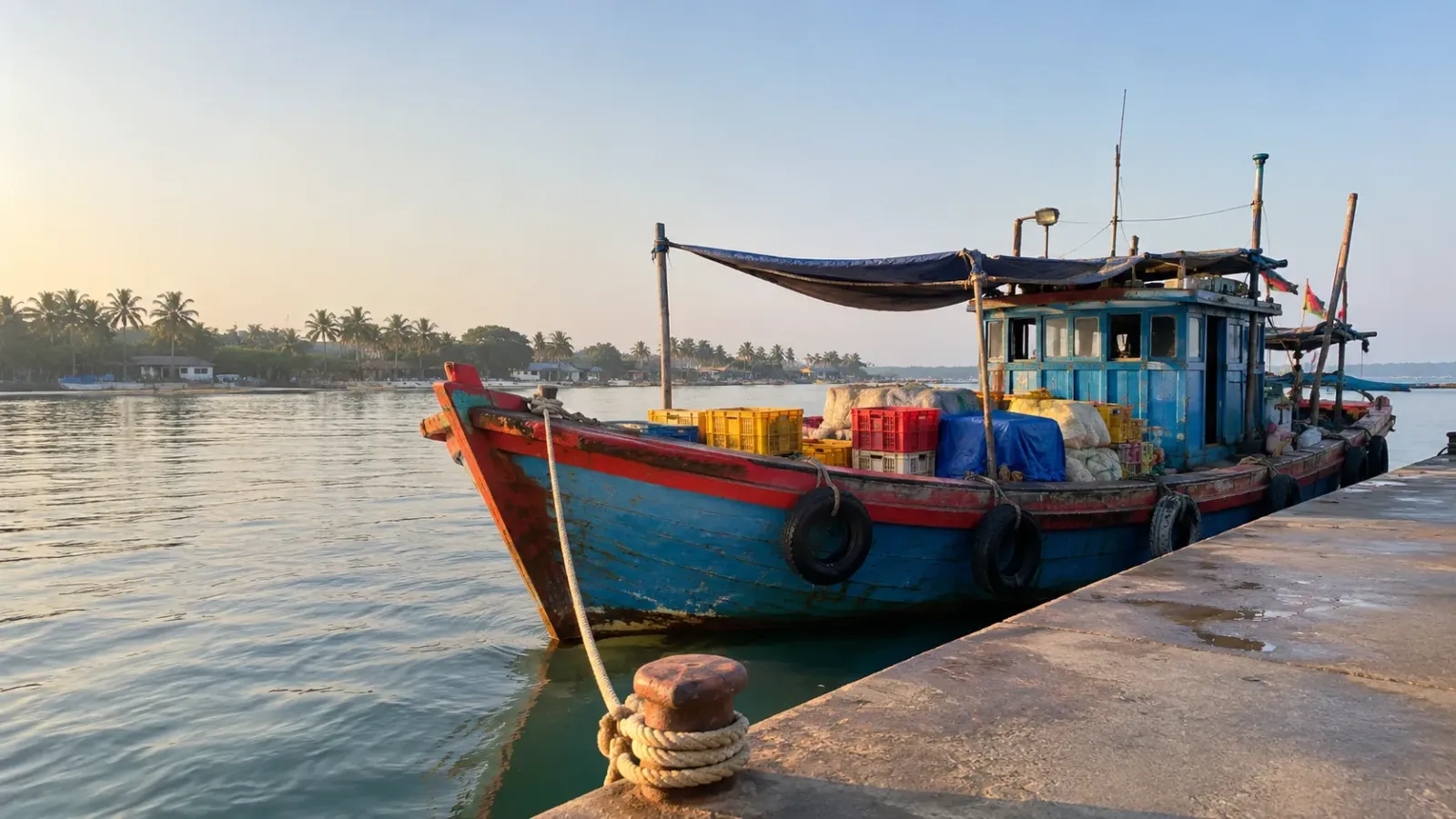
Wooden boats on this route carry mainly cargo and islanders, so check the day's sailing in person at Cua Dai.
Joining a Day Tour
For a first visit, a day tour is the simplest option. Many day tours bundle the road transfer, the boat, lunch and island charges, and the operator deals with port clearance and weather changes. Inclusions vary, so confirm whether the sightseeing fee and the environmental charge are in the price before you book. Most follow a similar pattern: a morning crossing, a walk around Bai Lang, beach and snorkelling time, lunch on the island, and a return in the early afternoon. Our Cham Islands Full-Day Tour works this way and departs from Da Nang, so if you are staying in Hoi An, confirm pickup when you book.
Coming from Da Nang
From Da Nang, you first travel down the coast road to Cua Dai. Allow about an hour by car, depending on where you start and on traffic. Public bus route 02 runs from Da Nang's central bus station through Hoi An towards the Cua Dai boat terminal, with buses every 15 to 30 minutes through the day. Its timetable and stops were adjusted more than once in 2026, most recently from 1 November, so check the current route and departure times before you travel. Either way, set off early enough to catch a morning boat, or let a day tour with hotel pickup handle both legs. Our Da Nang page lists other trips from the city.
| Option | Time on the water | Flexibility | Best for |
|---|---|---|---|
| Speedboat ticket | About 20–25 minutes | Medium: fixed return times set by the operator | Independent travellers who want a quick crossing |
| Local wooden boat | About 50–60 minutes | Low: limited sailings, check locally | Slow travellers staying overnight |
| Day tour | Speedboat crossing | Low, but logistics and fees handled for you | First-time visitors and families |
Fees and What to Carry
Since 10 June 2026, the Cham Islands sightseeing fee has been 70,000 VND per person per visit, set by Da Nang City's People's Council and collected by the Cu Lao Cham Nature Reserve Management Board. Children under 16 and school pupils are exempt, along with some other groups named in the resolution, mostly Vietnamese residents such as seniors and islanders, so carry proof if you qualify. The fee is also waived for everyone during the four-day Lunar New Year period, from the last day of the old lunar year (the 29th or 30th day of the twelfth lunar month, as applicable) through the third day of the new lunar year, and on 29 March, 26 May (the anniversary of the UNESCO listing) and 2 September. These exemptions apply to the sightseeing fee only, not to boat fares or the environmental charge.
The reserve's own travel guidance also lists a 20,000 VND environmental sanitation charge, and gives an indicative return speedboat fare of 350,000–400,000 VND per person that already includes both charges (early 2026, subject to change). Whether you buy a boat seat or a tour, check that both are covered before you pay. The island fee is separate from the Hoi An Ancient Town ticket, which covers heritage buildings on the mainland.
Carry your passport or ID: boat operators and tours usually ask for passenger details. Bring enough cash for lunch, drinks and transport on the island, as card payment is not something to count on there.
What to See on Hon Lao
Bai Lang: the Pier, the Market and the Village
Bai Lang is where the boats arrive and where island life is easiest to see. The small Tan Hiep market sits close to the pier, with dried seafood and local produce, and the lanes behind it lead past houses, small shops and family-run eateries. Champa-era finds here, including Chinese ceramics from the 7th to 10th centuries and pottery from the Middle East, point to the islands' place on old sea trade routes.
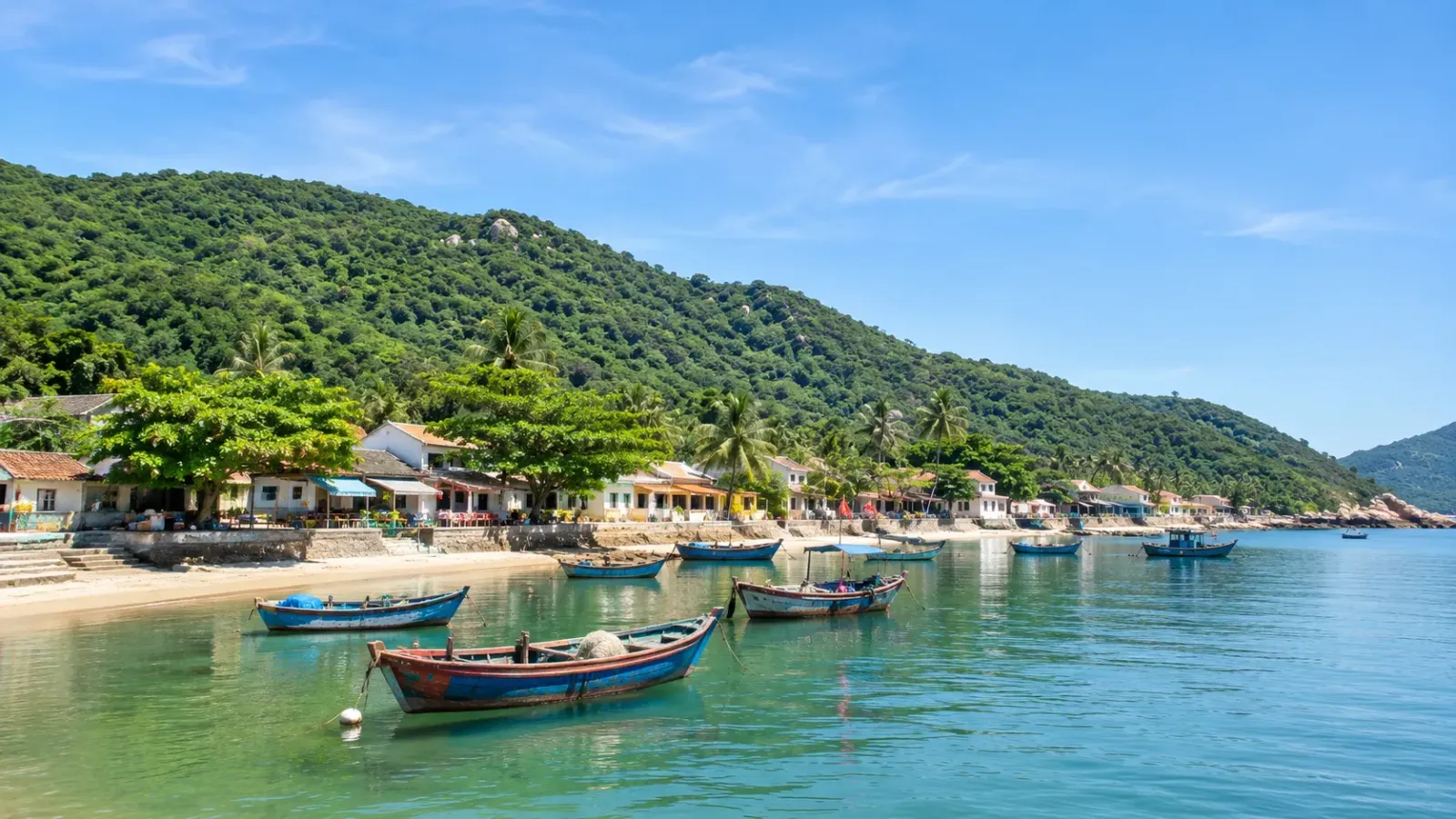
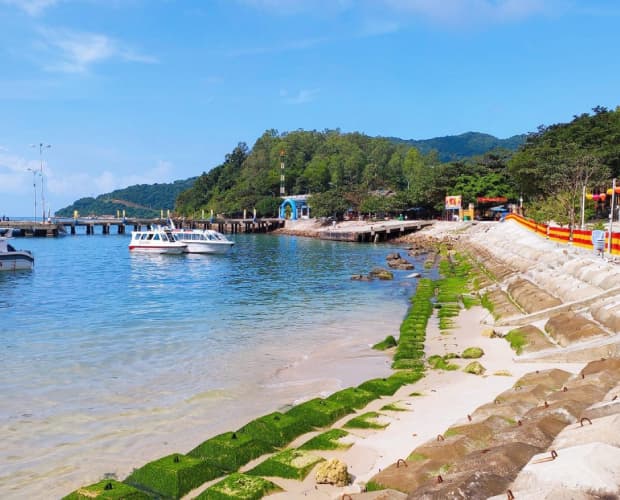
Island villages are small and walkable, with most visitor services clustered near the pier.
Hai Tang Pagoda and the Old Well
A short walk from the pier, Hai Tang Pagoda sits in Xom Cam hamlet, set back from the water against the hillside. It is one of seven sites on the islands listed as national relics in 2006. Nearby, the old well of Xom Cam is another of those listed sites. Dress modestly for the pagoda, with shoulders and knees covered, and keep your voice down.
Shrines and Older History
The other listed sites tell the story of a fishing and sea-trading community: a whale shrine, Lang Ong Ngu, where fishermen honour the whale as a protector; a shrine to the founders of the swiftlet-nest trade, long an island speciality; a tomb of the founding settlers; and archaeological sites at Bai Lang and Bai Ong. At Bai Ong, excavations uncovered a settlement and burial site of pre-Sa Huynh people from the early metal age, dated to about 3,100 years ago, with Champa and Chinese pottery from the 8th to 10th centuries in a later layer above. The Museum of Sa Huynh Culture, which puts the region's early history in context, is in Hoi An town rather than on the islands, so visit it before or after your trip if it interests you.
Beaches: Bai Ong, Bai Chong and Bai Huong
Bai Ong is the main beach for day visitors, with seafood restaurants and space to swim, and many tours stop here for lunch. Bai Chong is usually quieter. Bai Huong, a smaller fishing village on Hon Lao, is where some visitors go to stay overnight. Getting between them is easiest by motorbike taxi; the islanders run a self-managed motorbike-taxi group, so agree the fare before you set off.
Snorkelling and Swimming: What to Expect
Snorkelling is the main activity in the water around the Cham Islands. The reserve monitors its reefs each year, and the coral is one reason the islands were protected in the first place. Most snorkelling happens on boat stops around the smaller islands or off the beaches, and what you see depends on the day's visibility and swell. On a calm morning in the dry months, clear shallow water over coral is realistic; after rain or wind it can be cloudy.
Da Nang's environment department has published the areas inside the reserve where underwater recreation and coral viewing are allowed, and licensed boats should take you only to those points. What is actually on offer still depends on the operator's licence and the day's conditions, so ask what your trip includes and where you will snorkel. Snorkelling and coral viewing are the core experience; do not book expecting a full menu of water sports.
Look after the reef while you are in the water: do not stand on or touch coral, do not feed fish and do not take anything from the sea. Wear a life jacket if you are not a confident swimmer and stay close to your guide or boat.
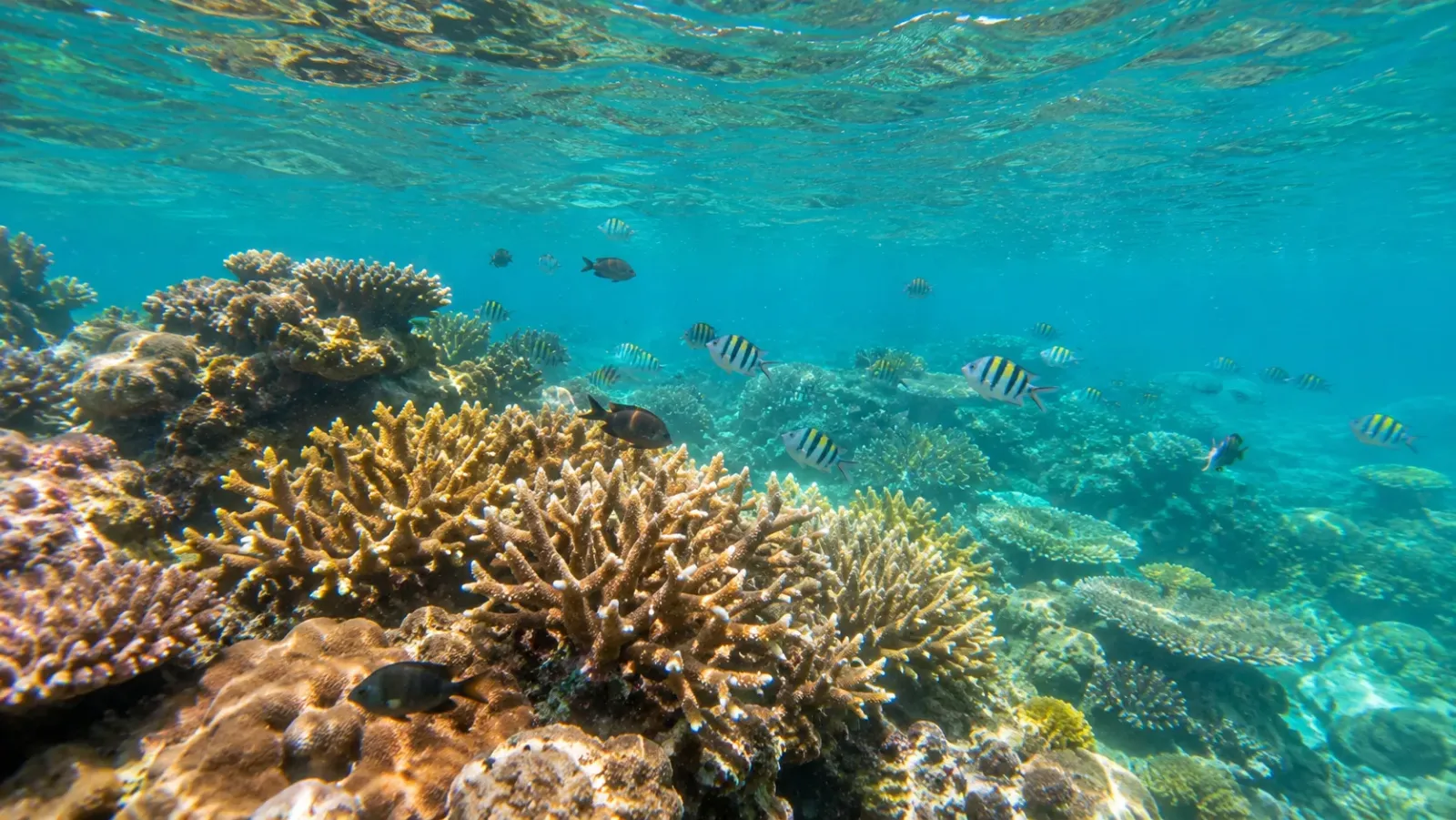
Visibility changes with the weather, so the clearest snorkelling usually comes on calm mornings in the drier months.
Day Trip or Overnight?
A Typical Day Trip
Most visitors cross in the morning, walk around Bai Lang and Hai Tang Pagoda, spend the late morning swimming or snorkelling, eat lunch at a beach and head back to the mainland in the early afternoon. Reporting from mid-2026 found that more than four in five speedboat trips to the islands were day tours, so a day trip is the standard way to visit. It also fits easily into a few nights in Hoi An; our two-week Vietnam itinerary slots it in as an optional day out.
Staying the Night
Fewer than one in 20 visitors stay overnight, which is exactly why some people do. Once the day boats leave, the village goes quiet, and the evening and early morning are the calmest times on the island. Accommodation is simple, mostly family homestays around Bai Lang and Bai Huong, and your host is required to register your stay with the local authorities, so bring your passport. Arrange your room and your boat back before you go, and remember that a sea ban can keep you on the island longer than planned.
When to Go and When Boats Stop
The Calmer Months
The sea is usually calmest from about March to August, which is also when the islands are busiest. In peak season, the islands see more than 2,000 visitors a day on average, so set off early if you want quieter beaches. Trips also run outside that window whenever the sea allows: the islands welcomed more than 13,700 visitors in the first quarter of 2026. From around September to December, central Vietnam's rainy and storm season makes crossings far less predictable. Our guides to the flood and typhoon season in central Vietnam and the best time to visit Vietnam cover the wider picture.
Sea Bans and Same-Day Cancellations
Boats to the islands need port clearance to sail, and the authorities stop them when conditions are unsafe. A dedicated sea forecast is issued for the Cua Dai to Cham Islands area, and the port authority is required to pass weather warnings on quickly so that visitors can be brought back before bad weather arrives. Even so, plans can change fast. In July 2026, in the middle of the calm season, around 300 visitors, most of them foreign, were stranded on the island for nearly a day after the Da Nang Maritime Port Authority suspended boats because of rough seas; they were brought back safely on 17 July.
The practical lesson is to avoid putting your island day right before a flight or a long onward journey. If a tour is cancelled for weather, check how changes and refunds work; for trips booked with us, see our cancellation policy.
Festivals on the Island
The fishermen's festival, Le Hoi Cau Ngu, is held at the whale shrine each spring around the 3rd and 4th days of the fourth lunar month; in 2026 it fell on 19 and 20 May. It includes traditional rites and ba trao, a sung performance that mimics rowing out to sea. If your dates line up, it is a rare chance to see island traditions in person.
Island Rules: Plastic, Coral and Stone Crabs
The Cham Islands have campaigned against plastic bags since 2009, when Tan Hiep became the first commune in Vietnam to pilot a programme to cut their use. You will see signs asking visitors not to bring plastic bags, and shops wrap purchases in paper or reusable bags. Pack a cloth bag and a refillable bottle, and take your rubbish back to the mainland.

Bring your own reusable bag: the islands have campaigned against plastic bags since 2009.
Stone crab is the islands' best-known dish, and it is protected. Under the 2026 regulation, it may only be harvested from 1 March to 31 July and only once its shell is at least 7 cm wide, and the reserve uses an eco-label to trace legally caught crabs. Outside that window, skip it on menus, and if a restaurant cannot show that its crab is in season and legal, order something else. Respect the coral rules above, and do not buy souvenirs made from coral or shells.
Practical Tips
- If you are prone to seasickness, consider motion-sickness medication taken as directed on the label or by a pharmacist, and sit in the middle or towards the back of the boat.
- The sun is strong on the water and the beaches; bring a hat, sun-protective clothing and reef-friendly sunscreen.
- Wear sandals you can get wet: you may step off the boat into shallow water.
- Bring cash and a passport or ID, and keep them in a waterproof pouch.
- Check the time of the last boat back and be at the pier early.
- Leave a buffer day before flights or long transfers. If you are travelling on down the coast from Hue, our Hue to Hoi An via the Hai Van Pass guide helps you time that leg.
Visiting the Cham Islands with VietMediaTravel
Our Cham Islands Full-Day Tour departs from Da Nang and includes a round-trip motorboat crossing, an English-speaking guide, lunch on the islands, snorkelling equipment, entrance fees for the sights on the itinerary and drinking water. Snorkelling depends on the day's sea conditions and on where activities are allowed. If you are staying in Hoi An, ask about pickup when you book.
For more ideas nearby, see our Hoi An tours and day trips. If you would rather build the islands into a longer trip around central Vietnam, we can plan a private itinerary for you.
Frequently Asked Questions
How long is the boat from Hoi An to the Cham Islands?
By speedboat from Cua Dai, about 20 to 25 minutes in normal conditions. Slower wooden boats take about 50 to 60 minutes and mainly carry cargo and islanders.
Can I visit the Cham Islands on my own?
Yes. Buy a speedboat seat at Cua Dai or through a hotel or agency, pay the island fee if it is not included, and get around on foot or by motorbike taxi. A tour is easier if you want transfers, lunch and snorkelling arranged for you.
How much is the Cham Islands entrance fee?
The standard sightseeing fee is 70,000 VND per person per visit since 10 June 2026, collected by the nature reserve's management board. Children under 16, school pupils and some other groups are exempt, and everyone visits free during the four days of Lunar New Year and on 29 March, 26 May and 2 September. The reserve's travel guidance also lists a separate 20,000 VND environmental sanitation charge, so check what your boat ticket or tour includes.
Can you snorkel at the Cham Islands?
Yes. Snorkelling and coral viewing take place at designated points inside the reserve. Visibility depends on the weather, and what each trip offers depends on the operator, so ask before you book.
Do boats run in the rainy season?
Sometimes. Boats sail only with port clearance, and from around September to December rough seas often stop them, sometimes at short notice. Keep the day flexible and have a mainland plan B.
Can you stay overnight on the Cham Islands?
Yes, in simple homestays, mostly around Bai Lang and Bai Huong. Bring your passport so your host can register your stay, and book your return boat in advance.
Related articles

Hoi An Ancient Town Ticket 2026–27: Fees, What It Covers and How to Use It

Vietnam Visa & Entry Requirements 2026–27: Visa-Free Entry, E-Visas and What to Expect on Arrival

Vietnam’s 2025 Province Mergers: Old and New Place Names and What They Mean for Your Trip

Water Puppet Shows in Hanoi vs Saigon: Where to Watch and How to Choose

Nha Trang Island Hopping 2026–27: Which Islands, Which Boat and What to Expect Now

Visiting the DMZ from Hue: Which Sites to See and How to Plan Your Day Trip

3 Days in Ho Chi Minh City: A Day-by-Day Itinerary for First-Time Visitors