Central Vietnam Itinerary: Hue, Hoi An and Da Nang in 5 or 6 Days
Vietnam ItinerariesBy Pham Phuong Anh
Five or six days is enough for Hue, the Hai Van Pass, Hoi An and Da Nang if you travel in one direction and sleep in the right places. This guide sets out a 5-day and a 6-day plan, day by day, with real tour pickup times, how to split your nights, which way round to go and what to drop when time is short.

Table of contents
Central Vietnam in 5 or 6 Days: The Short Answer
- Sleep in two or three places. Two nights in Hue and two in Hoi An cover a five-day trip. With a sixth day, add one night in Da Nang at the end.
- Travel north to south. Fly into Hue, cross the Hai Van Pass by road on Day 3 and fly out of Da Nang. You never retrace your steps.
- Five days covers the essentials: imperial Hue, the pass and Hoi An Ancient Town. A sixth day adds one excursion of your choice and a morning in Da Nang.
- Treat the Hue to Hoi An transfer as a sightseeing day, not a travel day. It is one of the best days of the trip if you go over the pass in daylight.
- Check where each tour picks up. Several of the day tours in this guide start from hotels in Da Nang, which matters if you are sleeping in Hoi An.
- The seasons differ along the route. Hoi An and Da Nang are generally drier from about February to August. Hue can stay cool and damp into February and is more reliable from March. October and November need the most careful planning everywhere.
Five Days or Six: What the Extra Day Buys
Both plans follow the same road and share the first four days. The difference is what happens after Hoi An. On the five-day plan you leave for the airport on the fifth morning. On the six-day plan you get one free-choice day, then a night and a morning in Da Nang before you fly.
| 5 days | 6 days | |
|---|---|---|
| Nights | 2 in Hue, 2 in Hoi An | 2 in Hue, 2 in Hoi An, 1 in Da Nang |
| Hue's Imperial City and tombs | Yes | Yes |
| Hai Van Pass by road | Yes | Yes |
| Hoi An Ancient Town, morning and evening | Yes | Yes |
| Ba Na Hills, the Cham Islands or a beach day | No | One of the three |
| Time in Da Nang | Airport only | An evening and a morning |
| Room for bad weather | Very little | The choice day can absorb a delay |
Five days works, but every day has a job to do and there is little slack. If rain closes the pass road for a few hours or you land later than planned, you will have to shorten something, usually the tombs in Hue or your second evening in Hoi An. If you can spare the sixth day, take it: it is the day that turns a tight schedule into a comfortable one.
The Route at a Glance
| Day | 5-day plan | 6-day plan | Sleep in |
|---|---|---|---|
| 1 | Arrive in Hue; evening food walk if you land early enough | Hue | |
| 2 | Imperial City in the morning, one or two royal tombs in the afternoon | Hue | |
| 3 | Hue to Hoi An over the Hai Van Pass | Hoi An | |
| 4 | Hoi An Ancient Town, early and again after dark | Hoi An | |
| 5 | Transfer to Da Nang Airport and depart | Ba Na Hills, the Cham Islands or a slow day, ending in Da Nang | Da Nang (6-day plan) |
| 6 | — | Morning in Da Nang, then depart | — |
The tour times quoted in this guide come from the published tour programmes as of November 2026. They can shift with traffic, weather and season, so treat them as a guide and reconfirm when you book.
Which Way Round: Start in Hue or in Da Nang?
The order of the stops matters more than you might expect, for one practical reason: the sightseeing transfer we list between the two towns runs from Hue to Hoi An only. Travelling north to south lets you use it.
Into Hue, out of Da Nang
This is the cleanest version. Hue's Phu Bai Airport is about 15 km from the city centre, roughly 20 to 30 minutes by car, so even an afternoon arrival leaves you an evening in town. You then travel south by road and leave from Da Nang without doubling back. Depending on your international ticket, reaching Hue may involve a connecting domestic flight.
Hoi An has no airport and no railway station. At the end of the trip you fly from Da Nang, about 30 km from Hoi An and 45 minutes to an hour by road.
Round trip from Da Nang
If you hold a return ticket to Da Nang, the plan still works. Go straight to Hue on Day 1, then follow the same route south and finish where you started.
- By road: Da Nang to Hue is about 100 km. A direct car or van normally uses the tunnel under the pass and takes about two to two and a half hours. Save the pass road itself for the journey back on Day 3.
- By train: the heritage tourist train between Da Nang and Hue runs in the morning and the afternoon in each direction and takes about three to four hours. Timetables changed during 2026, so check the departure for your date on the Vietnam Railways heritage train site before you plan around it.
If you land too late to reach Hue the same day, sleep in Da Nang and travel north the next morning. This changes the number of nights available in each city, as shown below:
| 5 days, first night in Da Nang | 6 days, first night in Da Nang | |
|---|---|---|
| Nights | 1 in Da Nang, 1 in Hue, 2 in Hoi An | 1 in Da Nang, 2 in Hue, 2 in Hoi An |
| What changes | You reach Hue on the morning of Day 2 and leave on the morning of Day 3. There is time for the Imperial City, but the royal tombs usually have to go. | Hue, the pass and Hoi An stay as planned, one day later. The free-choice day and the final night in Da Nang drop out, and you leave for the airport from Hoi An. |
Going the other way, from Hoi An north to Hue, is possible by private car, motorbike tour, bus or train, but not on the sightseeing transfer.
Day 1: Arrive in Hue
Keep the first day light. Check in, walk down to the Perfume River and cross Truong Tien Bridge as the light fades. Hue is a calm city by Vietnamese standards, and an unhurried first evening sets the pace for the rest of the trip.
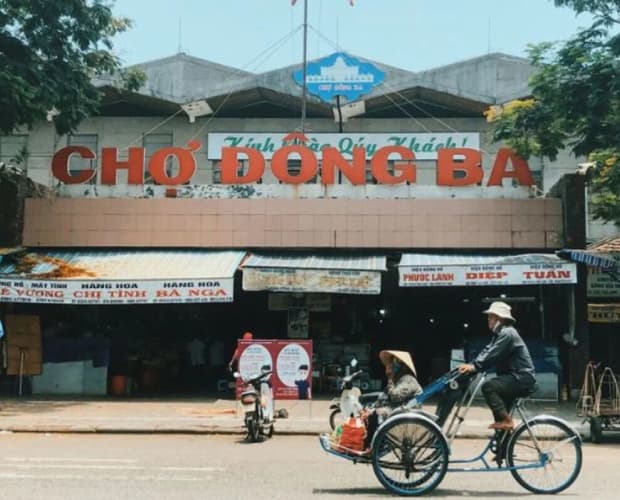
If you arrive early enough, food is the easiest introduction. The Hue Half-Day Walking Food Tour lasts four hours and runs three sessions a day, starting at 09:00, 13:00 and 17:00. The evening session includes the night market. The route crosses Truong Tien Bridge to Dong Ba Market, with tastings of local dishes such as banh beo and nem lui and a choice of bun bo Hue or bun thit nuong. The guide meets you at your hotel, and the tour needs a minimum of two people.
The 17:00 session only fits an arrival day if you have landed, checked in and had time to draw breath. If your flight is later, move the food walk to the evening of Day 2.

An easy first evening in Hue starts with a walk along the Perfume River to Truong Tien Bridge.
Day 2: The Imperial City and Royal Tombs
Give the morning to the Imperial City, the walled palace complex of the Nguyen dynasty on the north bank of the river. Start at opening time, before the heat and the tour groups build.
Spend the afternoon at one or two of the three main royal tombs: Tu Duc, Minh Mang and Khai Dinh. They lie in the hills south and west of the city, several kilometres apart, and are not within walking distance of each other. Most visitors hire a car with a driver for the afternoon or use taxis and ride-hailing apps between sites.
As of November 2026, the standard adult prices under Hue's fee schedule, in force since 4 January 2026, are:
- Imperial City: 200,000 VND
- Each main tomb: 150,000 VND
- Imperial City plus two main tombs: 420,000 VND
- Imperial City plus all three main tombs: 530,000 VND
Children aged 7 to 12 pay reduced rates. Which ticket to buy depends on how many sites you will reach:
- Imperial City and one tomb: buy two single tickets, 350,000 VND in total. A combination ticket costs more than you need.
- Imperial City and two tombs: the 420,000 VND combination saves 80,000 VND on single tickets. This is the best fit for a normal Day 2.
- Imperial City and all three tombs: the 530,000 VND combination saves 120,000 VND, but three tombs after a morning at the palace is a rush. It suits travellers who give Hue a full extra day.
Before buying a combination ticket, check whether you qualify for one of Hue's heritage admission discounts. Under a city policy announced on 16 November 2026, eligible passengers on selected new transport routes can receive 50% off one single-site admission at a qualifying monument, including the Imperial City.
The eligible rail services are the Hue–Phong Nha tourist train and the Hue–Da Nang steam tourist train, with the discount available until 31 May 2027. Eligible newly launched flights to Hue qualify until 31 December 2027. Existing air routes with increased flight frequencies are excluded.
You must have used the eligible transport service, present a valid paper or electronic ticket and visit within seven days of travel. The regular Hue–Da Nang heritage train is not named in the policy. Check whether the steam train is operating before planning around it. Combination tickets are not discounted, and the tombs of Tu Duc, Minh Mang and Khai Dinh are not among the eligible monuments.
If you do qualify, the sums change. A half-price Imperial City ticket plus one tomb comes to 250,000 VND, and plus two tombs to 400,000 VND, which beats the 420,000 VND combination. For all three tombs, the 530,000 VND combination is still cheaper than separate tickets at 550,000 VND.
Prices and rules can change, so check before you buy. Our guide to Hue Imperial City tickets and the royal tombs explains how the combinations and discounts work and how to choose between the tombs.
If you still have energy at the end of the day, Thien Mu Pagoda sits on the river west of the centre.

Start at the Imperial City when the gates open, before the heat and the tour groups arrive.
Day 3: Hue to Hoi An over the Hai Van Pass
This is the day that connects the two halves of the trip, and it deserves daylight. The road climbs over a headland between the mountains and the sea, with Lang Co Bay on one side and Da Nang Bay on the other.
The simplest way to do it is the Hue to Hoi An Full-Day Tour, a one-way sightseeing transfer. It picks up from hotels in Hue at 07:30 and stops at An Bang Cemetery, Lap An Lagoon, Lang Co Beach, the Hai Van Pass and the Marble Mountains. It is scheduled to reach Hoi An at 15:30 and drops you at your hotel there. A snack lunch and water are included. The published inclusions do not confirm the entrance fee for the Marble Mountains, so ask whether it is covered, and ask about the luggage allowance at the same time.
There are other ways to make the trip:
- Private car with driver: flexible, and you choose the stops. Ask specifically for the pass road; direct transfers otherwise tend to take the tunnel.
- Heritage train to Da Nang: the line follows the shoreline below the pass and takes about three to four hours, with a stop at Lang Co. You then need 45 minutes to an hour by road from Da Nang to Hoi An. Check the current timetable before you commit.
- Direct bus or van: the quickest option at roughly three to four hours, but these normally use the tunnel and do not stop for sightseeing.
From about September to December, heavy rain can close the pass road for a few hours or longer, so keep a plan B in those months. Our guide to getting from Hue to Hoi An via the Hai Van Pass compares every option in detail, including the northbound journey.
Arriving in Hoi An by mid-afternoon leaves you a first evening in the old town, which is when it looks its best.

Cross the pass in daylight: the views over Lang Co are the reason to go by road instead of the tunnel.
Day 4: Hoi An Ancient Town
Hoi An rewards a simple plan: go out early, rest in the middle of the day and come back after dark. The old town is small and best seen on foot. Early in the morning the streets are quiet and the light is soft on the yellow walls. In the evening the lanterns are lit along the river and the town fills up again.
In between, visit a few of the heritage buildings: the Japanese Covered Bridge, the assembly halls, the old merchant houses and the small museums. These charge admission. The heritage centre's January 2026 guidance described ticket packages valid for a stay of up to three days. Da Nang, which now administers Hoi An, then set the statutory admission fee at 20,000 VND per person for each heritage building from 10 August 2026, the same for Vietnamese and foreign visitors. Whether the earlier packages and validity rules still apply has not been confirmed, so check how tickets are sold and what yours covers at an official ticket booth before visiting the heritage buildings. Our Hoi An Ancient Town ticket guide sets out what we have been able to confirm.
For lunch, try cao lau, the noodle dish most closely tied to the town. If you want clothes made, see a tailor in the morning so there is time for a fitting before you leave.
For the afternoon, An Bang Beach is a short ride from the old town. Another option is the basket boats at Bay Mau coconut forest in nearby Cam Thanh. Our Bay Mau Coconut Forest and Hoi An Ancient Town Half-Day Tour picks up from hotels in Da Nang at 15:00, so if you are staying in Hoi An, ask about joining locally before you book.

Hoi An is at its best after dark, the main reason to sleep here for two nights.
Day 5: Ba Na Hills, the Cham Islands or a Slow Day
On the five-day plan, this is your departure day. Follow the airport transfer advice in the final-day section below. The sightseeing options in this section are for the six-day plan.
On the six-day plan you have one free-choice day. Choose one option; trying to combine them does not work. Each one ends the day differently, so check how you will get yourself and your bags to Da Nang for the night.
The Cham Islands
The Cham Islands Full-Day Tour lists hotel pickup at 07:30–08:30 and a motorboat from a pier in Hoi An at 09:15. After a morning on the island and lunch at Bai Ong, the boat returns at 14:00 and the programme has you back at your hotel by 14:30–15:30. The tour is listed as departing from Da Nang, and its programme does not say which areas the pickup covers.
If hotel pickup or a meeting point in Hoi An can be confirmed, the Cham Islands are a convenient choice before moving to Da Nang: collect your bags afterwards and take a car north in the late afternoon or early evening. Keep a mainland alternative in case rough seas disrupt boat services. The sea is usually calmest from about March to August. See our guide to the Cham Islands from Hoi An.

Boats to the Cham Islands run only when the sea allows, so keep a mainland alternative in mind.
Ba Na Hills
The Ba Na Hills and Golden Bridge Full-Day Tour picks up from hotels in Da Nang at 07:30–08:30 and returns at about 17:30–18:00, with the round-trip cable car and a buffet lunch included. Because you wake up in Hoi An, there are two ways to make it work:
- Take an early car to your Da Nang hotel and be collected there. Confirm in advance that the hotel will store your luggage before check-in; do not assume it.
- Ask when you book whether a pickup in Hoi An can be arranged, and how your bags would travel.
The standard tour includes drop-off at hotels in Da Nang, so you finish the day where you are sleeping. If you arrange a special pickup in Hoi An, confirm your final drop-off location and luggage arrangements before booking.
If you go on your own, the basic ticket with the round-trip cable car is 1,000,000 VND for an adult who is not a local resident, according to Sun World's 2026 price list. Check the price for your date. Cable car operations are suspended when wind or storms make them unsafe, and cloud can hide the views even on days when they run. Our Ba Na Hills guide covers timing and what to expect at the top, and the Ba Na Hills page lists the tours we run there.

The Golden Bridge overlooks the forested slopes of Ba Na Hills, with the best views on clear days.
A slow day
A late breakfast, a last walk through the old town, a few hours on the beach and an unhurried transfer to Da Nang at any time that suits you. After four full days, this is a perfectly good plan, and it is the easiest of the three for luggage.
Travellers with a strong interest in history sometimes use this day for My Son Sanctuary, the ruined Cham temple complex inland from Hoi An. It takes about half a day. We do not currently list a tour there. Da Nang's August 2026 resolution sets the statutory admission fee at 40,000 VND per person, but this is not necessarily the total ticket price. The sanctuary's online ticketing website lists tickets at 150,000 VND for international visitors and 100,000 VND for Vietnamese visitors. Check the current payable price on the My Son ticketing website before visiting.
Your Final Day: Da Nang and Departure
On the six-day plan, Day 6 starts in Da Nang, a few kilometres from the airport. Spend the early morning on My Khe Beach, with the green slopes of the Son Tra Peninsula at the northern end of the bay.
If your flight leaves in the evening, a short city tour is possible. The Da Nang City Half-Day Tour picks up at 09:00–09:30 and drops off at 13:30–14:00, with lunch. It covers the Marble Mountains, the Lady Buddha statue, the Dragon Bridge, the Museum of Cham Sculpture and Han Market. If you took the sightseeing transfer on Day 3, you will already have stopped at the Marble Mountains, so weigh that before you book.
On the five-day plan, your final day is Day 5 and you leave straight from Hoi An. Allow 45 minutes to an hour for the drive to Da Nang Airport, and more at busy times.
To work out when to leave, count backwards from your flight: start with your airline's check-in deadline, add the drive, then add a margin for traffic and weather. Use a wider margin for an international flight, in the rainy months, or when a tour drop-off comes before the airport run. Tour return times are estimates, so do not book a flight that depends on a tour finishing on the minute.

A night in Da Nang puts you a few kilometres from the airport on your last morning.
Where to Sleep and Which Tours Pick Up Where
Two nights in Hue is the minimum for the Imperial City and the tombs without rushing. Two nights in Hoi An gives you two evenings in the old town, which is the main reason to sleep there instead of visiting for the day. The one night in Da Nang on the six-day plan is practical: it puts you close to the airport and inside the pickup area for the tours that start there.
From October to December the balance shifts. Hoi An's riverside streets are the first to flood when the river rises, so choose a hotel away from the water, or consider spending more of your time in Da Nang.
As of November 2026, our tour pages show the following:
| Tour | Listed pickup | Times |
|---|---|---|
| Hue Half-Day Walking Food Tour | Your hotel in Hue | Sessions from 09:00, 13:00 and 17:00 |
| Hue to Hoi An Full-Day Tour | Hotels in Hue; drop-off at your Hoi An hotel | 07:30 to 15:30 |
| Cham Islands Full-Day Tour | Hotel pickup; areas not specified | 07:30–08:30 to 14:30–15:30 |
| Ba Na Hills and Golden Bridge Full-Day Tour | Hotels in Da Nang | 07:30–08:30 to 17:30–18:00 |
| Bay Mau Coconut Forest and Hoi An Half-Day Tour | Hotels in Da Nang | 15:00 to 20:30–21:00 |
| Da Nang City Half-Day Tour | Hotel pickup in Da Nang | 09:00–09:30 to 13:30–14:00 |
If the choice between the two towns is still open, our guide to Da Nang or Hoi An: where to stay goes through the areas, the season and the airport transfers.
Best Time to Follow This Itinerary
The central coast keeps a different calendar from the north and the south, and the three stops on this route do not match each other exactly. Hoi An and Da Nang are generally at their best from about February to August. Hue, on the other side of the Hai Van Pass, can still be cool and rainy in February and is more settled from about March.
Rain builds from September, and the storm and flood season usually peaks in October and November. Severe flooding in late 2025 disrupted sightseeing and tourism services in Hoi An, and heritage attractions had to be cleaned up before they could reopen.
You can still travel in those months, but use the six-day plan, book rooms you can change and avoid a tight onward connection. Our guide to the central Vietnam flood and typhoon season explains what tends to close first, and the best time to visit Vietnam guide goes month by month.
How to Adapt the Itinerary to Your Travel Style
- Families with children: keep Day 2 to the Imperial City and one tomb, with a rest in the middle of the day. On Day 3, a private car lets you set your own stops and breaks. For the choice day, Ba Na Hills or a beach day usually holds children's attention better than more monuments.
- Older travellers and anyone who prefers less walking: the Imperial City is large and seen on foot, and the tombs involve steps, so plan one tomb, not two. Take the six-day plan for the slower pace, and ask about boat boarding before you book the Cham Islands.
- History first: give Hue the weight. Visit two tombs on Day 2, use the choice day for My Son Sanctuary, and consider a seventh day for the former Demilitarised Zone.
- Beach first: keep Hue to the Imperial City and one tomb, choose the Cham Islands or a slow day on Day 5, and spend your Da Nang night close to My Khe Beach. This version is best from about March to August.
- Travelling from September to December: take the six-day plan and treat the choice day as a spare. Do the outdoor sights on the first dry morning you get, keep indoor options such as the Museum of Cham Sculpture in Da Nang in reserve, and book rooms and transfers you can change.
What to Do with a Seventh Day
Add a third night in Hue. That gives you a slower day there, or one of the long day trips north: our guides to the DMZ day trip from Hue and to Paradise Cave, Phong Nha Cave and Dark Cave explain what each involves.
Route 2 in our guide to one week in Vietnam sets out a seven-day version of this trip. It is a different variant, not this plan plus a day: it spends three nights in Hue and three in Hoi An, with no night in Da Nang. Use it if the extra day trip from Hue matters more to you than waking up near the airport.
If central Vietnam is one leg of a longer trip, the two-week north-to-south itinerary shows how it fits between Hanoi and Ho Chi Minh City.
Practical Tips Before You Book
Book in this order
- Flights. They fix your direction and tell you whether Day 1 starts in Hue or in Da Nang.
- The Day 3 transfer. The rest of the trip hangs on it, and it only runs from Hue to Hoi An.
- Hotels. Choose them with tour pickup in mind, and in the rainy months pick rates you can change.
- The other tours. Check the pickup area and the minimum group size for each one before you pay.
Luggage and check-in
You change hotels once on the five-day plan and twice on the six-day plan, so pack for moving. On Day 3 your bags travel with you; ask the operator about the allowance. If you arrive before check-in time or have a tour on a day you change hotels, ask the hotel in advance whether it will store your luggage. Most will, but confirm it.
What to budget for
We do not quote a total, because hotel and transport prices vary too much by season and standard. These are the items to price for your own dates:
| Item | Priced per | What we can confirm |
|---|---|---|
| Hotels, 4 or 5 nights | Room | Check current rates for your dates |
| Flights into Hue and out of Da Nang | Person | Check current fares |
| Airport transfers and the Hoi An to Da Nang car | Vehicle | Agree the price before you set off |
| Hue monuments | Person | 200,000 to 530,000 VND at standard admission prices, before any discount you qualify for |
| Transport between Hue's royal tombs | Vehicle | Compare private car and taxi rates |
| Hue to Hoi An transfer, if travelling independently | Person or vehicle | Depends on whether you travel by train, bus or private car |
| Hoi An heritage ticket | Person | Statutory fee of 20,000 VND per heritage building from 10 August 2026; confirm the actual ticket package and payable price at an official booth |
| Ba Na Hills, if you go independently | Person | 1,000,000 VND basic adult ticket for non-residents |
| Day tours | Person | See the current price on each tour page |
| Meals not included in tours | Person | Varies widely with where you eat |
Several tours bundle costs you would otherwise pay separately. The Ba Na Hills tour includes the cable car and a buffet lunch, and the Bay Mau tour includes the old-town ticket and dinner. Compare like with like before you decide that going independently is cheaper.
Frequently Asked Questions
Is five days enough for central Vietnam?
Yes, for Hue, the Hai Van Pass and Hoi An. You get one full day in each town and a sightseeing day between them. What you give up is most of your margin for bad weather and any of the excursions outside the towns.
Can I visit Hue as a day trip from Da Nang or Hoi An?
You can, but it is a long day. Da Nang to Hue takes about two to two and a half hours each way by road, longer from Hoi An, which leaves time for the Imperial City and perhaps one tomb. Hue is better with at least one night, and two if you want to see the tombs properly.
Should I stay in Da Nang or Hoi An?
For this itinerary, stay in Hoi An for the old-town evenings and, on the six-day plan, finish with a night in Da Nang near the airport. If two or more of the tours you want start from Da Nang hotels, spending more nights there is simpler.
What is the best month for this route?
Roughly February to August for Hoi An and Da Nang, and March to August for Hue. The sea is usually calmest for the Cham Islands from about March to August. October and November carry the highest risk of heavy rain and flooding.
Do I need to book tours in advance?
Book the Hue to Hoi An transfer first, because the rest of the trip hangs on that day. Then check the conditions on the others: the Hue food tour needs at least two people, and the Ba Na Hills and Bay Mau tours pick up from Da Nang hotels.
Plan Your Central Vietnam Trip
Explore VietMediaTravel's available Central Vietnam tours and day trips, or request a private itinerary with accommodation and transfers tailored to your travel dates.
Related articles

3 Days in Hanoi: A Day-by-Day Itinerary for First-Time Visitors

3 Days in Ho Chi Minh City: A Day-by-Day Itinerary for First-Time Visitors

Vietnam in 2 Weeks: A 14-Day Itinerary from Hanoi to Ho Chi Minh City

Hoi An at Night: Lanterns, River Boats, the Night Market and Where to Go After Dark

Money in Vietnam 2026–27: Cash, Cards, QR Payments, ATMs and Tipping

Da Nang or Hoi An? How to Choose Where to Stay in Central Vietnam

Hue Imperial City & Royal Tombs 2026–27: Tickets, Combos and Which Tombs to Choose